
How extreme wealth enables corruption in life as well as football
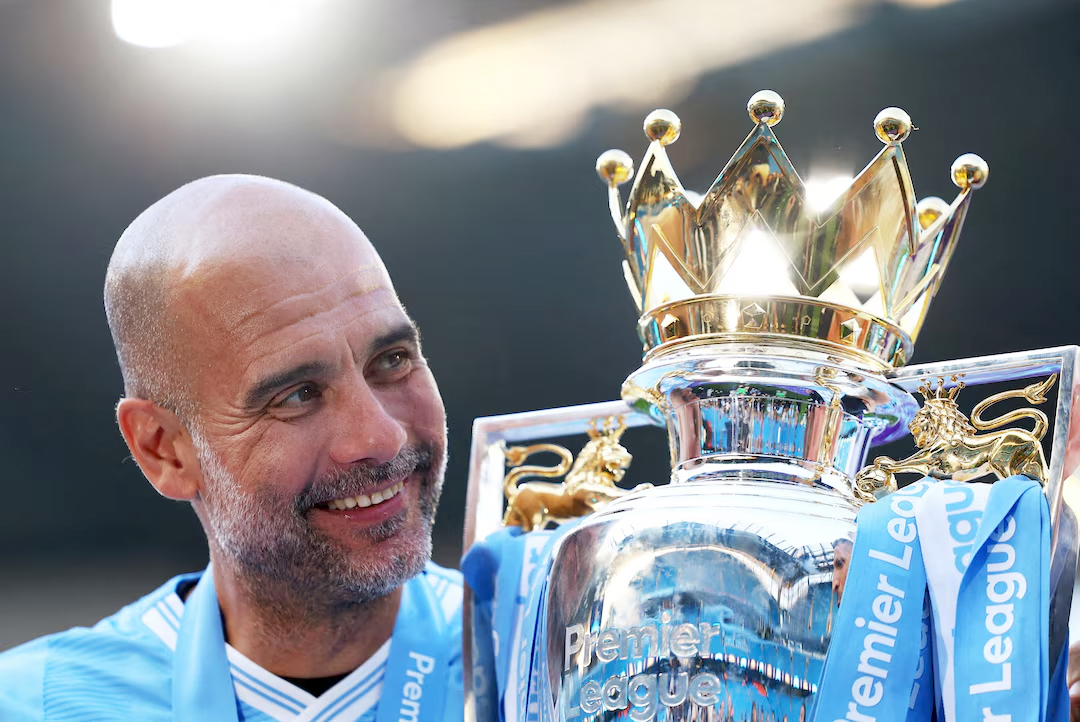
The world of football marvelled at Manchester City’s extraordinary decade.
It was not only the gathering of numerous trophies. It was the level of football they played that made them, for a time, almost untouchable.
Cynics were quick to say that this was simply proof that an abundance of money is the surest route to success.
It has not always been so.
Older people, like myself, have seen it all before, without the extraordinary amounts of money now pouring into football. In the 1970s, another team reached levels that were the envy of its peers. Liverpool was simply untouchable.
Kevin Keegan, Kenny Dalglish and Ian Rush became household names and carved their names into football history, just as Erling Haaland, Kevin De Bruyne and Sergio Agüero have done for Manchester City.
Liverpool’s managers, Bill Shankly and Bob Paisley, were revered in much the same way as Pep Guardiola is today.
Yet Liverpool managed to do so while playing by the rules of the game.
The extent of Manchester City’s cheating was laid bare by the findings of the independent commission established to examine the charges against the club.
Charges that were only made possible after a whistleblower came out with revelations of what was going on. City was found guilty of 114 out of the 115 charges that were levelled against them.
In a nutshell, they were found to overstate their sponsorship revenues in a way that would allow them to exceed the spending permitted to take on players and coaching staff, thus ensuring that they could literally buy their way to success.
Some people try to excuse this by arguing that the rules should not restrict the amount of money owners are allowed to spend on their teams. But, irrespective of whether you think that is a good or bad idea, that misses the point.
Rules – good or bad – are there to be applied to everyone. No one can simply decide unilaterally which rules apply to them and which do not.
And obviously, failing to follow certain rules gives you an advantage over competitors who do. This is as true of Lance Armstrong in cycling as it is of Manchester City in football.
One does have some sympathy for City’s players and supporters, who are not responsible for the decisions made by the club’s owners and management. Their joy and pride are forever tainted, whatever the eventual outcome of the legal proceedings, as surely City will appeal the decision.
Even though suspicions had been circulating for years, players and supporters can be forgiven for rationalising them away.
Not so the owners and management, if the allegations against them are ultimately upheld.
Any penalties imposed should fall heavily on those responsible. In my view, that could include measures affecting taking over the ownership itself.
As for the supposedly independent board of directors, the less said the better.
That is, if directors drawn from institutions such as First Abu Dhabi Bank, Etihad Airways, Experience Abu Dhabi, Emirates Palace Hotel in Abu Dhabi, Aldar Properties of Abu Dhabi, Masdar energy of Abu Dhabi and e& telecoms of Abu Dhabi are really what we mean by independent directors.
There is a broader lesson here about corporate governance that should not be ignored. As the saying goes, no crisis should be allowed to go to waste.
History provides countless examples of cheating in sport. Cut-throat competition has a way of pushing people beyond their boundaries, both good and bad.
Recent memory brings to mind Juventus and Glasgow Rangers, while the English league can go way back to 1919 where Leeds United were also found guilty in a scandal involving illegal payments.
But the Manchester City case raises a different question because of the apparent involvement of state-linked wealth on a scale rarely seen in sport.
Sport has increasingly been hijacked not only by the world’s billionaires but also the autocratic ones as well. The power that comes with such wealth can influence our daily lives, and those who possess it know and exploit it very well.
There have even been suggestions that the scale of UAE investment in Britain could be affected by the outcome of the Manchester City affair.
If political and economic considerations begin to influence the enforcement of sporting rules, then the issue is no longer simply about football.
The former mayor of Manchester, and now prime minister, has already found himself in an uncomfortable position after admitting: “I would be really concerned to lose them. They’ve been such a huge partner in the building of modern Manchester, and the building of Manchester City into the global force that it is”.
That reality check, however unavoidable, should have no bearing on the question of what punishment is appropriate if rules have been broken.
Too often we see influential people using their money to circumvent the rules, only to discover that other people in positions of power are willing to look the other way.
It is the old game of ‘you scratch my back and I’ll scratch yours’.
That is precisely why independent oversight matters. Rules are worthless if the people being regulated have sufficient wealth and influence to shape, weaken or simply ignore them.
And this brings me to something much bigger than football.
The recent announcement in the United States about voluntary self-regulation of the artificial intelligence (AI) industry strikes me as a sham and is another example of the same problem.
President Trump, conscious of growing public concern about the breakneck speed at which AI is developing, rushed to demonstrate that something was being done.
His solution – apart from rebranding AI into SI (superintelligence) appeared to be to bring together the heads of the very companies developing the technology and have them draft a non-binding voluntary agreement.
The spectacle was difficult not to find amusing. The people being asked to regulate themselves were the very people with the greatest financial interest in ensuring that regulation did not get in their way, or even worse initiate regulation that would work to their advantage.
The scratching of backs at the gathering as well as the hilarious self-correcting of each other from AI to SI was nauseating to watch.
The underlying issue, however, is much graver.
The travails of Manchester City today remind me of the dangers posed by the uncontrolled race into ever more powerful forms of AI, only with potentially much more serious consequences than winning a football title.
In both cases, the same principle applies.
Some people believe they should be allowed to play by different rules from the rest of us.
Don’t get me wrong. Wealth is welcome. It brings with it many advantages to those who possess it, and there is nothing inherently wrong with being rich.
But wealth also brings responsibility.
The system that allows people to accumulate enormous wealth depends on rules, institutions and public trust.
Those who benefit most from that system have an even greater responsibility to respect the principles that made their success possible.
Playing by the rules is not an inconvenience imposed on the successful.
It is the price of belonging to the game.





Click here to change your cookie preferences