

Eni signs $1.8bn contracts for Kronos gas field infrastructure
By Tom Cleaver
Italian energy company Eni on Monday signed contracts worth $1.8 billion for the construction of the infrastructure which will allow for the natural gas in Cyprus’ Kronos gas field to be extracted from under the seabed and transported to Egypt for liquefaction.
The Kronos field is located in Block 6 of Cyprus’ exclusive economic zone, with Eni owning the rights to the resources in that block alongside Frech energy giant Total.
Given the proximity of the Kronos field and Block 6 to Egypt’s Zohr gas field, which Eni also operates, Eni will be able to use its own infrastructure to take the Cypriot natural gas to the Segas liquefied natural gas (LNG) terminal in the Egyptian port city of Damietta, and export the gas to Europe and, if required, elsewhere from there.
“Today’s development marks a decisive step towards harnessing our nation’s natural wealth,” President Nikos Christodoulides said following the signing. “It serves as a strong vote of confidence in our country’s energy prospects” which “carries significant geopolitical and economic weight”.
“At the same time, this development contributes decisively to the further strengthening of our economy, creating even greater capacity for the state to invest in policies which improve the daily lives and quality of life of its people,” he said.
Eni’s chief operating officer of global natural resources Guido Brusco said of the contract’s signing that “the development of Kronos unlocks new quantities of European natural gas, developed by European companies and destined primarily for European markets”.
This, he said, will be done “with the aim of ensuring secure, affordable, and low-emission energy” at what he described as “a critical period for the global energy transition, energy security, and stability”.
Damianos: Kronos’ importance exceeds quantities of gas it possesses
Meanwhile, Energy Minister Michael Damianos said that “for Cyprus … the importance of Kronos far exceeds the estimated quantities of natural gas it possesses”.
“Through projects like Kronos, the eastern Mediterranean can contribute to Europe’s energy security and strengthen its ties with reliable partners,” he said.
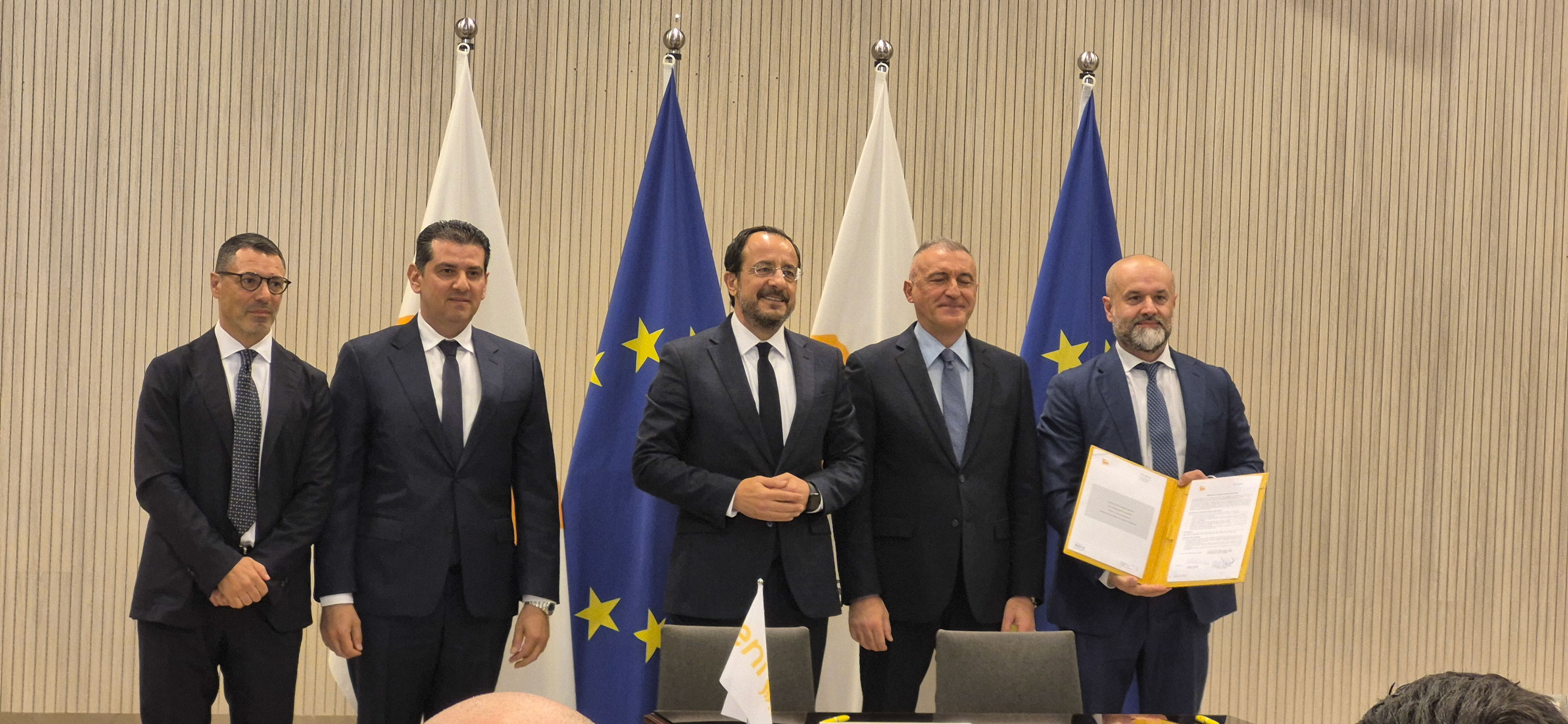
In specifics, Eni signed contracts with services provider Baker Hughes for the manufacturing of subsea production systems, with galvanised steel firm Dalmine for the manufacturing of the gas export pipelines, with energy products firm TechnipFMC for the production of production flexible flowlines, with energy engineering firm McDermott for the installation of subsea pipelines and related infrastructure, with energy production firm Oceaneering for the production of composite cables which will connect the pipeline to the seabed, with China Merchants Heavy Industry for the project’s floating control unit, with Egyptian state-owned energy firm Petrojet for the construction of a new pipeline to Egypt, and with oilfield services company Saipem for an offshore drilling rig.
Eni reached its final investment decision for the project in July, and said at the time that it believes there are more than three trillion cubic feet of natural gas in the field.
The company has also promised a “fast-track development model”, with it hoped that the first Cypriot gas will be sold as early as 2028.
Aim is to sell gas to Europe by 2028
This goal is shared by Christodoulides, who said earlier this year that “the goal is to sell the first Cypriot natural gas to Europe through Egypt in 2028 and we are approving all the relevant agreements”.
Last year, the Egyptian government was designated as the “host government” for Block 6, paving the way for the gas to be sent to Damietta for liquefaction, given that Cyprus does not yet have domestic liquefaction facilities, with efforts to build a liquefaction terminal at Vasiliko having stalled in recent years.
However, the Cypriot government has faced criticism regarding the deal, with energy expert Charles Ellinas having said that Eni may be “pressing for more concessions” to reduce the amount of money the state will make from the gas’ extraction and sale.
Additionally, he said that the amount of liquefied natural gas entering the market may increase by as much as 40 per cent in the coming years, and that with those “huge quantities” entering the market, “it is expected that LNG prices will decrease considerably”.




Click here to change your cookie preferences