
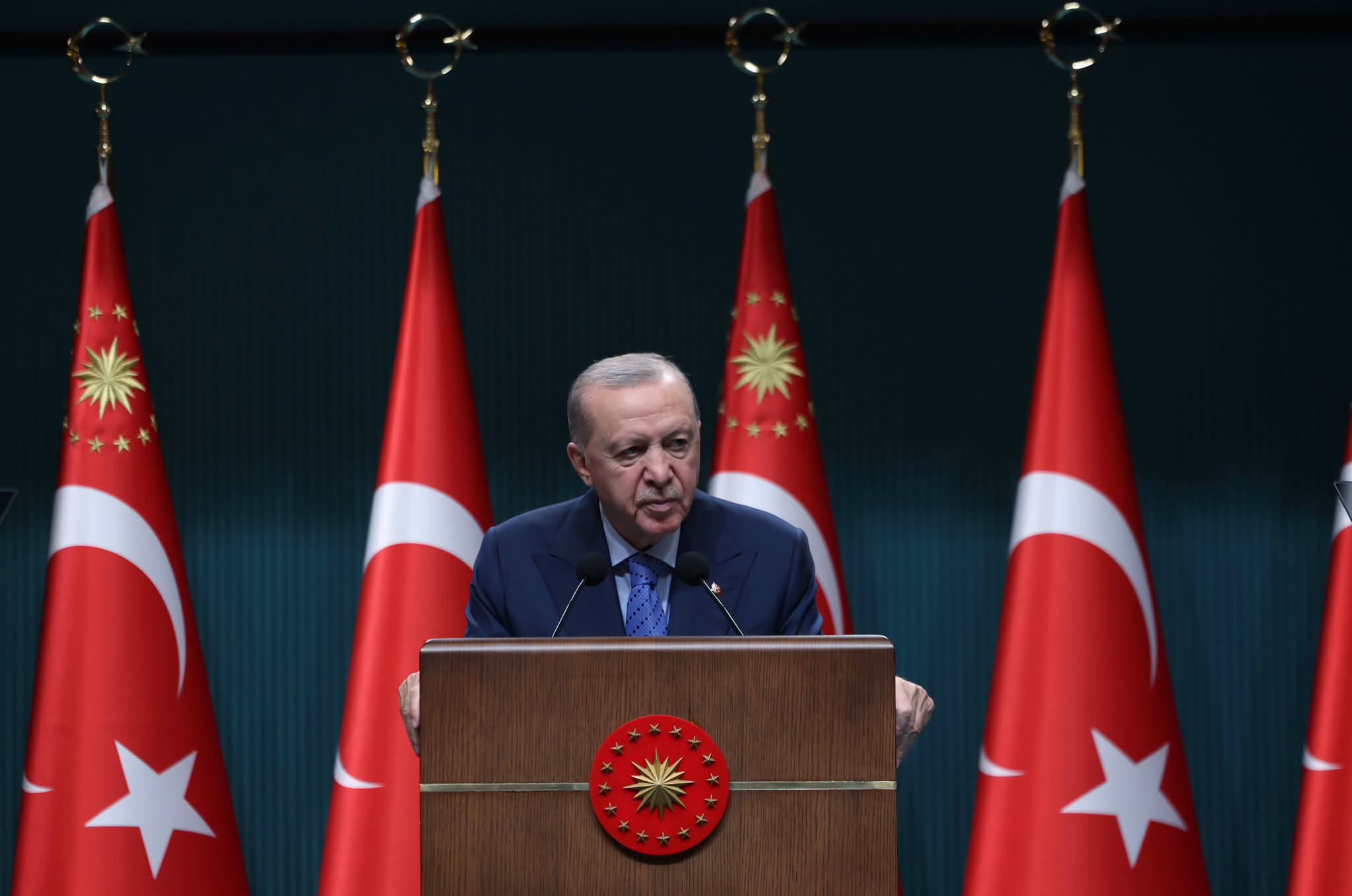
Turkish President Recep Tayyip Erdogan has stressed that his country is looking to securing its own interests in pursuing and ensuring the ratification of a maritime jurisdiction agreement with Libya, stressing that “we are not … trying to score a goal against anyone in the eastern Mediterranean”.
“We are not after saving the day, but building the future. The most concrete example of this is our Libya policy. We stood firmly by the brotherly Libyan people during their most difficult times. We tried to fulfil what was required of us by our fraternal relations,” he said after Monday night’s cabinet meeting.
He described the agreement as “a major step in guaranteeing the legitimate rights of Turkey and Libya in the eastern Mediterranean”, and said that last week’s ratification of the deal by the Libyan parliament shows that “our Libyan brothers, despite their political differences, are acting together on matters concerning their national interests”.
“We believe that the path to peace, prosperity, and security lies through unity and solidarity. For this reason, we are sincerely striving to reduce conflicts and strengthen alliances throughout our region,” he said.
He then stressed that Turkey’s policy regarding the eastern Mediterranean is “clear”, and that “we are not, so to speak, trying to score a goal against anyone in the eastern Mediterranean”.
“We are only concerned with protecting our maritime jurisdiction areas, rights, and interests. We advocate for the peaceful resolution of disputes and their resolution through dialogue with all coastal states. We expect the same constructive will from all actors, especially the European Union,” he said.
On this front, he warned that “aggressive rhetoric detached from reality will benefit no one”, and stressed that “even if it means paying a price, we will never hesitate to do what is right and beneficial for Turkey and the Turkish nation”.
Gerapetritis delivered joint statement to UN declaring agreement ‘null and void’
His comments came while Greek Foreign Minister Giorgos Gerapetritis was delivering a joint statement on the matter to the United Nations, with that joint statement having been issued on behalf of his own country, the Republic of Cyprus, Bahrain, Egypt, the United Arab Emirates, and the European Union.
That statement stressed that the agreement “remains null and void, contrary to international law and cannot serve as a lawful basis for maritime delimitation or produce legal consequences for third states”.
Additionally, it said that the agreement highlights the need to ensure that “arbitrary bilateral arrangements do not undermine established rules of international law or prejudice the rights of other states”.
On Monday, Greek newspaper Kathimerini had quoted the United States’ state department as having criticised the agreement as “unconstructive and provocative”, and as having said that it “increased tensions in the region”.
Libya’s parliament unanimously ratified deal seven years after signing
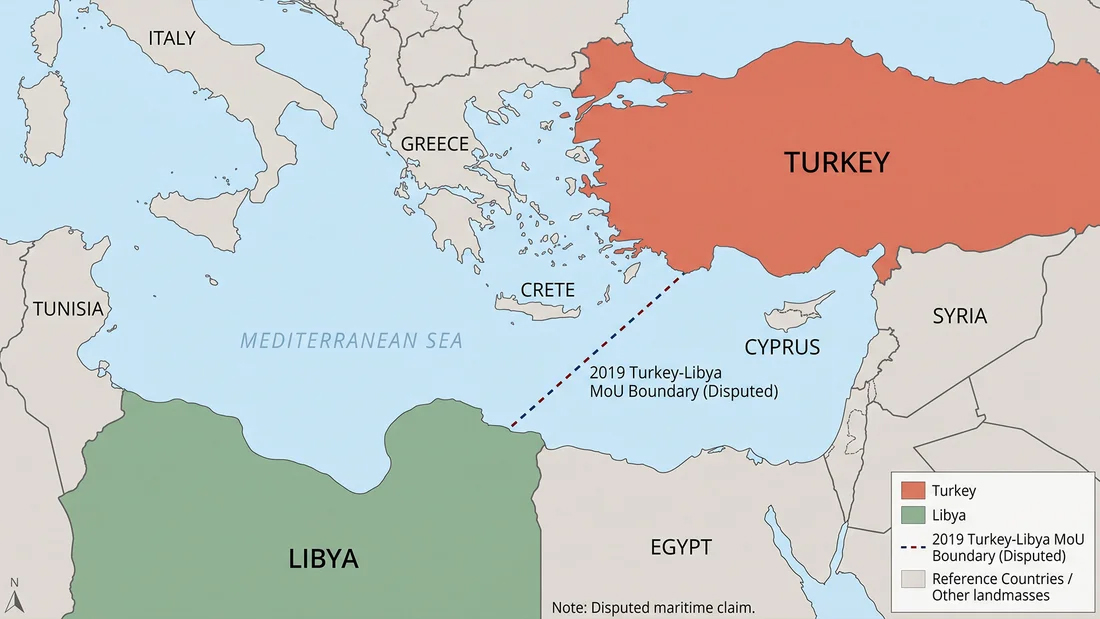
The maritime agreement was unanimously ratified by Libya’s parliament on Tuesday last week, some seven years after it had initially been signed by the internationally recognised Libyan government and Turkey in 2019.
It saw Turkey and Libya define where the two countries’ exclusive economic zones (EEZ) border one another in the eastern Mediterranean, with that border, according to the agreement, falling between two points southeast of the Greek island of Crete.
However, Greece and the Republic of Cyprus object to the deal, saying that Turkey and Libya do not share a maritime border because islands are each entitled to a full EEZ, and that therefore, the sea in question belongs to Cyprus and Crete. Turkey’s position is that islands are not entitled to a full EEZ.
Last week, the European Union’s foreign policy chief Kaja Kallas had told Turkish Foreign Minister Hakan Fidan that the deal “infringes upon the sovereign rights of third states”, while European Council President Antonio Costa and European Commission President Ursula von der Leyen had said that they “deeply regret” the Libyan parliament’s ratification of the deal.
“We reaffirm our solidarity with Greece and Cyprus. We reiterate the EU’s well-known position against any outside interference in Libya,” they said.
On the other side of the argument, Turkish Cypriot ‘foreign minister’ Tahsin Ertugruloglu told the Cyprus Mail that the Libyan parliament’s decision is “great news”, and added that “after all, not everyone is a puppet of discrimination and blatant misinformation”.



Click here to change your cookie preferences