
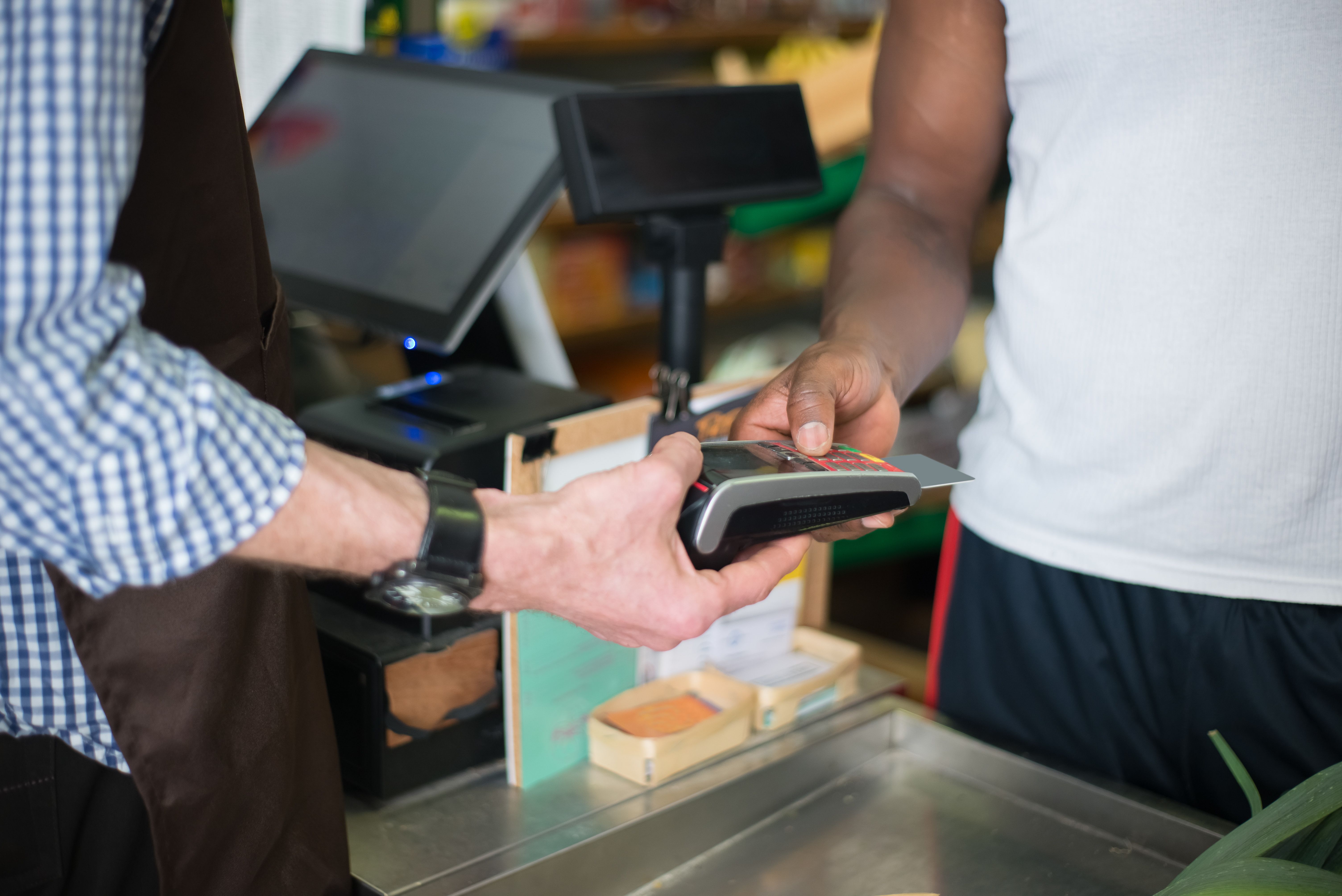
The further digitalisation of payments does not mean that cash is ceasing to have economic and social value. The recent initiative of the Association of Cyprus Banks and Visa to promote the cashback service highlights precisely this reality: the creation of an intermediate mechanism through which electronic payments and access to cash can coexist.
Consumers pay by debit card and, at the same time, receive cash from the business’s checkout. The service is not a “cash refund” or a rewards programme. It is a cash withdrawal at the point of sale, linked to an actual purchase.
According to the Association of Cyprus Banks, the service is currently available at approximately 450 retail outlets, with a maximum cash withdrawal of €100 per transaction. A purchase of any value can be made, and the service supports Visa or Mastercard debit cards issued by a domestic payment service provider. It does not apply to credit cards.
The service is provided free of charge to the consumer and, according to JCC, without any additional charge to the business.
The legal significance
The service must be considered within the broader framework governing payment services. In Cyprus, the Provision and Use of Payment Services and Access to Payment Systems Law of 2018, as amended, applies and transposes European Directive (EU) 2015/2366.
The legislative framework places emphasis on transparency of terms, the security of payment instruments and the allocation of liability between the user and the provider.
The customer must be aware that he or she is authorising a transaction comprising both a purchase and a cash withdrawal.
The separate display of the two amounts on the receipt constitutes an essential element of transparency. At the same time, the use of a PIN and authentication mechanisms reduces the risk of unauthorised use.
In the event of an unauthorised payment transaction, the issue is not exhausted by simply establishing that “the card was used”.
The Law establishes a specific framework of liability. As a general rule, the payment service provider bears responsibility for unauthorised transactions, while the user may, subject to certain conditions, be liable for up to €50 in cases involving the loss or theft of the payment instrument.
The user’s liability may be broader where he or she has acted fraudulently or with gross negligence.
Once the provider has been notified of the loss or theft, the user will, as a general rule, not bear financial consequences arising from subsequent unauthorised use, unless he or she has acted fraudulently.
Particular importance must also be attached to distinguishing between the roles of the various parties participating in the transaction.
The card issuer, the acquirer, JCC, the merchant and the international card schemes do not necessarily perform the same role or bear the same responsibility.
In the event of an incorrect charge or a disputed transaction, the consumer should, in the first instance, promptly contact and notify his or her payment service provider.
Clear evidence of the transaction and the separate recording of the purchase and the cashback amount may prove particularly important in investigating and resolving any dispute.
For the consumer
The principal advantage is convenience. Consumers do not need to search for an ATM simply to withdraw a small amount of cash.
Particularly in remote areas, where access to ATMs may be limited, a supermarket, kiosk or petrol station can serve as a supplementary point of access to cash.
The service also has a social dimension. It does not force consumers to choose exclusively between cash and electronic payments.
It allows both to coexist within the same transaction, without any additional charge for the cashback service.
For the business
The merchant may differentiate the business from competitors that do not provide the service, thereby potentially increasing its customer base.
JCC also highlights the possibility of reducing cash-handling costs.
There is, however, also a legal and operational responsibility. Staff must apply the procedure correctly, confirm the amount and protect the customer’s security information.
A business should not treat cashback merely as a simple “checkout service”, but as a function connected to a payment system and governed by specific rules.
Cashback should not be viewed as a substitute for ATMs, but rather as a useful complement to them.
Its value will ultimately depend on the expansion of the network, adequate public awareness and, above all, the confidence created through its proper and secure implementation.
In an economy that is steadily moving towards electronic payments, I consider it positive that digitalisation does not necessarily lead to the disappearance of cash. Cashback offers convenience to consumers and a potential competitive advantage to businesses, but its successful operation requires clear rules, transparency and the proper allocation of responsibility.




Click here to change your cookie preferences