
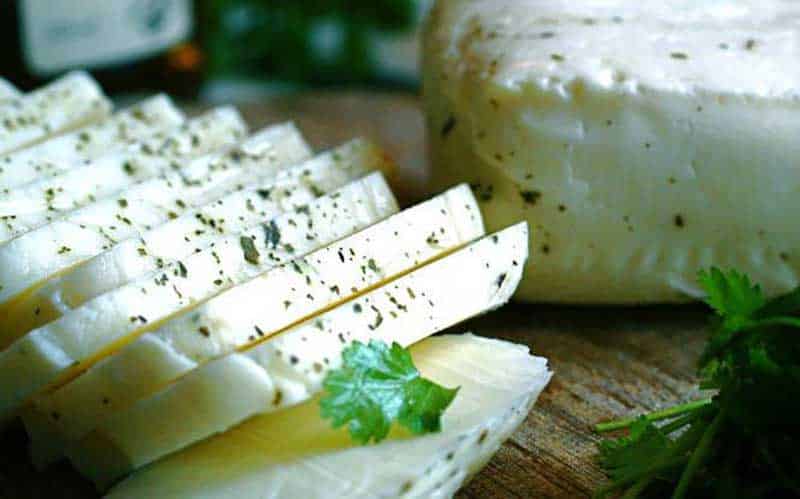
Sheep and goat farmers say the 51 per cent minimum share of their milk in PDO halloumi will not change when the transitional period ends in 2029, and plan to object to any attempt to alter it.
the head of the ‘voice of the livestock breeders’ Neophytos Neophytou said that information reaching the group indicated the quota would be maintained.
He said cheesemakers were expected to send a letter requesting a change, a position the organisation rejects.
Farmers intend to submit objections both individually and collectively, he said, and expect the EU to turn down any request to revise the quota.
“If everyone does not help sheep and goat farming to rebuild, halloumi will be lost,” he said.
He called on cheesemakers and cattle farmers to contribute to rebuilding the sector.
Neophytou said 95 per cent of the group’s members are sheep and goat breeders.
He said the organisation represents the entire livestock industry, is not affiliated to any political party and operates on a non-profit basis.
The cheesemakers’ association confirmed in June that it was examining whether to ask for a revision of the milk ratio set out in the European specification.
Spokesman Michalis Koullouros said maintaining exports was the industry’s main objective.
“It goes without saying that it is something we are discussing and thinking about because everyone’s goal is to maintain exports,” he said.
Under the PDO framework, the transitional period ends in July 2029, after which, sheep and goat milk must make up at least 51 per cent of the halloumi mixture.
Cheesemakers have said reaching the threshold could be difficult without cutting export volumes, particularly after recent losses to livestock populations.
Koullouros said any application to amend the quota would require lengthy examination by European authorities, so a decision to proceed would need to be taken quickly.
He said the discussion was about aligning the rules with actual milk availability while protecting a product worth about €350 million a year in exports.
Sheep and goat farmers have opposed any change, for in a statement in June, their association rejected any attempt to alter the approved framework and urged all parties to focus on raising sheep and goat milk output and meeting the existing rules.
“Halloumi is not a common cheese product that can be adapted according to market or export needs,” it said.
The group said the EU had granted a 15-year transitional period specifically so the sector could adjust gradually.
It argued that the 51 per cent threshold is directly tied to the authenticity of halloumi and the survival of traditional sheep and goat farming in Cyprus.
Farmers warned that weakening the standard could affect family farms and rural communities that depend on sheep and goat production.



Click here to change your cookie preferences