
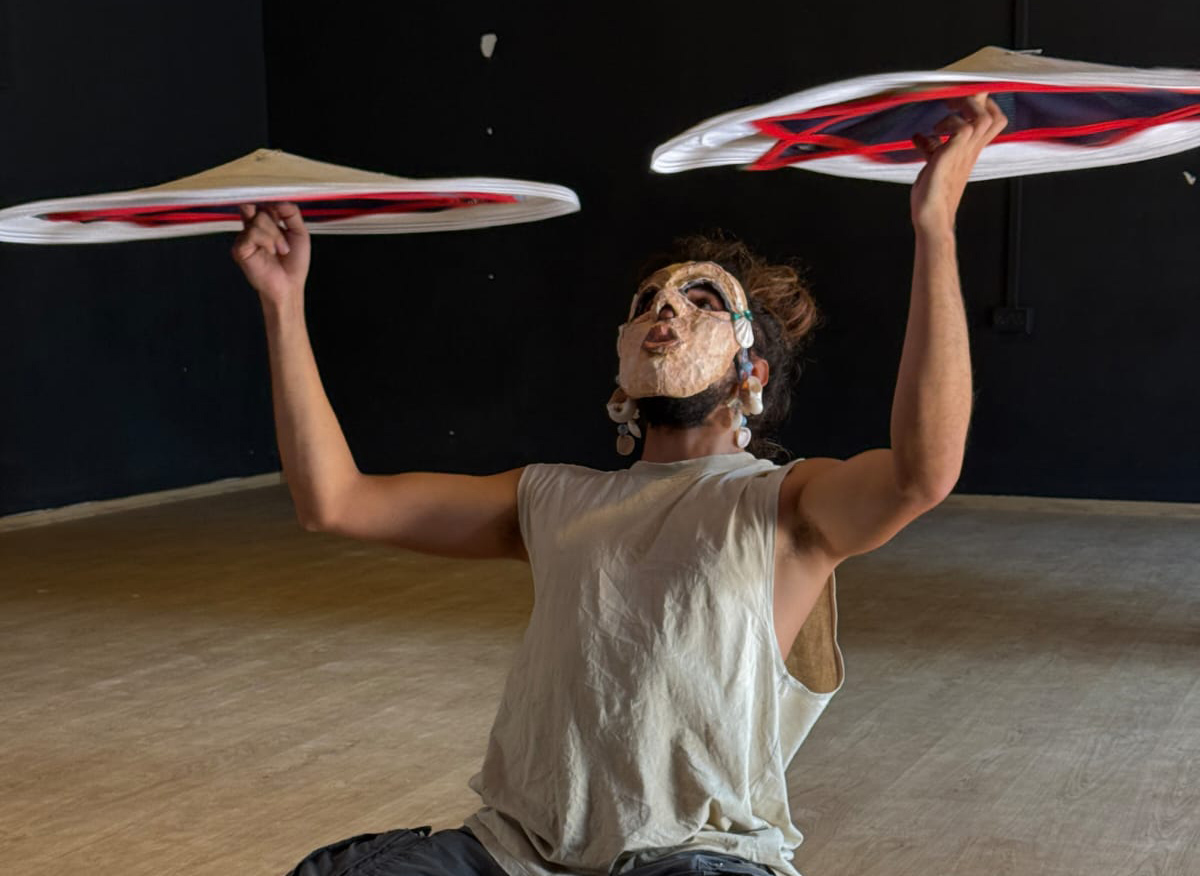
A performance using circus arts looks at the island’s bicommunal past. It will be staged in Nicosia this month with more set to follow
How did a trip to Chile inspire a bicommunal contemporary circus project exploring Cyprus’ division and identity? This November, Greek and Turkish Cypriot artists are bringing together their voices, memories and experiences in the Third Space project, approaching this complex subject through unexpected means: circus, ancestral rituals and figures inspired by Cyprus goddesses.
“The idea was born while I was travelling in Valparaíso, Chile, this January,” says its artistic director Andria Spyrou. “I was witnessing mask theatre, mime, puppetry and storytelling, and felt an urge to bring that experience to the island.
“I immediately made contact with Yasemin Collective in Cyprus to see if they would support the idea of creating a peace-building project based on circus art, and whether we could bring my artistic partner, Marco Cepeda Cortés, to the island to share his knowledge of physical theatre.”
Andria put together a team and applied to an open call by the Technical Committee on Culture, which supports bicommunal projects that strengthen collaboration through art and culture. In August, Third Space, powered by the Home for Cooperation, was one of two projects selected for funding.
Connecting the island’s communities
For Andria, the project comes from a need to bring the island together. “Greek and Turkish Cypriots are not in contact as much as we should be,” she says. “And this creates stagnant ideas. We don’t allow ourselves to reinvent ideas, and stop using old narratives that we have inherited and perhaps do not belong to us, but rather to other times.
“It’s very important to understand and heal the past to create the new.”
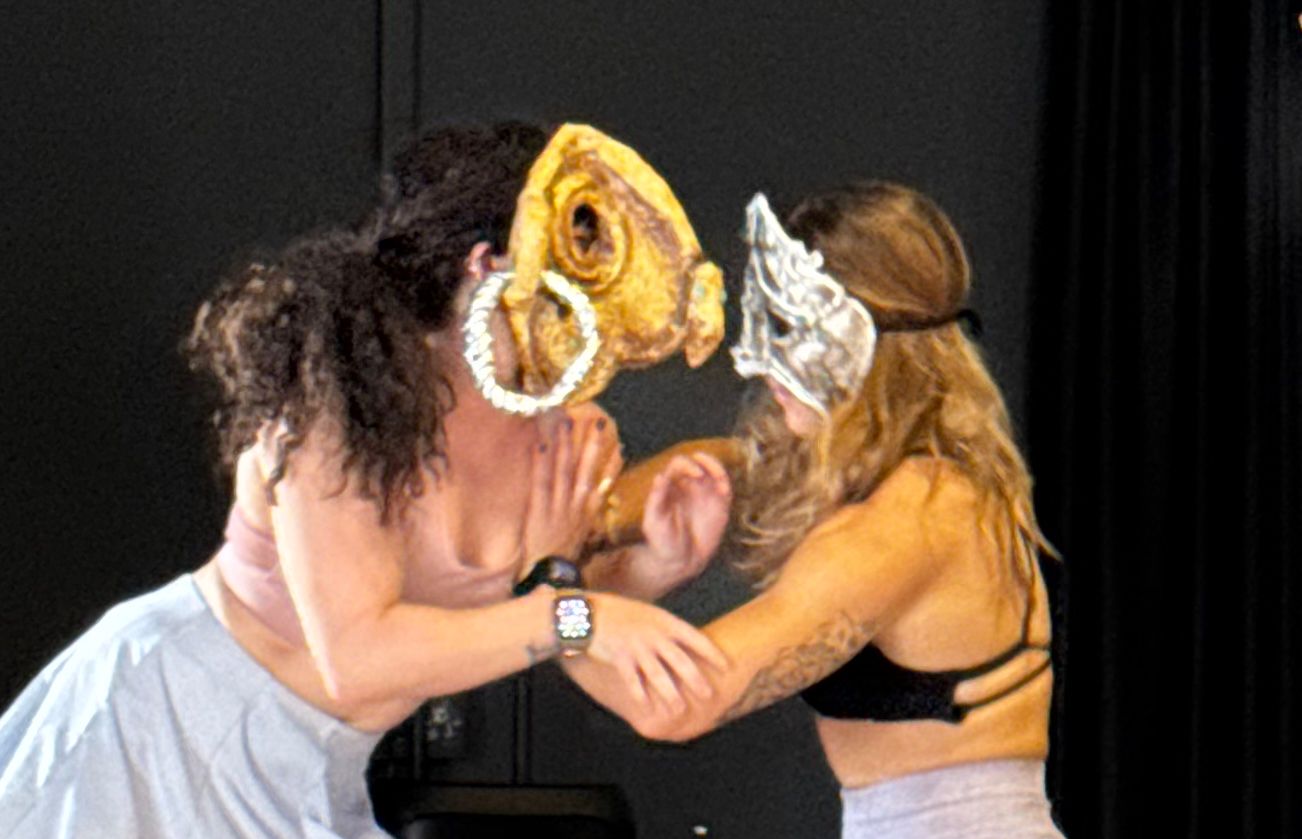
This month, the artists premiere Homeland, a performance exploring Cyprus as both a divided and shared home. It examines history from a woman’s perspective and questions identity and belonging, drawing on female figures inspired by goddesses to consider both what separates people and the connections that remain. Following its first show in Nicosia on November 22, the team hopes to take the production to audiences across Cyprus and, later, abroad.
Circus as a language of connection
Bringing together 11 artists, the project uses movement, masks, drumming, comedy and narration in English and the island’s dialects. Third Space also brings together members of Cyprus’ growing circus community, one that refuses to let checkpoints stop it.
Fusion dancers, acrobats, clowns, poets, drummers, flow artists and hair hangers approach the island’s division and identity through their different disciplines. Physical theatre and non-verbal acts also allow the performance to reach audiences across backgrounds and languages.
“Circus can bring diversity,” says Andria. “You may see many extravagant, bizarre, beautiful, ugly, dangerous and weird acts that bring shock or joy, sadness or excitement to people – comedy as well. We need more laughter in our conversations. I think in Cyprus we grow up with this heaviness of talking about 74, which is needed as a process, yet perhaps now it is time to move from that space and allow new flowers to grow.
Rethinking Cypriot identity
The idea of a shared home is central to Third Space, but Andria also questions what it means to belong to Cyprus. She sees a sense of identity crisis among younger people whose lives and experiences do not necessarily fit conventional definitions of what a Cypriot is.
She challenges the assumption that Cypriot identity has to be tied to one language, pointing to the island’s many linguistic and cultural influences. Greek, Turkish, English and other languages can all exist under the same Cypriot identity, she argues.
“Our home is where the land is,” she explains, “hence the title Homeland. The land is, at the end of the day, the one that hosts us as humans. All communities share the same land, same rain, same trees and air.”
Bringing women’s histories into the conversation
Homeland takes a particularly female perspective on a subject that is historical, personal and political. The performance follows three figures inspired by a prehistoric bird-headed female figurine; Nikifora, representing the warrior and powerful qualities of the goddess; and a modern Aphrodite associated with beauty and desire.
The three figures enter into power struggles and conflict before attempting to find harmony. In one scene, they are presented as attractions for visitors; another explores the reality of restrictions on movement, with the prehistoric figure neglected and unable to cross.
The female perspective also questions whose voices have traditionally shaped political conversations. “How come history and politics have always been told by men? Where are the women across history? What did they do? What was their role and how can we bring empowerment?” asks Andria.
“We take these political conversations, but within a women’s context. The goal is not to make it solely about women, but make it inclusive.”
Research into goddess worship, women’s history, ceremonies and drumming informs the performance. It also draws on everyday rituals practised across Cyprus, some of which continue today.
“The performance includes drumming rituals with Ianthi Sparsis,” says Andria. “We studied these devotional rituals but also everyday rituals our ancestors used to do across Cyprus. Habits that carry on today, like burning incense in our homes with olive branches (kapnisma) or marking a cross on bread dough before placing it in the oven.”
These gestures offer a reminder that the island’s history and identity are made up of many layers, some of them easily overlooked. By bringing them into a shared performance, Third Space asks what might be discovered when people look beyond inherited divisions and make room for the stories they have in common.
Find out more about the Third Space project at www.thirdspacecyprus.com


Click here to change your cookie preferences