
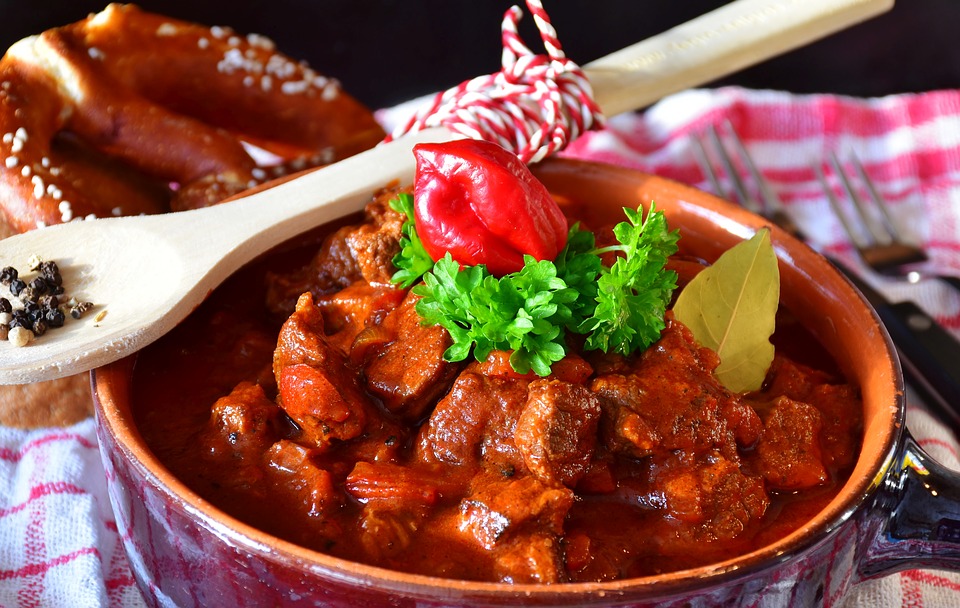
Goulash – or gulyás – is one of Hungary’s most recognisable dishes, with origins deeply rooted in the pastoral traditions of the Great Hungarian Plain. Its earliest form dates back to medieval cattle herders known as gulyás, who cooked simple, nourishing meals in iron cauldrons over open fires while tending livestock across vast grasslands. These early versions were more soup than stew, designed to be practical, filling and easy to prepare in the field.
The defining transformation of goulash came with the introduction of paprika to Hungarian cuisine in the 16th and 17th centuries following the arrival of peppers from the Americas. Over time, paprika became central to Hungarian cooking, giving goulash its characteristic deep red colour and warm, smoky flavour. By the 18th century, the dish had moved beyond herdsmen’s camps and into rural households, gradually evolving into a symbol of national cuisine.
During the 19th century, goulash gained cultural significance as a dish associated with identity and tradition. It became a staple in both peasant and bourgeois cooking, with recipes varying widely depending on region and available ingredients. While the original pastoral version remained closer to a soup, thicker stew-like interpretations developed in home kitchens, often enriched with potatoes, carrots, onions and beef.
Regional variations across Hungary reflect local tastes and historical influences. Some versions remain soup based and lighter, while others are rich, slow cooked stews. In certain areas, csipetke – small pinched pasta dumplings – are added for texture and substance. Despite these differences, paprika remains the essential ingredient that unites all forms of goulash, anchoring it firmly in Hungarian culinary tradition.
Goulash also spread beyond Hungary’s borders into central and eastern Europe, where it was adapted to local ingredients and preferences. In Austria, for example, it evolved into thicker versions served with bread or dumplings, while in neighbouring regions it often took on variations in spice level and consistency. Despite these adaptations, the Hungarian version remains the most closely associated with the dish’s origins.
In Cyprus, goulash is known through international restaurants and European influenced menus, where it is typically served as a hearty beef stew. Local adaptations sometimes incorporate Mediterranean herbs or serve it alongside rice or potatoes, reflecting Cypriot dining habits.
Traditionally, goulash is a dish associated with autumn and winter, when slow cooked meals are especially valued. It is often prepared in large quantities for family gatherings, reinforcing its role as a communal food.
From the open plains of medieval Hungary to modern kitchens around the world, goulash has retained its essence as both sustenance and symbol.





Click here to change your cookie preferences