
On Cyprus’s southern shore, Larnaca greets the Mediterranean with an easy grace — neither boastful nor hurried, just quietly radiant. It’s a city that doesn’t need to shout for attention. Instead, it hums with authenticity: the scent of sea salt and souvlaki, the echo of church bells drifting through narrow lanes, and the flutter of pink wings over a shimmering salt lake.
Where Paphos tells tales of gods and kings, and Limassol dances to a cosmopolitan beat, Larnaca offers something simpler — a gentle invitation to slow down, look closer, and fall in love with everyday Cyprus.
A city between water and faith
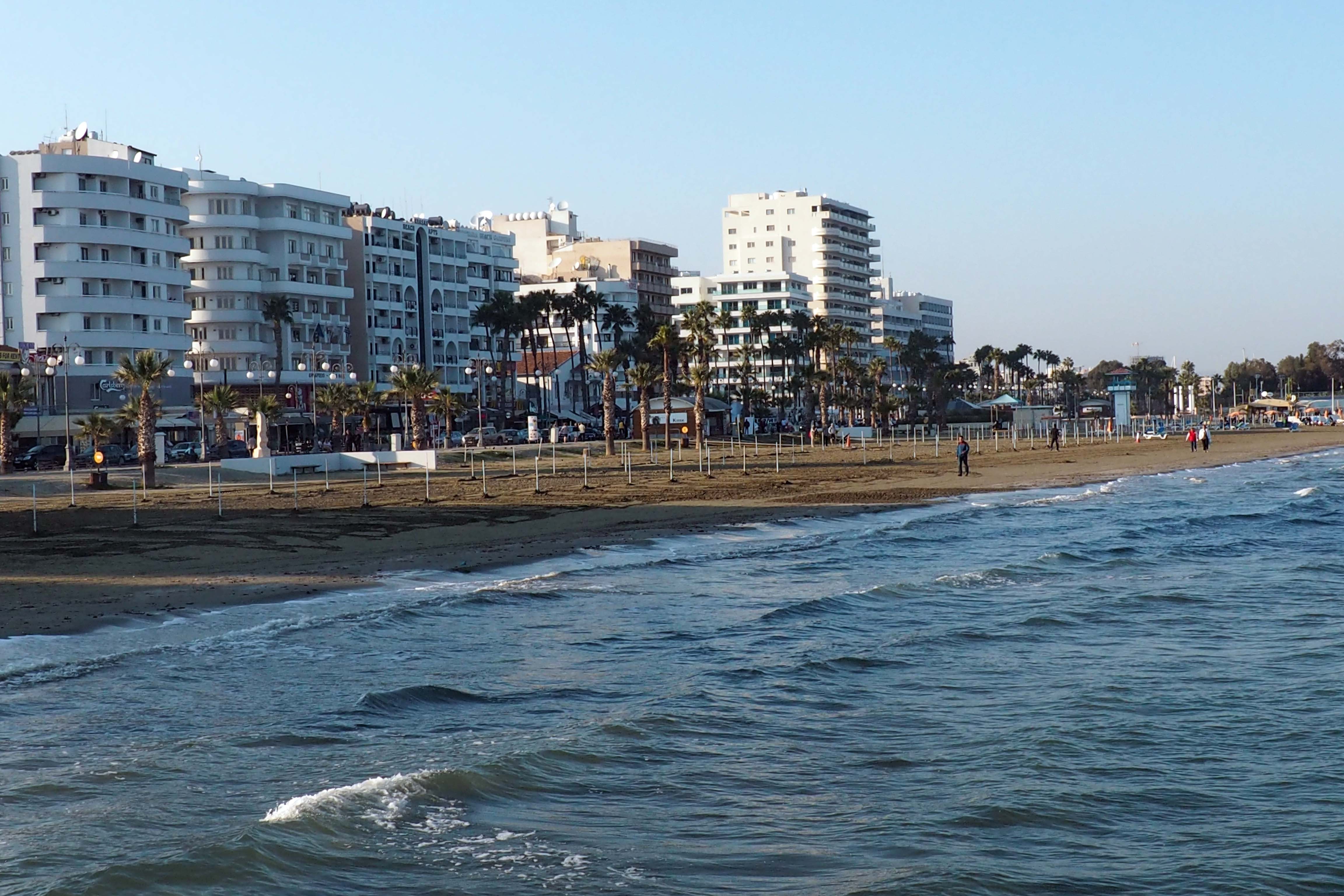
Larnaca’s rhythm begins at Finikoudes Beach, a palm-fringed promenade that stretches along the city’s waterfront. In the morning, joggers trace the curve of the sand as cafés open their shutters; by evening, the same strip glows under soft amber lights, alive with the laughter of families and the clinking of glasses.
If you want something different you can go to Kastella Beach, with its 600 metre long sandy beach. It is easily accessible with a bus stop a few metres away and is surrounded by traditional fish taverns.
At the end of Finikoudes you can find Larnaca Castle. A historic medieval fortress that served to protect the harbour. It features a small museum with artifacts from different periods.
Just a few streets inland, time bends around the Church of Saint Lazarus. Built in the 9th century, it anchors the old town with its honeyed stone and Byzantine arches — a monument to devotion that has watched empires rise and fade. Candles flicker beneath its dome, and the air smells faintly of incense and beeswax.
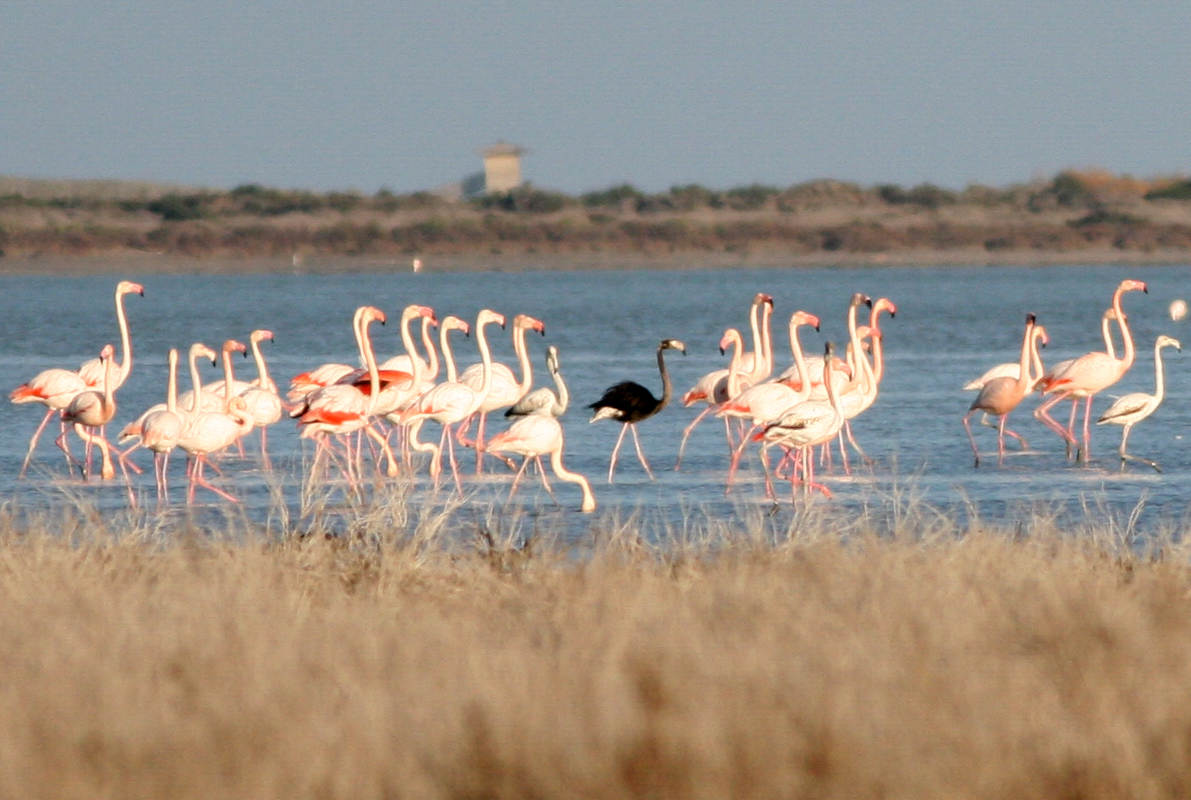
Beyond the city, Larnaca Salt Lake stretches like glass, its surface shifting from silver to rose as the sun dips low. Come winter, it transforms into a sanctuary for flamingos — thousands of them, elegant and improbable, painting the horizon pink. Watching them wade through mirrored water feels almost surreal, a reminder that Cyprus holds magic even in its quiet corners.
Stories in the sand and sea
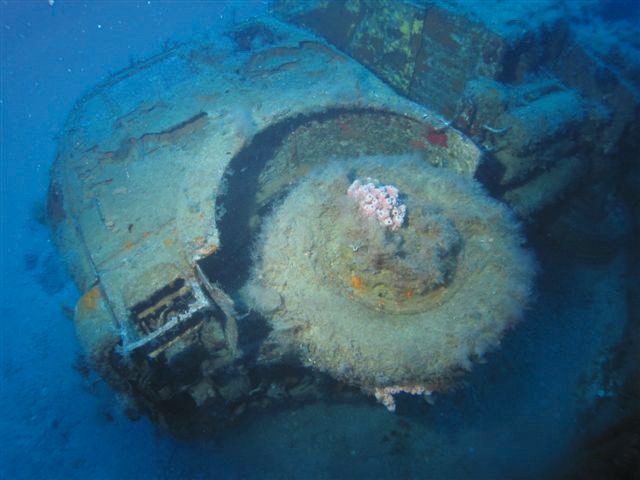
Beneath Larnaca’s turquoise waters lies another story — the Zenobia Shipwreck. Sunk in 1980, the Swedish ferry now rests on the seabed, perfectly preserved and home to a flourishing marine world. Divers descend through the cool blue, tracing stairwells and cargo holds now claimed by coral and fish. It’s not just an underwater site — it’s a time capsule.
Back on land, the Kamares Aqueduct arcs gracefully against the skyline, its 18th-century arches glowing gold at sunset. Nearby, Hala Sultan Tekke, one of Islam’s most revered sites, rests beside the salt lake — a symbol of peace and coexistence on this storied island.
Flavours and evenings that linger
As day fades, Larnaca’s appeal shifts from the sacred to the social. Tables spill out onto pavements, and the scent of grilled octopus drifts through the air. Locals gather at Mackenzie Beach, where music drifts from beachfront bars and the rhythm of the waves keeps time.
Local food is never rushed. Plates of the traditional meze arrive in endless sequence — olives, halloumi, tzatziki, stuffed vine leaves, grilled fish — and wine flows freely. It’s here, among friends and strangers alike, that you understand Larnaca’s quiet confidence. The city doesn’t try to impress; it simply invites you to stay a little longer.
Between then and now
Larnaca isn’t a city of spectacle; it’s a city of moments. A fisherman mending his nets by the marina. An old woman sweeping her doorstep as the church bells ring. A couple watching the tide roll in over Finikoudes.
And yet, it feels alive with possibility — a revitalised city centre with modern hotels rising beside centuries-old houses, local artists transforming alleys into open-air galleries, and cafés where traditional Cypriot coffee sits comfortably alongside oat-milk lattes.
It’s this balance of tradition and modern rhythm that makes Larnaca quietly magnetic.
A gateway and a refuge
For many travelers, Larnaca is their first glimpse of Cyprus — Larnaca airport is the island’s biggest and busiest. But those who pause here instead of passing through quickly discover the city’s understated soul. Within an hour’s drive lie Lefkara’s lace-making workshops, Ayia Napa’s famous beaches, and Cape Greco’s wild cliffs. Yet somehow, every road seems to lead back to the sea, back to Finikoudes, back to that soft golden light.
From flamingos drifting across the Salt Lake to sunsets over Finikoudes, Larnaca whispers rather than shouts — and that’s its magic. It’s Cyprus stripped to its essence: warm, timeless, and impossibly welcoming.
You may come here by chance, but you’ll leave already planning your return.
To explore more:
Essential tips, customs, and useful words for Cyprus visitors
Paphos: Where myth, history and the sea meet
Aphrodite’s Rock: The heart of Cyprus’ coastal magic
Nicosia: Inside Europe’s last divided capital
From flamingos to Finikoudes: Fall in love with Larnaca
Limassol: The Mediterranean city that has it all
Protaras – Cyprus’s family-friendly coastal gem
Ayia Napa: Cyprus’s sun-drenched blend of buzz and beauty
Best beaches in Cyprus – From golden sands to hidden coves
Cyprus, but cooler: Why Troodos is the island’s best-kept secret
Omodos: A timeless mountain village in the heart of Cyprus
Unearthing Cyprus: Walking through 10,000 years of history
UNESCO world heritage sites in Cyprus: What to see, why they matter, and how to visit
A guide to Nicosia’s modern retail landscape
Traditional Cypriot dishes: A guide to the most popular foods in Cyprus
What is the best time to visit Cyprus?
Moving to Cyprus: A guide to the pros and cons
Where to live in Cyprus? A guide to each major city (pros & cons)
Understanding Cyprus’ time zone and how it compares with Europe, the UK, and the US





Click here to change your cookie preferences