
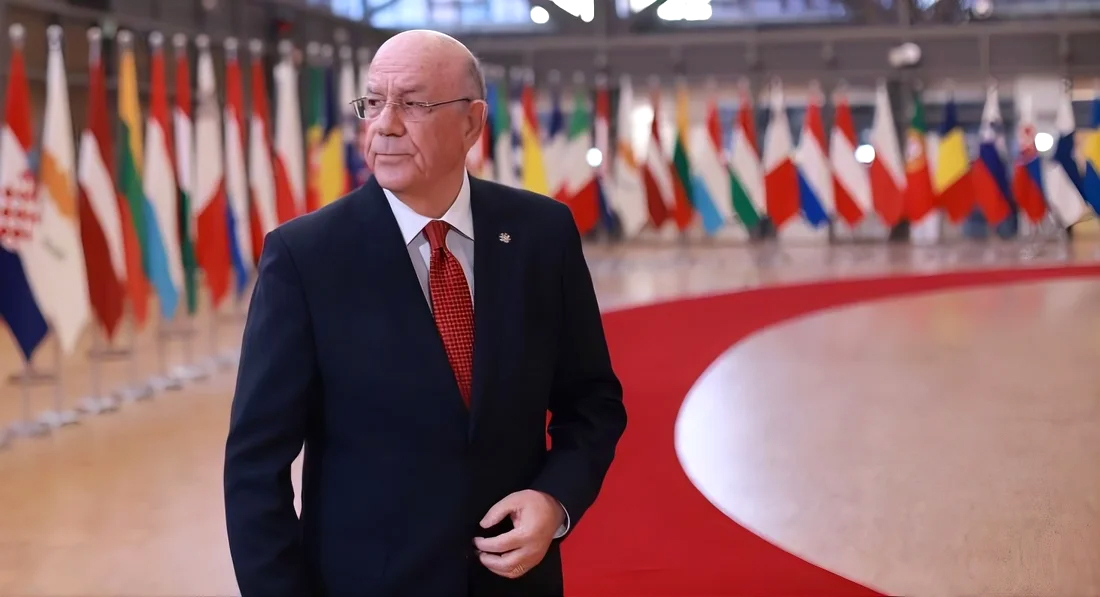
It is time for fiscal discipline and not populism, Finance Minister Makis Keravnos said on Sunday.
In an interview with Kathimerini, he said the economy is showing resilience in the midst of a global crisis.
The effects of the war in Iran on the economy, energy costs and tourism, in case the conflict continues for a long time, are of greater concern.
“Responsible and strict economic policy should continue,” he added, stressing that the potential of the economy must not be lost as there is a risk that the growth rate will decrease or there will be stagnation, especially if the war continues.
Asked if the support measures announced are enough, he said that everything will depend on the intensity and duration of the war.
Right now, he said, there is no question of additional measures, before we even see what was announced implemented.
Asked about the possibility of imposing a cap on fuel, he expressed the view that caps are generally not effective, pointing out the risk of closing petrol stations with a cap on prices, while a cap on profits prices may constantly increase to keep profits stable.
On Wednesday, the government announced a package of eight measures to combat rising costs amid the ongoing conflict in the Middle East, which government spokesman Konstantinos Letymbiotis said were worth €100 million.
Asked about any damage to tourism, he estimated that no major damage has been done so far, but there are concerns due to a fall in bookings.
“There is time to make up for lost ground,” he said, noting that the comparison should not be made with last year because it was a record year, but with a defined reference point to have more realistic estimates.
However, he said, the assessment of the impact on the fiscal cost at the moment is not a cause for concern.
“The message is that Cyprus is a safe destination and has an economy with the best characteristics compared to other countries in Europe,” Keravnos said, adding that signs of gradual recovery are already appearing, such as the increase in flights to Cyprus.
Answering a question about the necessity of the GSI electrical interconnection linking the energy grids of Cyprus and Greece, amid increased energy prices, the minister said that the development on the project has been determined by the recognition that the study on the project needs to be updated.
Of the 27 EU member states, 25 are connected, “but the cost of energy is the biggest problem in the EU, with serious consequences for the competitiveness of the European economy,” the minister said.
The impact of foot and mouth disease has not had an impact on the economy, apart from the cost of compensation, for which the first package reached €28 million, Keravnos said.
Calling for prudence, seriousness and rationality ahead of the parliamentary elections next month, the minister said that “whenever we have been swept away by populism and inflated announcements and demands, we have entered dangerous paths and endangered the viability of the economy and, by extension, the stability of the country”.





Click here to change your cookie preferences