
The European Parliament, Egypt’s energy move and Turkey’s needs
By Nikolas Xenofontos
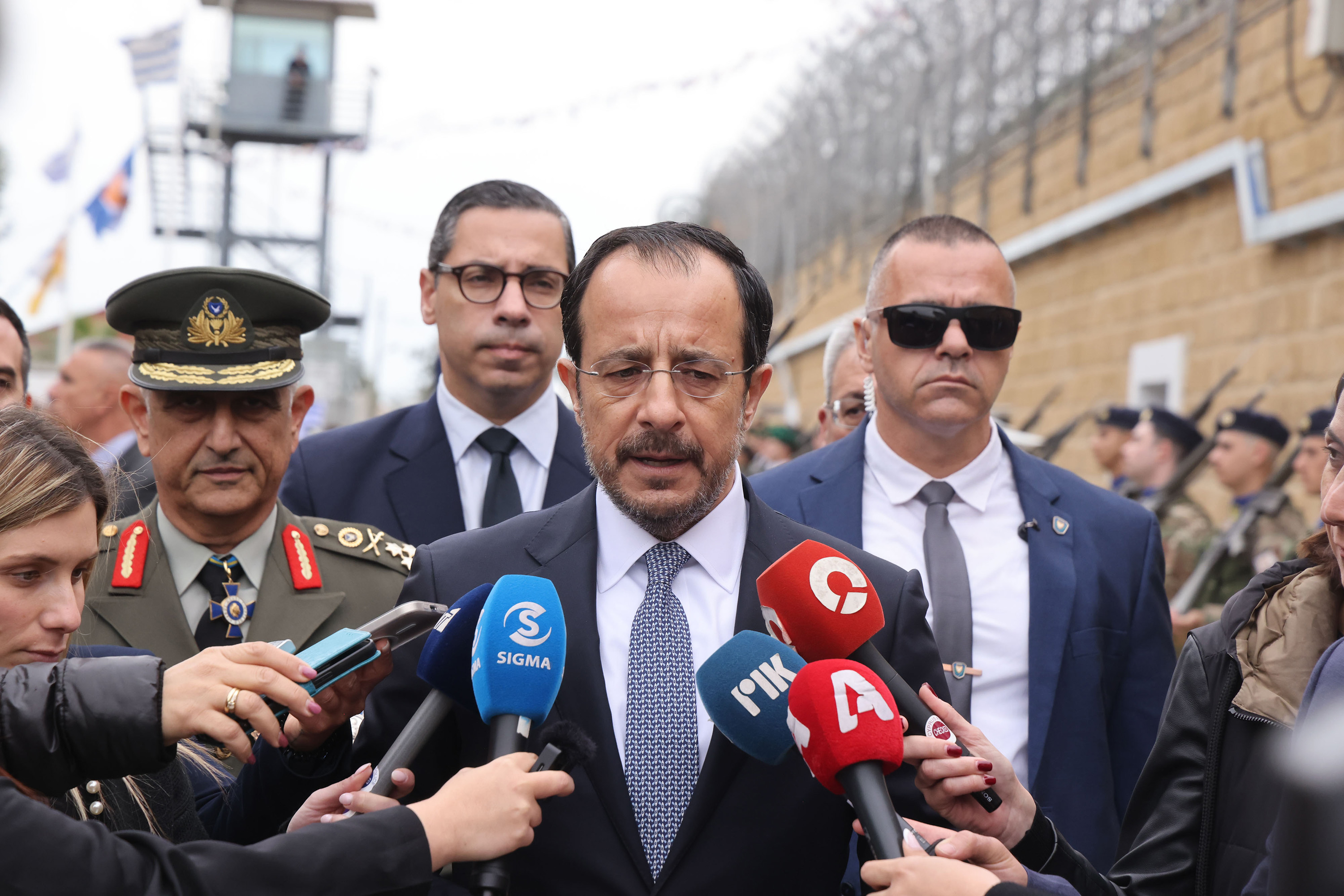
Nikos Christodoulides recently stated that “the EU has the tools to demonstrate the benefits of a solution to Turkey, which holds the key to solving the Cyprus issue,” while noting that Ankara will move only when the interests of a solution outweigh those of no solution.
Everything he said above is correct. The problem is that he has turned this reality into an excuse – shifting responsibility to the EU instead of acting on it.
Unfortunately for him, the European Parliament, through its new resolution on the Cyprus issue, has outlined exactly the course that our president must follow.
More specifically, it condemned every attempt by Turkey to “open” and colonise Varosha, the two-state solution, and the presence of Turkish troops.
Beyond that, however, it refers positively to Tufan Erhurman and emphasises Turkey’s European future. On the one hand, it recognises Ankara’s strategic role and its key role in Nato, as well as its mediating contribution in international conflicts. On the other hand, however, it states that Turkey’s regime cannot lead to its accession to the EU.
Within the logic of a “special relationship”, the draft promotes the strengthening of cooperation with Turkey “in the field of security and defence”.
However, the retention of the phrase regarding EU–Turkey cooperation in “existing” European defence programmes, even without explicitly naming Safe – which was removed after interventions – seeks to promote Turkey’s state participation in the programme in question.
The draft states that the European Parliament is ready to support an upgraded customs union, referring to the significant economic benefits it would bring both to member states and to Ankara itself.
Quite simply, the EU is ready to support any return to Crans-Montana, but this will take place within a framework of cooperation with Turkey. Since it is itself building bridges of cooperation with it, just as Turkey is doing, the question then is: who is not building bridges of cooperation?
The untapped natural gas reserves in the Exclusive Economic Zone of the Republic of Cyprus have been – since their discovery – the key to resolving the Cyprus issue, especially when Ankara found itself in periods without alternatives.
This potential has now become more concrete: recent declarations of commerciality for the “Glaucus” and “Pegasus” fields, estimated at around 7tcf, confirm that Cyprus possesses exploitable resources capable of shaping regional incentives. At this moment, Ankara is not desperately seeking natural gas but is looking for alternative proposals, and Cyprus is an excellent option for it.
On the other hand, Christodoulides is currently trying to eliminate these natural gas reserves through an agreement to sell natural gas to Egypt, effectively bypassing their potential as strategic incentives. But to what extent does this create incentives for Turkey for a solution, when it excludes it? To what extent should the processes for a pipeline to Turkey, for upgrading the EU–Turkey customs union, for Turkey’s participation in defence programmes, be initiated by the EU and not by Cyprus?
Why should Christodoulides not take on the part of creating incentives for Turkey to a degree that makes them more beneficial than the status quo?
If Europe is building bridges towards Turkey and Ankara is seeking benefits, then the real obstacle is no longer what Turkey wants. It is the refusal of Nikos Christodoulides to use the only tools that the Republic of Cyprus has at its disposal, exactly as Elam desires.
When you appoint ministers who do not align with the declared basis of the solution, when your own governing coalition speaks of Elam entering the government “through the back door”, then the problem is not simply strategic. It is a matter of credibility. And without credibility, no strategy – no matter how correct it may be in words – can function in practice.
Because in the end, the Cyprus issue will not be judged by what we say we want – but by what we show we are willing to do. And at this moment, Nikos Christodoulides shows exactly the opposite of what he declares.
At Crans-Montana, when a win-win framework had been reached, Turkey was ready to sign the abolition of guarantees, had the Greek Cypriot side accepted. The Turkish government has not changed, but circumstances do – and not always in favour of small Cyprus.
Nikolas Xenofontos is a student and writer focusing on political analysis and public discourse in Cyprus




Click here to change your cookie preferences