

‘The first thing we do, let’s kill all the lawyers,’ William Shakespeare’s Henry VI
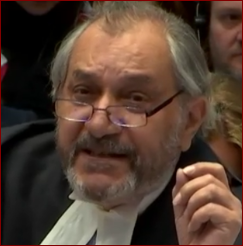
Early on Easter Saturday a team of police officers raided the home of the well-known lawyer Nikos Clerides in Nicosia, armed with a search warrant issued by a judge shortly after midnight on Good Friday to search his premises for material allegedly in his possession as the lawyer of the woman at the centre of the ’Sandy’ affair.
The ‘Sandy’ affair is the cause celebre in Cyprus that has shocked Cypriot society since late March after an investigative journalist, Makarios Drousiotis, published allegations by a woman known by the pseudonym ‘Sandy’ about her alleged rape when under age and corruption in high places based on texts and screen shots she claimed she handed to her lawyer when she consulted him professionally a few years ago.
The allegations are vigorously denied by all those against whom they have been made, and it looks as though the law enforcement agencies are proceeding on the basis that she has retracted them and admitted they are fake.
This article, however, is not at all concerned with the authenticity of the documents she provided to her lawyer, or the truth of any of the allegations she made. It is about the controversy surrounding the search warrant to access her lawyer’s personal computing devices (PCDs) from his home and office that contain client files protected by legal professional privilege.
Clerides’ premises were not raided as those of a suspect, but as those of someone who had been Sandy’s lawyer in search of material she gave him when she consulted him professionally that would have attracted legal privilege.
Nikos Clerides is a colleague, and it is important for me to declare an interest at the outset in line with the code of conduct of journalists. I could have chosen not to comment on the legal aspects of the search warrant, but as my articles are usually about the interface between law and society, I could not ignore the elephant in the room.
According to Cypriot case law, a judge hearing an application for a search warrant of a lawyer’s premises must subject it to rigorous and anxious scrutiny because lawyers are in possession of information and data from many clients all of which is legally privileged and beyond the reach of the state. At common law there is no balancing exercise between competing public interest considerations for the judge to perform – once material is privileged the public interest is to protect it from disclosure.
The judge who heard the application for the search warrant would presumably have first enquired what made the application so urgent it had to be heard in the early hours of Holy Saturday on the holiest weekend in the Greek Orthodox calendar.
I remember many years ago when I had to make an urgent application for an injunction to a high court judge in England at his home in the country over a weekend to stop the removal from the UK of a refugee early the next day.
The judge greeted me in a foul mood accompanied by a Doberman dog. The first thing he told me is “look here Riza you better have a good reason for disturbing me at home over the weekend.” I had a good reason and good grounds for the application, which he granted but made me draft the order as his dog loitered about.
On an application for a search warrant in England – and probably in Cyprus – the judge has to be satisfied by evidence on oath that there are reasonable grounds to believe that an offence has been committed; that the search is for material of substantial value in the investigation of the offence; that the material is likely to be relevant evidence in any trial for the alleged offence; and that it does not include items subject to legal privilege.
It is important to appreciate that despite its name legal privilege is not the right of lawyers – so it is not self-serving and we do not have to ‘kill all the lawyers’ (William Shakespeare’s Henry VI). Under English common law it is a substantive fundamental human right of every client that what he tells his lawyer and the advice he receives are sacrosanct and can never be used against him or her.
The rationale behind legal professional privilege is that in countries where the rule of law prevails, people are entitled to unimpeded access to lawyers to whom they can confide without withholding any facts to obtain advice about their legal rights and obligations.
People need legal advice and representation, and the law would indeed be an ass if it allowed the state or anyone else access to what people tell their lawyers when seeking and receiving legal advice.
The right to legal professional privilege is virtually unqualified with just a few exceptions, the most important of which is if legal advice is sought in furtherance of fraud or crime. Other than that all professional communications between client and lawyer are protected whether litigation is in prospect or not. It continues indefinitely beyond the relationship with the lawyer unless legal privilege is waived by the client whose decision whether to waive it or not cannot be challenged in the courts. If a client waives privilege, the police can in principle get a search warrant to access previously privileged material in the possession of a lawyer but there must be clear evidence of waiver for a lawyer to allow access or a judge to order it.
The safest way to ensure material covered by legal professional privilege is not accessed by law enforcement officers executing a search warrant of a lawyer’s premises is for them to be accompanied by an independent lawyer to sift through the contents of PCDs to ensure material subject to legal privilege is excluded from the search.
In England legal professional privilege is so precious that even in a case where the evidence sought could have exonerated a man of a charge of murder, the highest court in the land refused access to it on the ground it was privileged and the client refused to waive privilege.




Click here to change your cookie preferences