
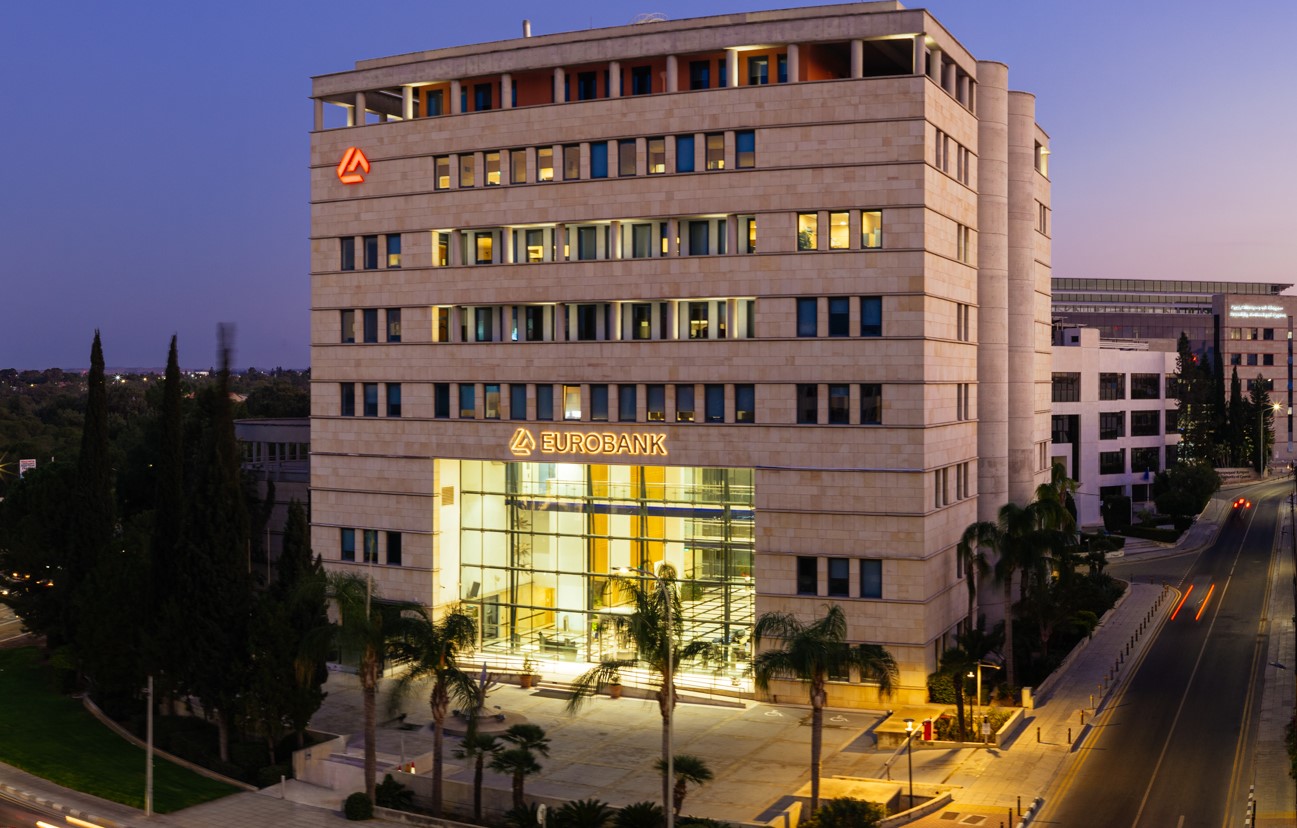
Bank reports resilient performance amid Gulf region tensions
Eurobank on Friday reported an adjusted net profit of €351 million for the first quarter of 2026, with the bank citing strong lending activity, resilient operating performance and continued growth across its core markets.
The group’s reported net profit reached €331 million, while earnings per share stood at €0.09 and the return on tangible book value reached 15.1 per cent.
“Despite a challenging environment, Eurobank continues its sustained solid performance and organic growth,” said chief executive officer Fokion Karavias.
“During the first quarter of 2026, credit expansion was strong across all our core markets, with organic loan growth totaling €1.1bn and the loan book growing by 10 per cent year-on-year,” he added.
The bank reported that organic loan growth amounted to €1.1 billion in the first quarter, representing an increase of 9.8 per cent year-on-year.
Eurobank added that managed funds increased by €0.3 billion during the quarter, rising by 25.9 per cent year-on-year to €10.2 billion.
The group stated that non-Greek operations contributed 47 per cent of adjusted net profit, underlining the importance of international operations, particularly Cyprus and Bulgaria, to the bank’s profitability.
“In Greece, corporate loans experienced significant growth, due to increased investments, while mortgages are gradually recovering,” Karavias said.
The chief executive also said that wealth management delivered strong results, with managed funds rising by 26 per cent year-on-year.
“Earnings per share reached 9 cents, with the non-Greek operations contributing around half of the group’s profits,” Karavias stated.
Eurobank explained that the global economy continues to face pressure from developments in the Gulf region, with growth forecasts already revised downward internationally and regionally.
“Though it is currently hard to accurately quantify, there is a broad expectation that growth prospects, both globally and in the region, will take a hit, with GDP estimates already revised downwards,” Karavias said.
However, the bank stressed that all of its core markets are still expected to outperform eurozone growth rates.
“For Greece and Cyprus in particular, entering this international crisis from a solid fiscal footing is a major advantage which should be safeguarded by remaining anchored to a prudent fiscal policy, while providing the necessary relief measures to vulnerable households and businesses,” Karavias said.
The chief executive added that the first quarter confirmed the group’s ability to sustain organic growth despite geopolitical volatility.
“Overall, the first quarter demonstrated robust top line performance and reaffirmed our ability to sustain organic growth,” Karavias said.
“As such, without underestimating the volatile geopolitical environment and its adverse impact on economic growth, we are on track to deliver our 2026 plan,” he added.
According to the financial results, net interest income increased by 4.0 per cent year-on-year to €664 million, although the net interest margin declined by 7 basis points to 2.46 per cent due mainly to lower European Central Bank rates.
The bank said the average ECB deposit facility rate stood at 200 basis points in the first quarter of 2026, compared with 279 basis points during the corresponding period of 2025.
Net fee and commission income rose by 19.9 per cent year-on-year to €203 million, supported primarily by lending activity, wealth management services and insurance income following the acquisition of ERB insurance subsidiaries in Cyprus during the second quarter of 2025.
Core income increased by 7.4 per cent year-on-year to €866 million, while total operating income rose by 6.1 per cent to €877 million.
What is more, operating expenses climbed by 8.5 per cent year-on-year to €330 million.
The cost-to-core income ratio reached 38.1 per cent, while the cost-to-total income ratio stood at 37.6 per cent during the quarter.
Eurobank reported that core pre-provision income rose by 6.6 per cent to €536 million, while total pre-provision income increased by 4.7 per cent to €547 million.
Loan loss provisions increased marginally by 0.3 per cent year-on-year to €76 million, corresponding to 55 basis points of average net loans.
The bank’s core operating profit before tax increased by 7.8 per cent year-on-year to €460 million.
The adjusted net profit contribution from non-Greek operations declined by 10.4 per cent year-on-year to €165 million.
Within international operations, Cyprus generated adjusted net profit of €103 million, representing a decrease of 14.7 per cent year-on-year, while Bulgaria posted adjusted net profit of €56 million, marking an increase of 2.2 per cent.
Eurobank said its non-performing exposure ratio stood at 2.6 per cent at March 31, 2026, while provisions coverage over non-performing exposures reached 94.1 per cent.
The group’s capital adequacy remained strong, with the total capital adequacy ratio reaching 20.4 per cent and the CET1 ratio standing at 15.4 per cent.
The bank also reported that tangible book value per share increased by 6.7 per cent year-on-year to €2.55.
Total assets amounted to €108 billion at March 31, 2026, including €62.3 billion in Greece, €28.7 billion in Cyprus, and €14 billion in Bulgaria.
Total gross loans reached €57.1 billion, of which €37.7 billion were in Greece, €9 billion in Cyprus, and €9.3 billion in Bulgaria.
At group level, business loans stood at €35.2 billion, mortgages at €13.1 billion, and consumer loans at €5 billion.
Customer deposits totalled €82.4 billion at the end of March 2026, down by €0.2 billion during the quarter.
Of these deposits, €45 billion were held in Greece, €23.8 billion in Cyprus, and €11.1 billion in Bulgaria.
Eurobank added that the loan-to-deposit ratio stood at 67.6 per cent, while the liquidity coverage ratio reached 165.3 per cent at March 31, 2026.
The bank further reported that private banking client assets and liabilities increased by 6.2 per cent year-on-year to €14.1 billion.





Click here to change your cookie preferences