
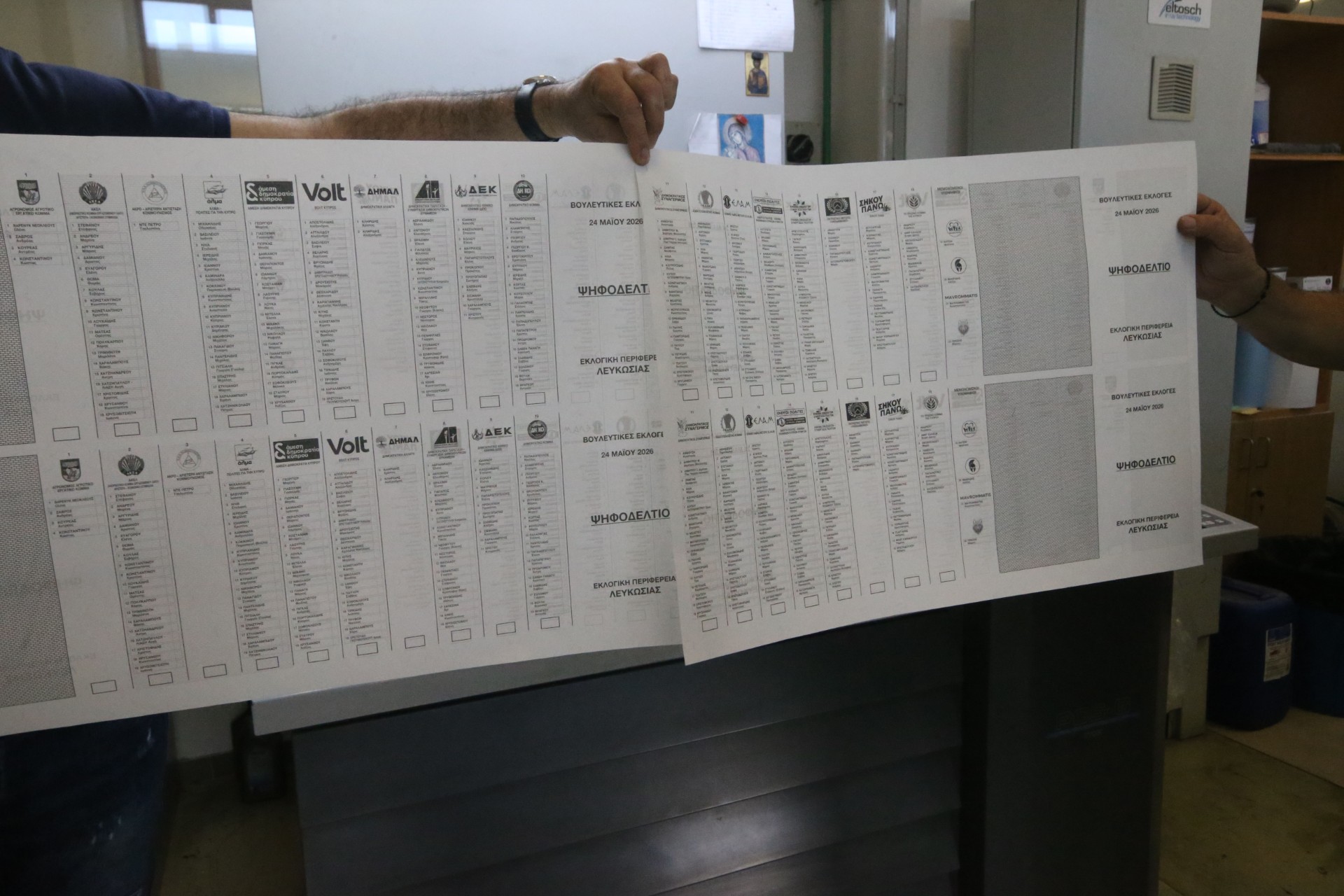
Over 750 enter parliamentary race representing 19 parties
On May 6, 753 people officially entered the election race hoping to secure one of the 56 seats in parliament for a five-year term.
Of the contestants, 744 are running with 19 political parties and nine are independent. Of the total, 520 candidates are men and 224 women.
In terms of the representatives of religious groups in parliament – who do not have voting rights on legislation – the Armenian and Latin representatives have already been declared without an opponent. For the Maronites, there are two and elections will go ahead.
What is so interesting in these elections is the record number of parties and candidates, with the latter up by 102 compared to the 2021 parliamentary elections, and the whole country is bracing for drastic changes.
Newcomers Alma, Volt and Direct Democracy are expected to tip the scales to the detriment of traditional polar parties Disy and Akel, while for others – such as Edek and Dipa – unprecedented ‘relegation’ is looking more likely than ever.
The hopefuls now have until May 22 to convince people to vote for them in the May 24 elections, with the day in between reserved for ‘radio silence’.
Many view the imminent changes as a sign of the times, while others put it down to a reaction against the establishment.
Political parties are still reeling from the shock of the European Parliament elections two years ago, when outsider Fidias Panayiotou, a young, enthusiastic youtuber, managed to finish third at 19.4 per cent with the only support being followers and a sunny disposition as his arsenal.
Two years into his MEP term, Panayiotou has set up Direct Democracy and is running with a 56-member team of candidates.
Alma of former auditor-general Odysseas Michaelides has also set its mind on entering parliament, as has Volt also with heavyweight names, including Alexanda Attalides and Makarios Drousiotis.
Direct Democracy is appealing to the younger generation, while Alma and Volt are waving the anti-corruption banner, with Volt’s Drousiotis having made headlines more than once by presenting evidence purportedly incriminating high-ranking officials.
Recent polls have shown that Disy and Akel remain first, albeit with a significantly lower percentage.
Nicosia has also lost one seat to Paphos, which makes it harder to hang on to the number of seats parties have taken for granted.
Nonetheless, when all else is said and done, the final word lies with the voters.
There are 568,587 registered in the electoral roll, including 859 Turkish Cypriots. Of the total, over 10,000 are new voters.
By district, there are 198,376 voters in Nicosia, 117,052 in Limassol, 116,345 in Famagusta, 60,561 in Larnaca, 47,429 in Paphos and 28,824 in Kyrenia. Voters enclaved in the north will be added to Famagusta and Kyrenia.
Voters will be requested to proceed to polling stations to vote for the party of their choice and a number of names, which differs by district.
Nicosia gets 19 seats, Limassol 12, Famagusta 11, Larnaca six, Paphos four and Kyrenia three.
Polling stations open at 7am on May 24 and close at 6pm with a one-hour break at noon.
Votes are counted at polling stations and results are expected to start coming through soon after voting is concluded. The new MPs and representatives of religious groups will be pronounced on May 25.
There are 1,200 polling stations, with a maximum of 600 voters each. These polling stations will be staffed by around 5,300 employees and 1,200 police officers.
Polling stations will also be operating in London, Athens, Salonica and Brussels.
The online Where Do I Vote service will be activated on May 15.
HOW MPS GET SEATS
The current electoral system provides for the allocation of parliamentary seats at the first distribution on a simple pro rata basis, while in the two subsequent phases of the second allocation, a reinforced proportional representation system is applied, with thresholds of 3.6 per cent and 7.2 per cent, respectively.
In order for a party to be eligible to participate in the second allocation, it must obtain 3.6 per cent of the valid votes. Voting is, of course, secret.
HOW TO VOTE
Ballot papers are printed in different colours for each electoral constituency to avoid confusion among voters and to facilitate the work of the responsible officials during the voting process, particularly with regard to the sorting and counting of the votes.
Nicosia’s ballot paper is white, Limassol yellow, Famagusta blue, Larnaca pink, Paphos green and Kyrenia orange.
At the bottom of each ballot paper, beneath the names of the candidates, is a box where the voters must mark their party of preference.
Only one can be chosen and voters may not vote for candidates from different party lists. They may vote for either a single party or a single independent candidate.
If the voters decide to vote for a party list, they may choose their candidates of preference, however this is not compulsory.
Preference crosses can be up to five for Nicosia, three for Limassol, three for Famagusta, two for Larnaca, two for Paphos and one for Kyrenia.
Voters should keep in mind that the leader of a political party does not require a preference cross.
Individuals with disabilities or blindness can request assistance from the presiding officer of the polling station. Special arrangements can be made for people requiring wheelchairs after prior notification sent to the interior ministry.
Ballot papers are folded in the polling booth and then deposited in the ballot box.
A petition disputing the validity of the elections may be filed within a period of two months from the date of publication of the final election results in the Official Gazette of the Republic.
WHAT NOT TO DO
It is against the law to unlawfully, directly or indirectly, influence or compel a person to vote or abstain from voting. It is also prohibited to supply or pay for food or drink with corrupt intent, and publish fake news in order to promote a candidate.
On the eve of polling day and polling day itself it is forbidden to organise or take part in any public meeting directly or indirectly related to the elections, as is publishing news or opinion poll results, and displaying posters or other content.
CANDIDATE OBLIGATIONS
Every candidate is legally required to appoint an election agent and to submit a declaration of the amounts spent during the pre‑election period for the purposes of their campaign. The expenditure limit for each candidate is set by law at €25,000, plus €5,000 for personal expenses. Exceeding the statutory amounts leads to a fine and may result in imprisonment.
To be recognised as a political party and operate lawfully, a party must be registered. Political parties must submit detailed statements of revenues and expenditures for election campaigns, submitting annual audited financial statements and keeping and submitting a special register of contributions.
All entities providing advertising services during the pre‑election period to candidates or on their behalf are required to submit to the auditor-general summary statements of the services provided to each candidate, within one month from election day.
WHO CAN BE ELECTED
Citizens of the Republic of Cyprus have the right to stand for election to parliament provided they have reached the age of 21, have not been convicted of an offence of dishonesty or moral turpitude, have not been deprived of the right to be elected due to any electoral offence and are not suffering from any mental illness preventing them performing their duties as MP.
WHO CAN VOTE
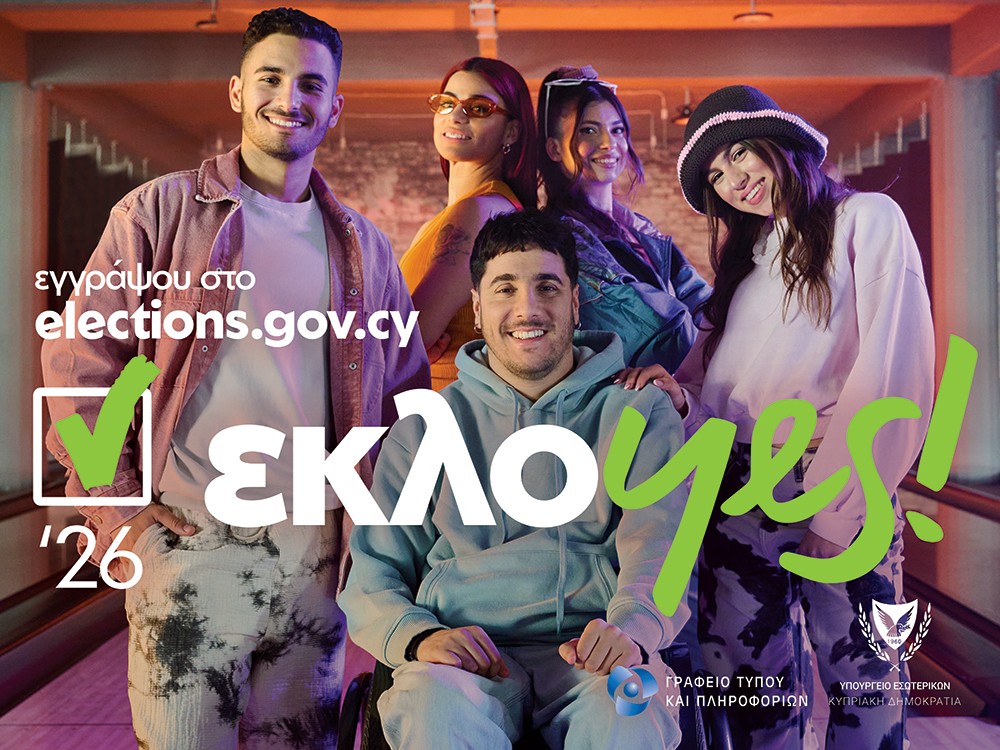
Every citizen of the Republic of Cyprus who has reached the age of 18 on or before the day of the elections, and who meets the residence qualifications provided for in Cyprus’ electoral law, is entitled to vote.
Any person who possesses the electoral qualifications is required to submit an application for registration on the electoral roll within 30 days from the date on which he/she acquires such qualifications, for the issuance of a voter ID card, and in any event no later than the final day for the compilation of the supplementary electoral roll.
For the purposes of the 2026 Parliamentary Elections, the deadline for submitting applications for registration on the electoral roll was April 2.
Citizens of the Republic of Cyprus who are enclaved in the north, in the areas of Karpasia and Kyrenia, may exercise their right to vote at polling stations in the south by presenting identification issued by the Republic of Cyprus bearing their photograph.





Click here to change your cookie preferences