
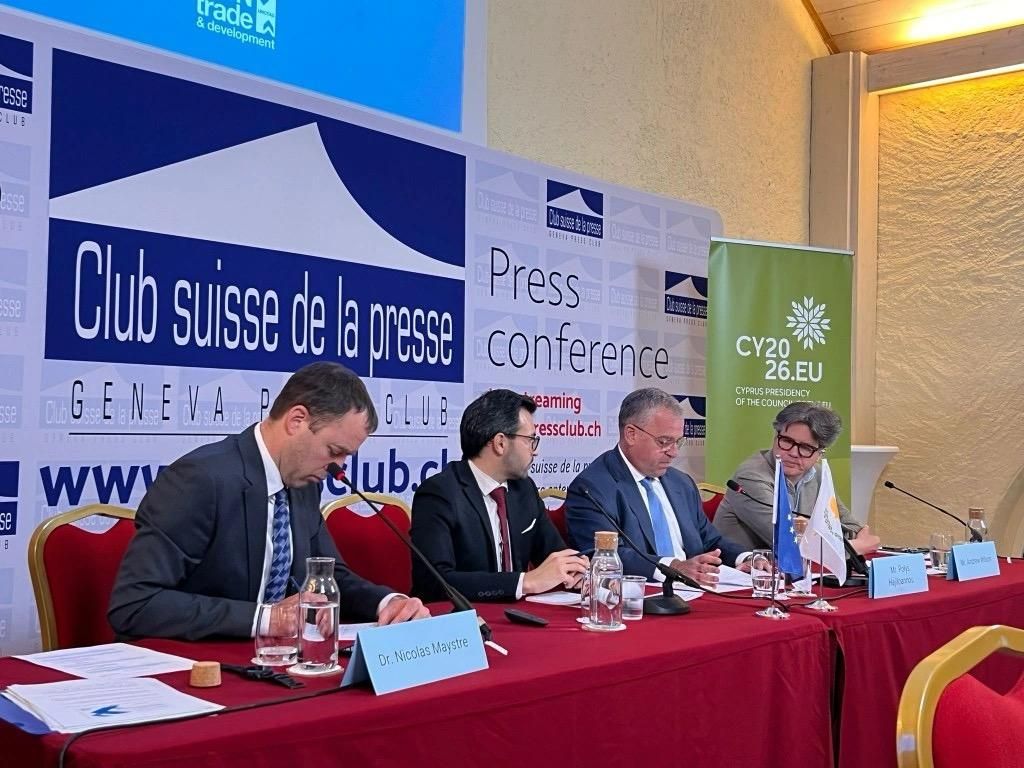
Shipping must be treated as one of the foundations of Europe’s resilience agenda, Safe Bulkers CEO Polys Hajioannou said during the EU Trade Policy Retreat in Geneva, held in the context of Cyprus’ Presidency of the Council of the European Union.
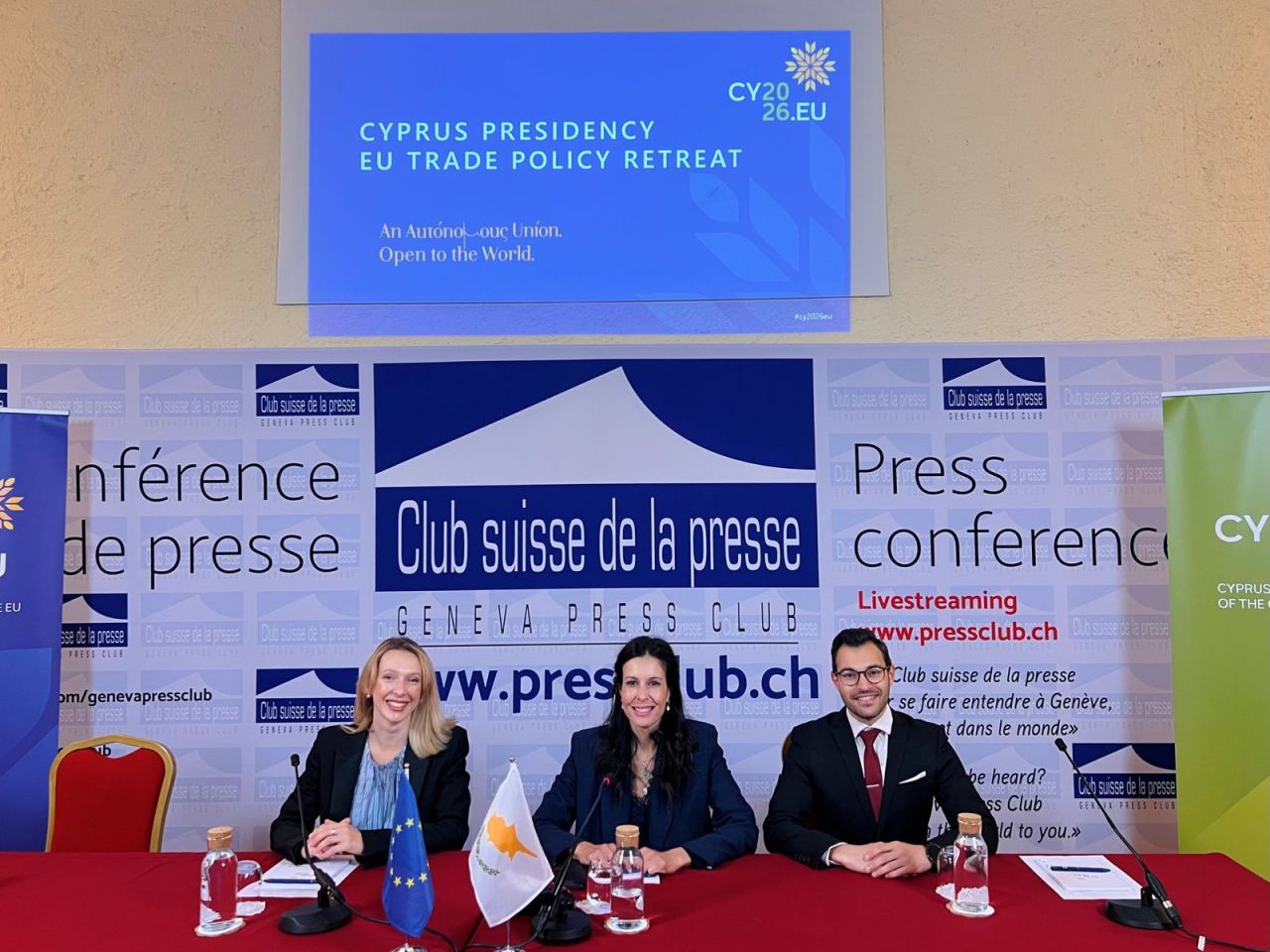
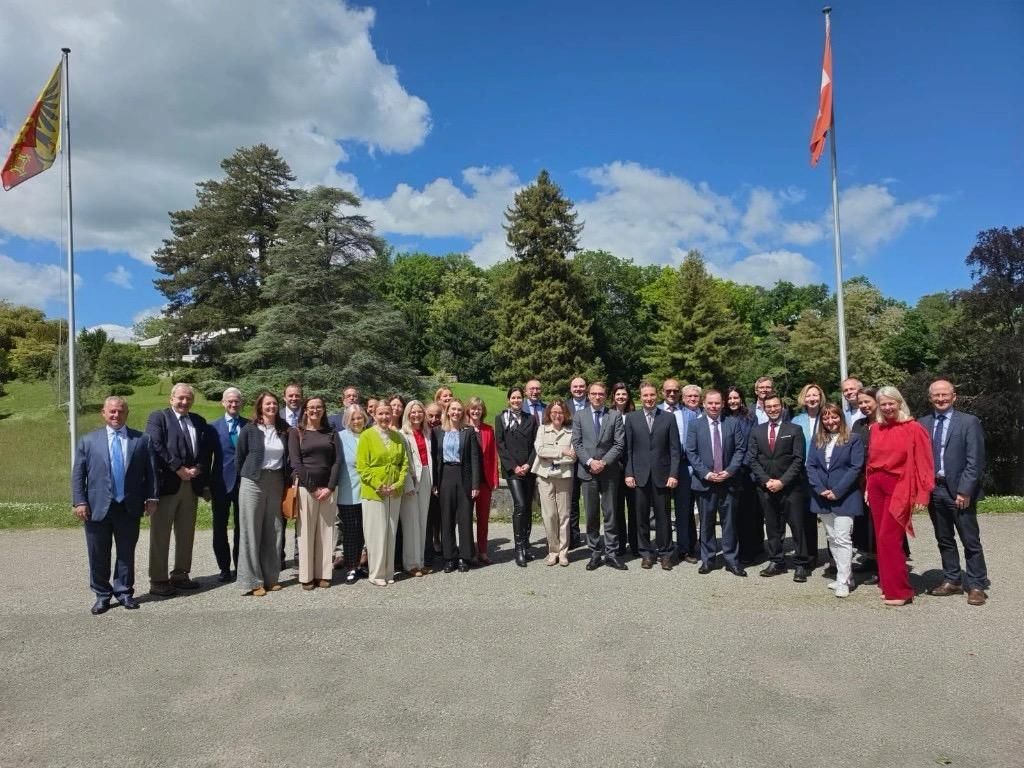
The retreat was organised by the Permanent Mission of the Republic of Cyprus to the United Nations (UN) and the World Trade Organisation (WTO), bringing together officials, academics and industry representatives to discuss the future of global trade, supply chains and Europe’s strategic role in an increasingly fragmented world.
Hajioannou, who is also president of the Cyprus Union of Shipowners (CUS), took part in the second working session, which focused on resilient and open supply chains in a fragmenting world.
The session also included Andrew Wilson, Deputy Secretary General for Policy at the International Chamber of Commerce, and Nicolas Maystre, Senior Economic Affairs Officer at UNCTAD’s Macroeconomic and Development Policies Branch.
The first working session focused on the future of the World Trade Organization after MC14, including reform, fragmentation and the rise of plurilateralism.
It featured contributions from Maria Martin-Prat, Ambassador of the European Union to the WTO, and Petros C. Mavroidis, Edwin B. Parker Professor of Foreign and Comparative Law at Columbia Law School.
Speaking during the retreat, Hajioannou said Europe is being asked to rethink “how it trades, secures supply chains, competes, and decarbonises, all at once”.
He said that, at a time of “unprecedented disruption”, resilience has become both the organising principle of global trade and a key driver of the European Union’s future choices.
However, he stressed that resilience is not built only through government frameworks, but also “on the bridge of every ship that keeps moving when the world becomes harder to navigate”.
Referring to Europe’s current priorities, Hajioannou said the EU is rightly focusing on strategic autonomy, reducing dependencies, protecting the single market, and advancing the green and digital transitions.
“These are the right priorities, and the Cyprus Presidency has rightly placed them at the heart of its programme,” he said.
But he added that these ambitions “need ships to be delivered”.
“They need ships to carry European energy, European food, European raw materials, European exports,” Hajioannou said.
“Without ships, strategic autonomy risks remaining an ambition. Shipping is not a side issue to Europe’s resilience agenda. Shipping is one of its foundations,” he added.
His remarks linked closely with the Cyprus Presidency’s motto, “An Autonomous Union, Open to the World”, which he said also reflects the role of shipping.
Autonomy, he said, means that Europe must be able to move its own goods, secure its supply chains and protect its strategic interests.
At the same time, openness remains essential, because shipping “is, and must remain, a global industry built on free trade, common rules, and the belief that the seas connect us more than they divide us”.
Hajioannou said this combination of autonomy, openness and resilience makes one thing clear.
“Healthy oceans, safe and motivated crews, and open seas are essential,” he said.“This is the shipping Europe needs, and the shipping we are committed to deliver,” Hajioannou concluded.



Click here to change your cookie preferences