
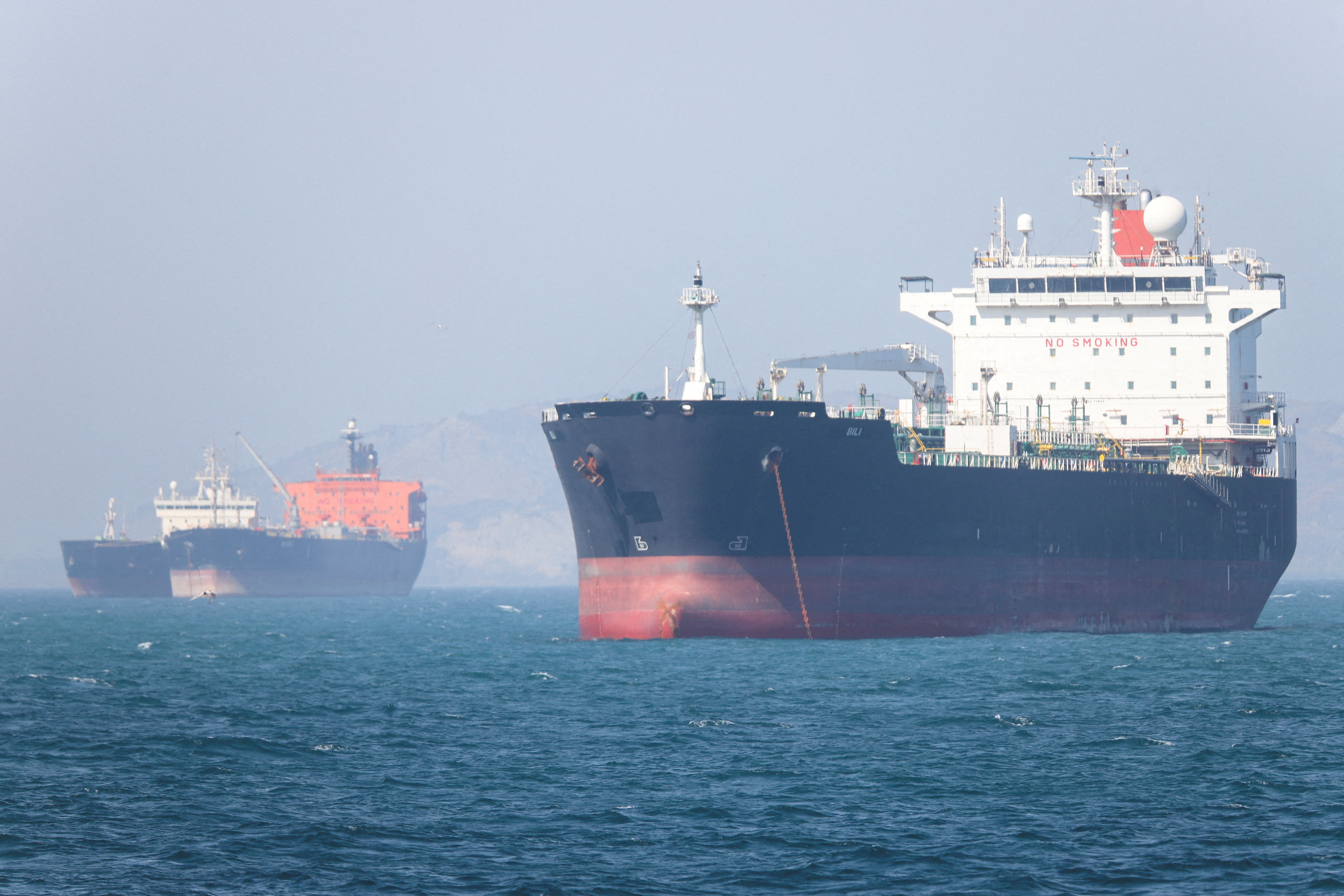
Global shipping is facing a fresh security threat off Somalia, as piracy re-emerges at a time when vessels are already being diverted away from the Red Sea and the Strait of Hormuz remains largely closed to commercial traffic, according to Deutsche Welle.
The resurgence comes after two difficult months for the industry, with renewed fears over attacks on vessels in the Red Sea and escalating tensions involving the US, Israel and Iran adding further pressure to key maritime routes.
Even before the latest crisis, around half of vessels travelling from Asia and the Gulf to Europe were already avoiding the Red Sea and the Suez Canal because of earlier attacks by the Iran-backed Houthis.
As a result, major shipping companies have been taking the longer route around southern Africa, avoiding the Bab el-Mandeb Strait, the narrow chokepoint between the Red Sea and the Gulf of Aden.
However, that diversion adds two to three weeks to voyages and thousands of nautical miles, while also bringing ships closer to Somalia’s coastline, the same waters where Somali pirates carried out a wave of hijackings that peaked in 2011.
According to Deutsche Welle, piracy is now making a troubling return, with three ships hijacked off Somalia and nearby Yemen in recent weeks. As of May 8, 2026, the Honour 25 and Eureka oil tankers, as well as the cargo ship Sward, remained under pirate control.
Experts believe organised crime groups in Somalia are exploiting the wider regional turmoil, as international naval patrols have been stretched by developments around Hormuz and the Red Sea.
Tim Walker, senior researcher for transnational threats and organised crime at South Africa’s Institute for Security Studies, told Deutsche Welle that pirates now see fewer deterrents along Somalia’s 3,300-kilometre coastline, the longest in continental Africa.
“Some groups, organized by piracy kingpins, are now looking to seize vessels and hold them for ransom, along with the crew on board, sometimes demanding a high ransom for their safe return,” Walker said.
At the same time, the European Union’s Operation Atalanta, the naval mission tasked with protecting shipping off Somalia, continues to operate in the western Indian Ocean alongside the multinational Combined Task Force 151.
However, the mission is not an escort force and is responsible for patrolling a vast maritime area, making full coverage difficult at a time of rising regional risk.
According to Lloyd’s List Intelligence, at least two active pirate groups are operating mainly from Puntland, the semi-autonomous region in northeastern Somalia.
These groups appear to be well-resourced, having seized large traditional vessels known as dhows, which are normally used for fishing and local trade.
The pirates are reportedly using these vessels as mother ships, allowing them to stay at sea for weeks and extend their range before launching attacks on commercial ships.
“Some of the latest hijackings involved large dhows, which need navigation kits, weapons and boarding equipment,” Troels Burchall Henningsen, assistant professor at Denmark’s Institute for Strategy and War Studies, told Deutsche Welle.
“It’s a large operation which requires investment,” he added.
Walker also pointed to the increase in traffic around the region, saying that more vessels are now passing through the area while some are failing to follow the strongest security measures.
“There are a lot more ships in the area and some aren’t adopting the best security measures,” he said, referring to one tanker sailing to Mogadishu that was hijacked close to the Somali coast, where it was most vulnerable.
The return of piracy is adding another layer of concern for shipping companies already facing higher costs due to Middle East tensions.
Insurance premiums have risen, while longer voyages around Africa are adding around $1 million in fuel costs per trip and pushing freight rates higher.
Industry leaders have warned that any major resurgence in piracy could push costs up further and deepen disruption across global trade.
During the previous piracy crisis in 2011, the economic cost of hijackings was estimated at around $7 billion a year, according to the Sasakawa Peace Foundation.
That figure included military operations, rerouting, faster sailing speeds, higher fuel use, security equipment and onboard guards.
By contrast, ransom payments accounted for only a small share of the total cost, at nearly $160 million, the think tank calculated.
For Cyprus, the renewed threat is not remote. The island remains one of Europe’s most important shipping centres, with the Shipping Deputy Ministry saying Cyprus has the 11th largest fleet globally and the third largest fleet in Europe.
The Cyprus Shipping Chamber (CSC) also says that approximately 4 per cent of the world’s fleet is managed from Cyprus, emphasising the island’s exposure to any renewed disruption across key maritime routes.
This means that a wider return of piracy off Somalia would be directly relevant to Cyprus’ shipping cluster, particularly as more vessels are pushed towards the longer route around Africa.
Cyprus also has direct experience in regulating security measures for vessels operating in high-risk areas. UN experts have described the Republic of Cyprus as one of the “exemplary flag States worldwide” for its regulation of private maritime security companies.
They said Cyprus’ commitment to safety and compliance in the use of armed guards on ships in high-risk areas had been proven.
According to the UN experts, only 12 companies were approved by the Cypriot government to provide private armed security personnel on board ships, while they also praised the Shipping Deputy Ministry’s vetting and due diligence process.
At the same time, the Deputy Ministry of Shipping maintains specific rules for the armed and unarmed protection of Cyprus-flagged vessels, including provisions linked to high-risk areas and ship protection measures.
Moreover, Maritime Cyprus reported that the Cyprus Flag Administration had updated its list of approved private ship security contractors, in line with the Protection of Cyprus Ships Against Acts of Piracy and Other Unlawful Acts Law of 2012.
The latest piracy data also shows why the issue matters for Cyprus. The ICC International Maritime Bureau’s January-March 2026 report recorded 16 piracy and armed robbery incidents in the first quarter of the year, including 14 vessels boarded, one hijacked and one attempted incident.
The same report also warned that Somali pirates retain the capability to target vessels far from the Somali coast and urged ships to follow recommended security practices.
Meanwhile, Deutsche Welle reported that the resurgence may also be linked to cuts in development funding to Somalia.
For years, the US supported development projects in coastal communities to reduce poverty and discourage young men from joining pirate groups.
Under the current Trump administration, however, nearly all non-security development aid has been suspended, with Washington focusing instead on direct counter-terrorism operations against the Islamist militant group al-Shabab.
“When you reduce those resources, the intelligence network and maritime patrols don’t have the same capability to work from,” Henningsen said.
Maritime organisations have advised shipping companies to avoid Somali territorial waters, including ports, while the use of armed guards on board remains one of the most effective deterrents.
“There has never been a successful hijacking of a ship [off Somalia] with armed guards on board,” Henningsen concluded.





Click here to change your cookie preferences