
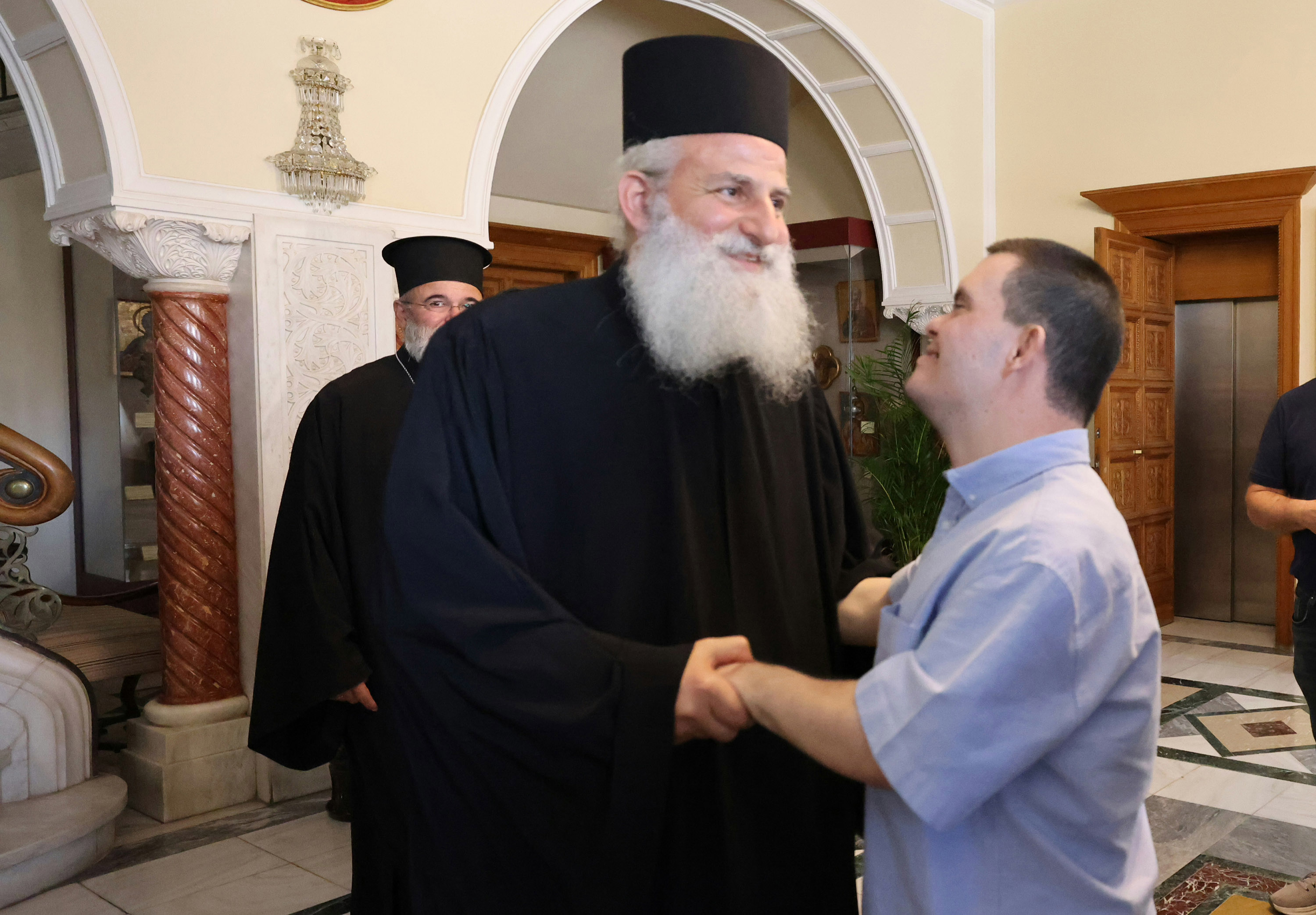
Archimandrite Gregorios Ioannides was on Tuesday selected as the new bishop of Paphos by the Holy Synod of the Church of Cyprus.
The vote came after the Holy Synod earlier in the day finalised the list of candidates who had expressed interest for the position which had been vacant since May 2025 after former bishop Tychikos was removed from office, with Archbishop Georgios serving as caretaker ever since.
The election process was conducted via secret ballot by the 16 synod members based on the provisions of the new church statute.
Eligible for the position of the Paphos bishop are celibate clergy including deacons, as well as monks with a degree from a recognised Orthodox theological school and ten years of ministry in the capacity of clergy or a monastery who are aged at least 35.
Reports said Gregorios garnered 11 votes, while another candidate received four.
Speaking after his election, the new Paphos bishop expressed gratitude, saying it was a great honour but also a burden of responsibility.
“I thank God who today has bestowed on me such an honour. In the Church, we are all ministers, and our mission is to minister to the flock.”
Asked whether he would seek a meeting with his predecessor Tychikos, Gregorios said the doors of the bishopric would be “open to everyone”.
Institutionally, whoever serves as Paphos bishop also acts as caretaker for the archbishopric whenever the archbishop is incapacitated.
The formal announcement of Gregorios as new Paphos bishop will take place on June 10. His ordainment and enthronement will take place on June 11.
Gregorios is associate professor at the Church of Cyprus School of Theology.
He holds a post-graduate degree, and specialises in liturgics – the academic discipline and practical art dedicated to the study of formal public worship, rites, rituals and religious practices.
The Paphos bishopric had effectively remained vacant since May 2025, when the Holy Synod voted to depose Tychikos over ecclesiastical disputes and protocol breaches. Tychikos was subsequently suspended by the Synod.
His removal sparked massive fallout. His legal team argued that the decision was driven by conspiracies related to the financial administration of the bishopric, while the Church cited unacceptable breaches and a physical altercation.



Click here to change your cookie preferences