
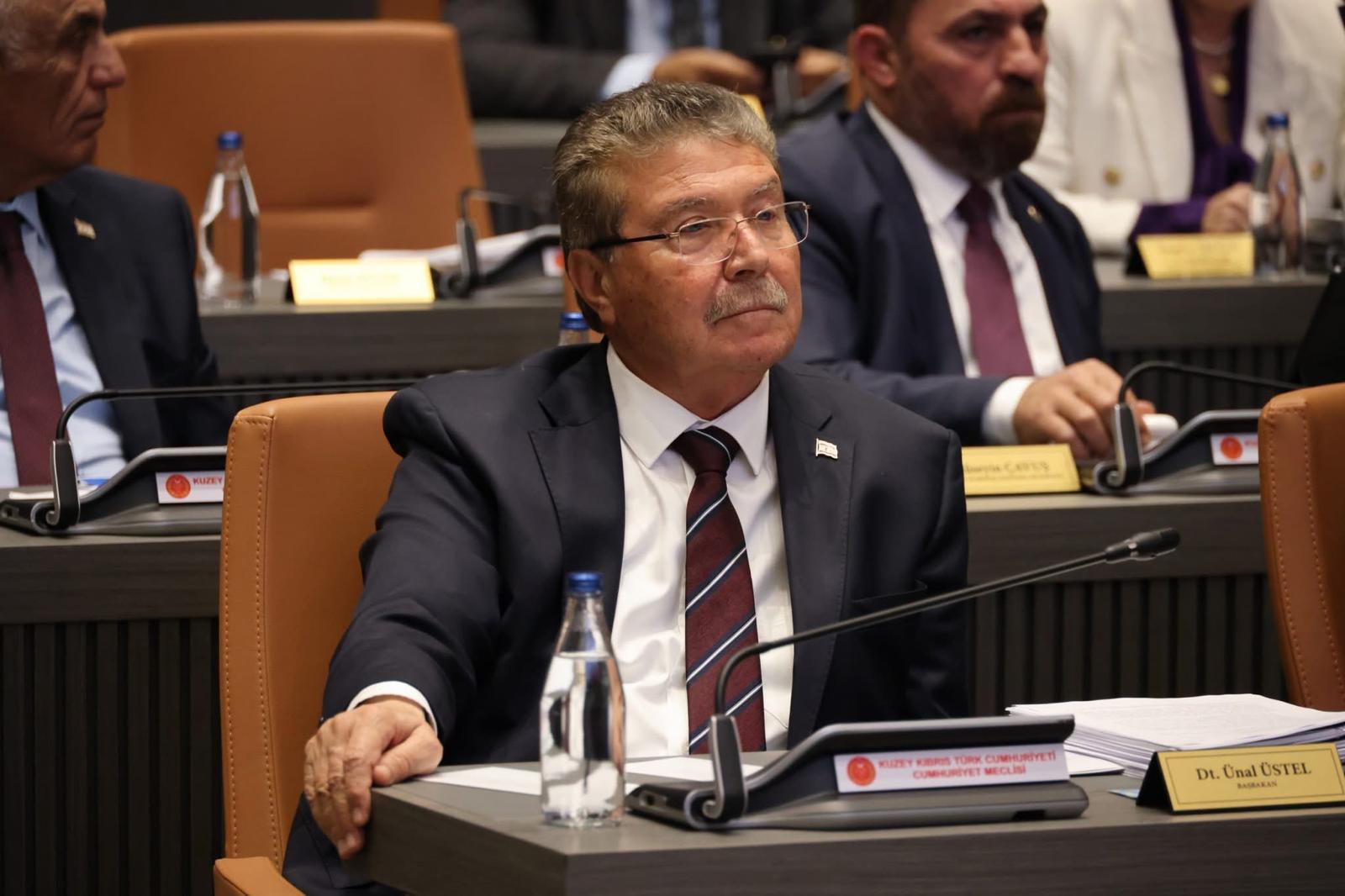
The Turkish Cypriot legislature late on Monday night voted to defy two vetoes exercised by Turkish Cypriot leader Tufan Erhurman, repassing two laws concerning the development of forest land in the Karpas peninsula and the criminalisation of the naming of high-profile individuals who appear in court accused of crimes.
Erhurman had vetoed both laws after they had been passed by the legislature earlier in the year, with the legislature first moving to reestablish the law regarding development in the Karpas peninsula.
The legislature had in March allocated 3,500 donums or 4.68 square kilometres of forest land to the Istanbul Technical University, but the plans had drawn fierce criticism from the opposition, given that the amount of land allocated had been much smaller in earlier drafts of the law.
Initially, it had been believed that the land would be used to host a Cyprus-based campus for the university, similar to that of Ankara’s Middle East Technical University in the village of Kapouti, near Morphou.
However, after the plans were passed by the legislature, ‘prime minister’ Unal Ustel said that the matter of the land’s allocation is related to “national security and Turkey’s strategic use for military purposes”.
Now, it appears that a proportion of the land allocated may be used to construct a factory for parts for unmanned combat aerial vehicles, better known as combat drones, after Haluk Bayraktar, the general manager of defence contractor Baykar, said earlier this month that he intends for his company to begin constructing drones in Cyprus.
Baykar produces the Bayraktar range of drones. The company’s chief technology officer is Selcuk Bayraktar, Haluk Bayraktar’s brother and Turkish President Recep Tayyip Erdogan’s son-in-law.
The law passed by the legislature on Monday night almost was word-for-word the same as the law passed in March, with the opposition remaining less than pleased with the amount of land allocated.
In response to this, ‘education minister’ Nazim Cavusoglu urged his fellow legislators to think past the dimensions of the land to be allocated.
“The issue to be discussed is not the size of the land, but why the project was not implemented 20 years ago. The Istanbul Technical University will contribute to the economy and the region,” he said.
Opposition party the CTP’s Devrim Barcin, however, accused the ruling coalition of disrespecting Erhurman and his office in attempting to repass the bill without any major changes.
The law was passed with the votes of 26 members of the ruling coalition, with 14 members of the opposition voting against.
Next on the order paper was a law which criminalises those, including journalists, who take and publish photographs of suspects in and around courtrooms, or who publish the names of defendants, in the media or on social media.
Initially, violators were set to be subject to maximum penalties of three months in prison, though this was on Monday night downgraded to a fine amounting to four times the monthly minimum wage. At present, the north’s monthly minimum wage is 60,618TL (€1,134), with the fine as such set, for now, at 243,272TL (€4,553)
‘Prime minister’ Unal Ustel addressed the legislature to defend the law, which had been vetoed earlier this month, saying that “whatever laws we have written, we have written with the industry and our legal experts”, and that “we did not do this on our own”.
Asked by the CTP’s Dogus Derya whether he had collaborated with journalists’ unions regarding the law at hand, he said, “shut up”.
He went on to say that “I believe the freedom of the press in this country is unparalleled anywhere else in the world”. The north is ranked 82nd out of 180 jurisdictions in reporters without borders’ world press freedom index.
CTP leader Sila Usar Incirli expressed her distaste for the bill, saying that “the public has told you that this threatens press freedom”, and that “while we should all be shouting at the top of our lungs that journalism is not a crime, you want the microphones to be death, the cameras to be blind, and the pens to be broken”.
Like the first law, it was passed with the votes of members of the ruling coalition, with opposition members voting against it.
Erhurman does not have the power to veto the laws for a second time, but can refer them to the judiciary if he believes them to run contrary to the ‘TRNC’s’ constitution.




Click here to change your cookie preferences