
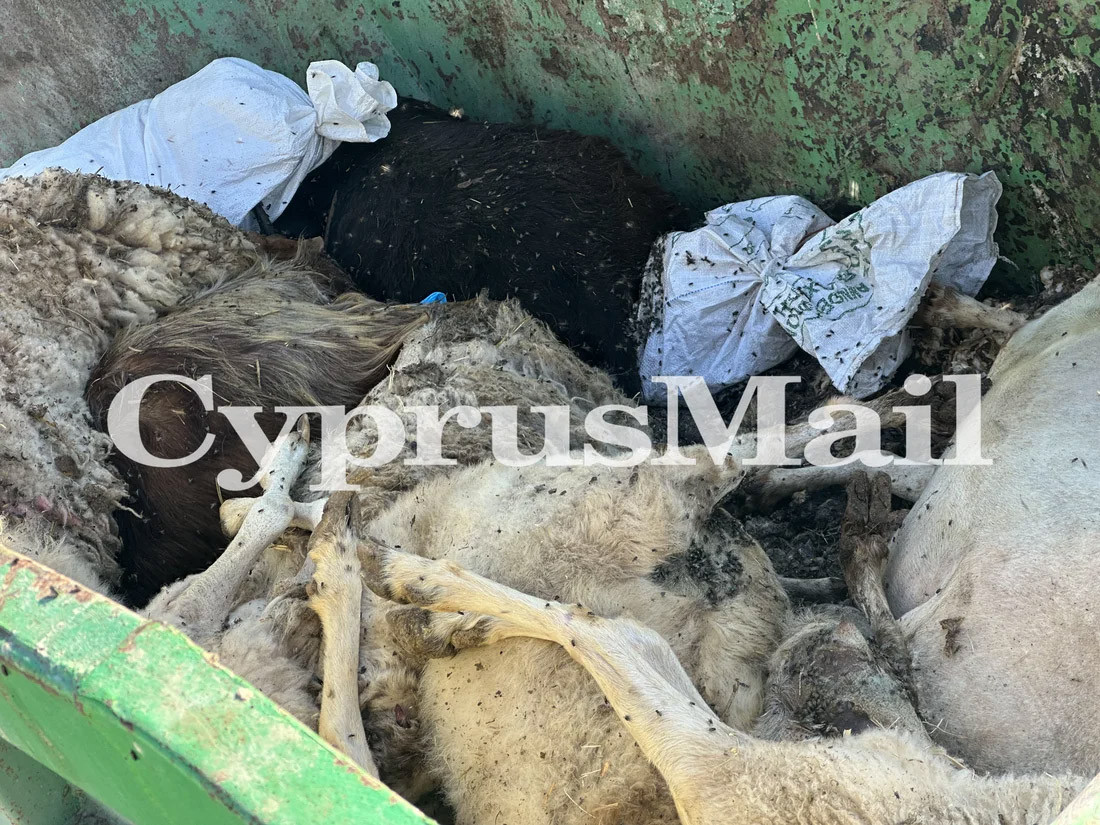
Complaints have been raised by residents in Larnaca over the burial of livestock culled as part of efforts to contain foot and mouth disease, with concerns focusing on the handling of carcasses and the implementation of sanitary protocols at disposal sites.
Local reports allege that dead animals had remained exposed in an open trench since last weekend and had not been buried in accordance with required procedures.
Residents claimed the carcasses had been “simply thrown” into the ditch and warned that strong odours were already developing, expressing concern that conditions could deteriorate further as temperatures increase.
In response, the Veterinary Services rejected claims that protocols had been ignored, insisting that all required measures were followed during the most recent culling and burial operations carried out in the district.
In a statement issued on Thursday, the Veterinary Services said the burial site had been selected in consultation with the relevant authorities, including the Environment department, the Water Development Department (WDD) and the geological survey service.
Officials said the animals were placed in a trench following the necessary assessments and that the carcasses were covered in accordance with established sanitary requirements.
The services stated that the burial area is located away from residential communities and livestock units and has been subject to regular inspections since the animals were interred.
According to officials, an on-site inspection subsequently found that recent heavy rainfall had caused erosion of clay covering parts of the burial site.
“Instructions were immediately given to place additional clay on the burial site,” the Veterinary Services insisted, adding that all animal burial locations in both the Larnaca and Nicosia districts are continuously monitored and corrective measures are taken whenever required.
The latest complaints come amid wider scrutiny of how carcasses from infected livestock are being managed during the ongoing outbreak.
Earlier this month, concerns were also raised in Athienou after multiple dead sheep were photographed in an open skip used as part of the disposal process.
At the time, livestock representatives said culled animals were being collected from designated points before being transferred for incineration yet acknowledged that delays had occasionally resulted in carcasses remaining at collection sites for longer than intended.
Farmers also reported instances where dead animals had been found outside containers.
Authorities have maintained that disposal procedures are tightly regulated and designed to prevent environmental contamination and the further spread of disease.





Click here to change your cookie preferences