
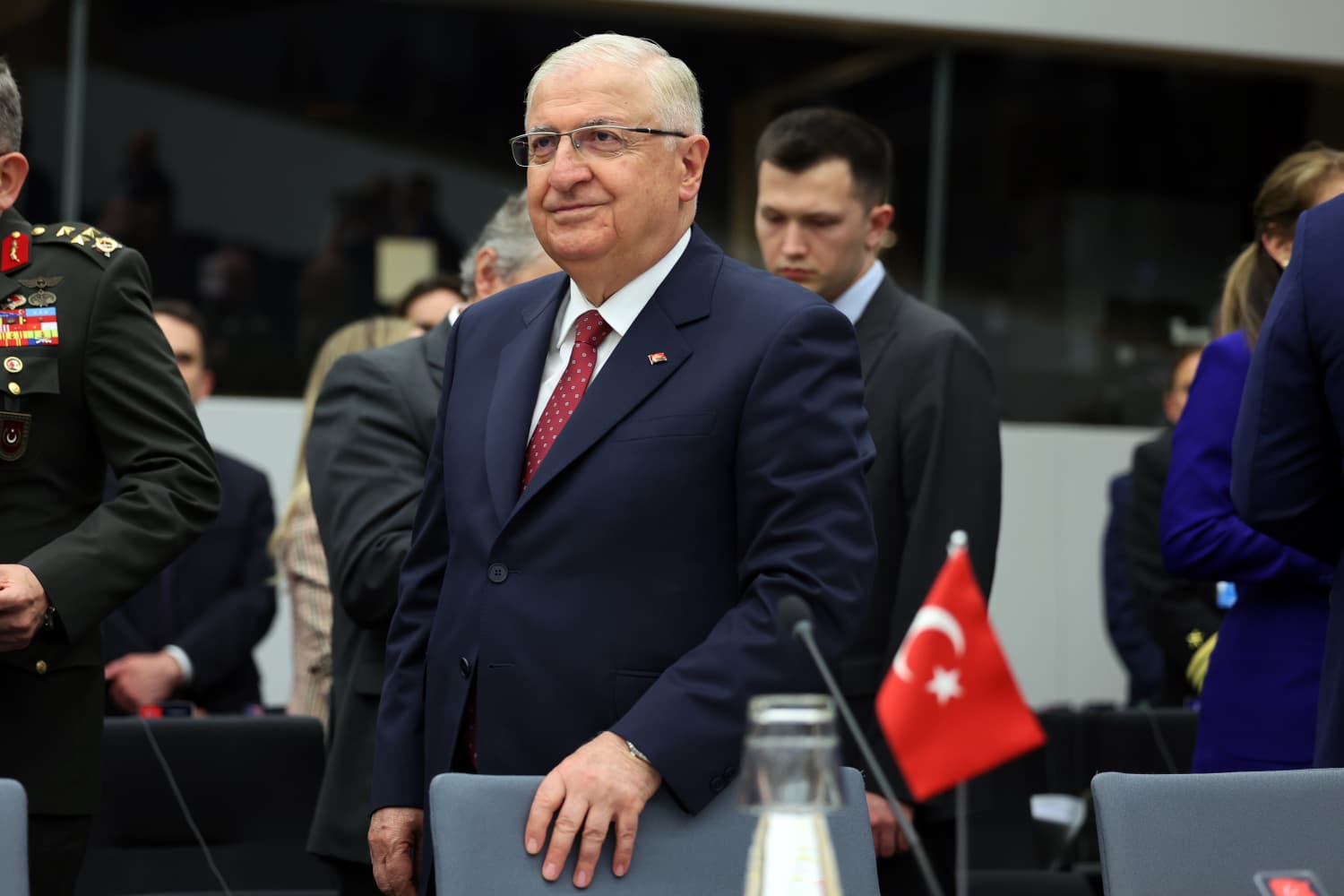
The signing of a status of forces agreement between the Republic of Cyprus and France, which will, among other things, allow France to station troops on the island violates international law, Turkish Defence Minister Yasar Guler said on Friday.
“The agreement signed between France, which does not have guarantor status, and the Greek Cypriot administration is, in fact, an initiative which lacks legitimacy, disrupts delicate balances, and violates international law,” he told reporters after returning from the week’s Nato defence ministers’ summit in Brussels.
He said that it is “of utmost importance” that “actors responsible for generating security refrain from steps which will deepen regional tensions”.
“They must prioritise dialogue, cooperation, and a shared understanding of security. In this context, we are closely following some recent military cooperation initiatives in the eastern Mediterranean and some developments which could affect the regional security equation,” he said.
He warned that if deals such as that signed by France and the Republic of Cyprus continue to be signed and honours, they may present “the risk that approaches could draw certain actors into conflicts and crises”.
“Instead of enhancing regional security, [they] could harm the security of the people in the region in the long run,” he added.
He then stressed that Turkey will “continue to fulfil its rights and responsibilities as a guarantor power [of Cyprus] on the legitimate basis which stems from international law”.
“The security, peace, and wellbeing of the Turkish Cypriots are of vital importance to us … I would like to reiterate that Turkey is a party to peace, stability and constructive dialogue in the eastern Mediterranean,” he said.
However, he added, “we also have the full will to fulfil our responsibilities as a guarantor power in the face of developments which threaten the security of the Turkish Republic of Northern Cyprus”.
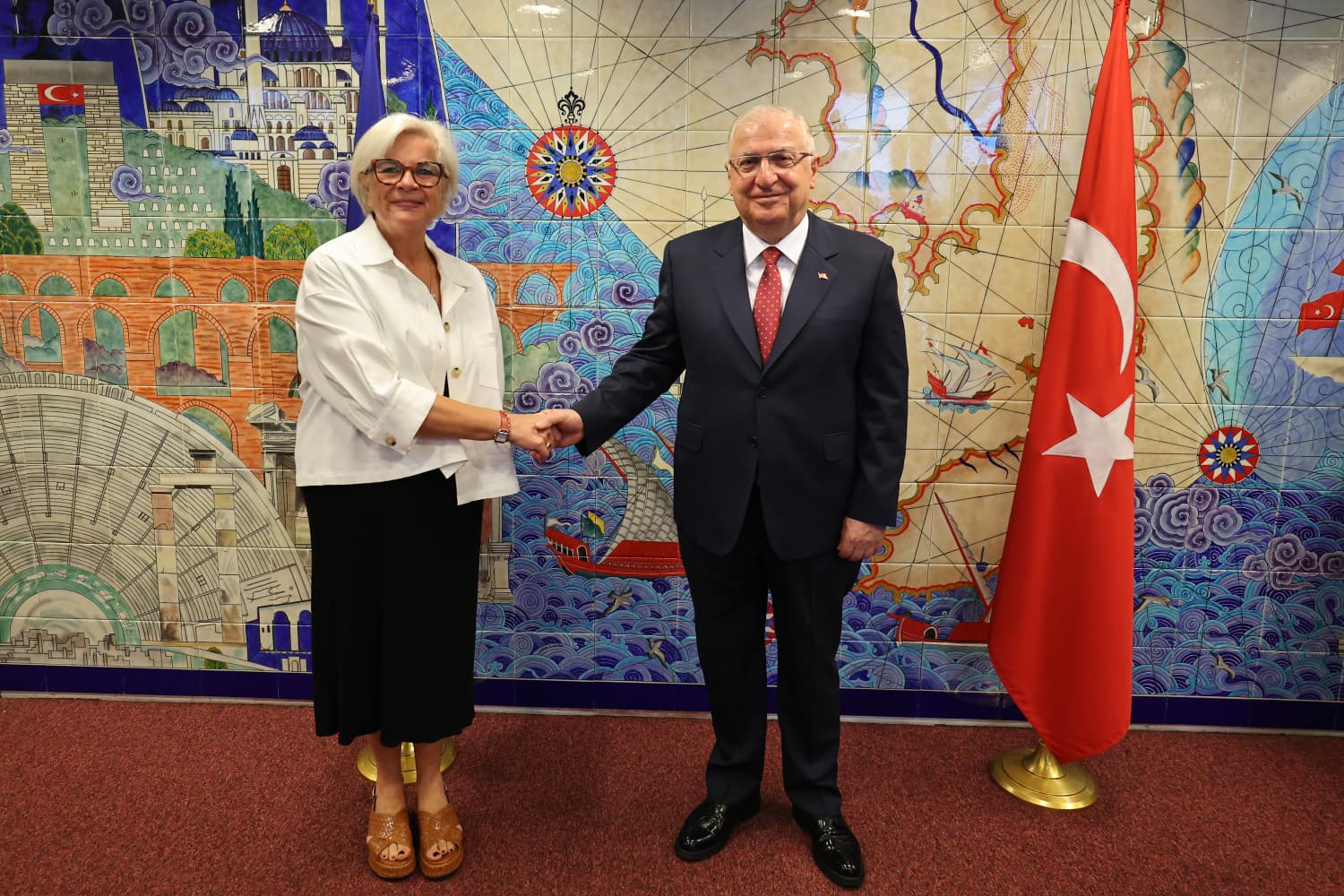
The agreement was signed by French Armed Forces Minister Catherine Vautrin and Cypriot Defence Minister Vasilis Palmas in Nicosia earlier this month. Guler held a meeting of his own with Vautrin in Brussels on Thursday, though no statements were made after that meeting.
Plans for a status of forces agreement had been announced by Cypriot government spokesman Konstantinos Letymbiotis when French President Emmanuel Macron most recently visited the island in April.
President Nikos Christodoulides had said at the time that the agreement will “strengthen humanitarian military cooperation and joint action at a regional level”, and “provide for the presence of French forces on Cypriot territory for humanitarian purposes”.
Macron had spoken at length on the matter of defence during his visit to Cyprus, saying that the mass deployment of European military hardware in and around Cyprus after the island was hit by an Iranian-made drone in March, “constituted a reaffirmation of our determination to secure Europe’s space”.
“I said it in a simple way on March 9, that when Cyprus was attacked, it was Europe which was attacked,” he said.
Turkish Cypriots had earlier expressed bemusement at the deal, with ‘prime minister’ Unal Ustel accusing the Greek Cypriot side of “increasingly intensifying” the buildup of military assets in and around the island “under the guise of humanitarian purposes”, while instead aiming to “gain military advantages”.
This, he said, “disregards the Turkish Cypriot people’s inherent rights to sovereign equality on the island” and “is intended to disrupt the delicate balances established concerning the security and stability and our region”.
He went on to say that the “signing of military cooperation and armament agreements with various states … including those which do not even have a coastline in the eastern Mediterranean” on the part of the Greek Cypriot side is a “manifestation of [its] insincerity” with regard to the Cyprus problem.
Opposition political party CTP deputy leader Asim Akansoy, meanwhile, described the timing of the agreement as “quite unfortunate” given that it came on a day when United Nations envoy Maria Angela Holguin was on the island and “making efforts for the demilitarisation of [it] and a just and lasting peace”.
“It was a very unfortunate, unacceptable, and strongly reprehensible step,” he said, before warning that it also “has the potential to increase tensions” both between the island’s two sides and in the wider region.
He called for Turkish Cypriots across the political spectrum to “develop a common stance” on the matter.





Click here to change your cookie preferences