
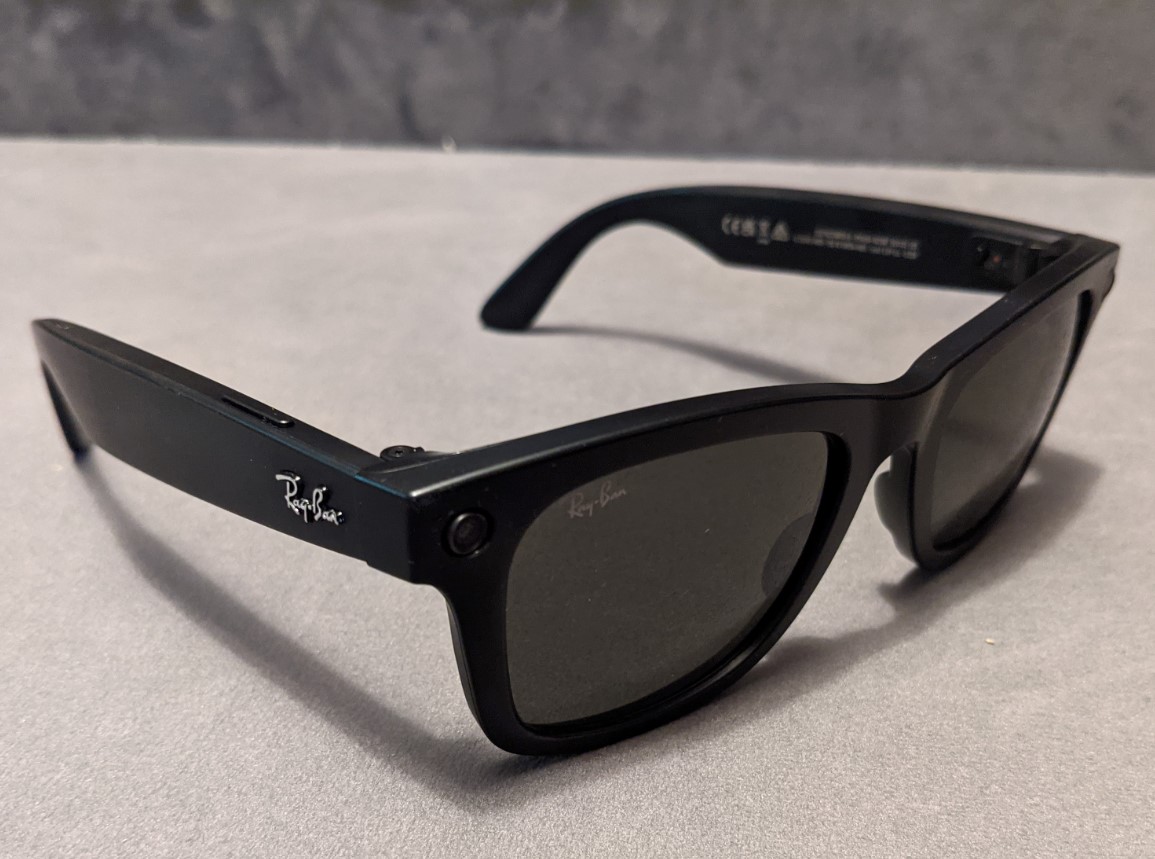
Adonis Georgiadis used a debate in the Greek parliament at the end of July to explain why he had bought Ray-Ban Meta glasses. “Whoever wants to insult me, spit at me or hit me, I will have it on camera,” the Greek health minister said, adding that “I’ll press the little button and record everything.”
He traced the decision to protests at Nikaia General Hospital, where he said he had been punched and spat at. According to Georgiadis, available recordings showed people spitting at him, throwing coffee and rushing towards him, but none captured the alleged punch. Afterwards, he said, people repeatedly asked him to produce the missing video, according to the parliament report.
His response was a pair with a camera beside the lens. “The glasses are mine. I bought them legally and, for anyone interested, they cost €600,” he said, identifying them as Meta2 Ray-Bans.
The same post confirmed that he had worn them during visits to Lemnos and Leros, where they prompted criticism over personal data. Georgiadis said he used them as a Bluetooth device, not as a camera, and that no footage published from the visits had come from the glasses.
In parliament the following day, he predicted that within a year those criticising him would own similar glasses.
Cyprus does not need a year to understand the argument. It has already been living with it through the cameras in people’s hands, cars and, eventually, police uniforms.
That was no theoretical concern in June 2024, when a 26-year-old man was remanded for six days after videos of women in bathing suits on Limassol beaches appeared online. Police said six women recognised themselves.
Limassol police spokesman Lefteris Kyriacou told Cyprus Mail that the issue was the filmer’s intention. The women were not simply caught in the background of a holiday picture. The recordings appeared to focus on particular women and were posted without their consent.
Phones have recorded beaches, restaurants, demonstrations and road accidents for years. However, a phone usually has to be lifted and aimed. Smart glasses can film without that familiar gesture. The camera has moved from the hand to the line of sight.
That difference is now troubling Instagram, where harassing videos recorded with smart glasses have been posted. “We don’t want people to be surreptitiously taking videos of other people and harassing them and then posting them on our platform,” Instagram head Adam Mosseri said. Meta confirmed that two accounts had been banned under its harassment policy, according to the a report.
Meta says a white capture light alerts people when a photograph or video is being taken. After attempts to cover or damage it, the company introduced an update that disables the camera when tampering is detected. Meta will also remove advertisements and listings offering to defeat the light and could ban the accounts involved, according to its privacy update.
Still, a light can show that recording has started. It cannot say where the file will go, how long it will survive or what somebody may do with it.
Meanwhile, Cyprus has moved another everyday camera out of a legal grey area. Since July 23, dashcams have been permitted in private, commercial and government vehicles for recording accidents, traffic offences and criminal acts.
The footage can be requested by police and insurers, while a court will decide whether it is admissible as evidence. Yet the new Cyprus law does not turn every driver into a broadcaster. Publishing identifiable people, vehicles or minors without the necessary consent remains prohibited.
A recording can now have a financial value. It may establish who caused a collision, shorten an investigation or expose a false account before money is paid.
Cyprus motor premiums reached €132.18 million in the first half of 2025, an increase of 9.4 per cent, according to market figures based on Insurance Association of Cyprus data. Separately, the Motor Insurers’ Fund paid more than €19.2 million in compensation for accidents involving uninsured vehicles between 2021 and 2025, Politis reported.
For insurers, therefore, better evidence can mean fewer disputed claims and lower investigation costs. The Insurance Association of Cyprus is already developing an industry platform that will register claims data and screen motor-insurance applications and compensation demands for fraud, according to Insurance Europe.
But the same technology that can strengthen a claim can also manufacture one.
Aviva detected more than 18,400 suspicious claims worth £233 million in 2025. Fraudsters were increasingly using AI-generated images and altered documents, particularly to fabricate accident scenes and vehicle damage, the insurer said. “Fraud isn’t a victimless crime. It drives up the cost of insurance for everyone,” Aviva counter-fraud head Pete Ward said.
The insurer is using AI and human oversight to detect those claims, creating a contest in which one machine produces the evidence and another decides whether to believe it. Research by actuarial consultancy Milliman found experienced insurance professionals identified AI-manipulated vehicle photographs correctly only about half the time, little better than chance, according to its fraud study.
Police face the same pressure for recordings that can settle conflicting accounts. Cyprus passed legislation on March 26 allowing body cameras during arrests, searches, pursuits, high-risk operations and responses to crime scenes. The stated purpose was to protect officers from false complaints, protect citizens from possible abuse and strengthen evidence in criminal and disciplinary cases.
However, the law arrived before the cameras. In May, specifications were still being drafted and no tender had been launched. A month later, Justice Minister Costas Fitiris told MPs that 300 to 500 cameras would be bought in 2026 for a pilot, with the remainder of the force funded through the 2027 budget.
Meanwhile, Politis reported that the Justice Ministry was setting up a unit to combine police and fire service tenders, saving time and staff and seeking better prices through larger orders. The project will involve more than the cameras. Recordings must be encrypted, unauthorised access is a criminal offence and footage may generally be kept for no longer than six months unless required in court, CyBC reported.
Meta has no intention of waiting for public procurement. Sales of the AI glasses it makes with EssilorLuxottica almost doubled in the second quarter, helping the Ray-Ban owner increase revenue by 8.7 per cent at constant exchange rates to about €7.7 billion. First-half adjusted operating profit rose 15 per cent to €2.75 billion, Reuters reported.
Meta and EssilorLuxottica were considering doubling annual production capacity to 20 million pairs by the end of 2026, Bloomberg News reported in January. No decision had been finalised, Reuters said. New models start at $299, moving the technology closer to ordinary premium eyewear.
Meta chief executive Mark Zuckerberg has described glasses as a central part of the company’s AI strategy. “They’re going to be able to see what you see, hear what you hear, talk to you and help you,” he told investors in a January call.
That promise is costing heavily. Meta’s Reality Labs division has accumulated more than $80 billion in operating losses. At the same time, the company’s second-quarter free cash flow fell 91 per cent to $784 million as spending on AI infrastructure accelerated, although revenue rose 28 per cent to $60.8 billion, according to its latest financial results.
Europe is now trying to place rules around the same mixture of cameras, AI and synthetic content. From August 2, providers must make it clear when people are interacting with AI and add machine-readable markings to generated or manipulated material. Older systems have until December 2 to meet some detection and labelling obligations.
Transparency failures can result in fines of up to €15 million or 3 per cent of worldwide annual turnover under the penalty rules. However, legislation adopted in June during the Cyprus EU Council presidency delayed requirements for stand-alone high-risk systems until December 2027. “Today’s agreement on the AI Act significantly supports our companies by reducing recurring administrative costs,” Cyprus Deputy Minister for European Affairs Marilena Raouna said, as Reuters reported.





Click here to change your cookie preferences