
THE WAY THINGS ARE
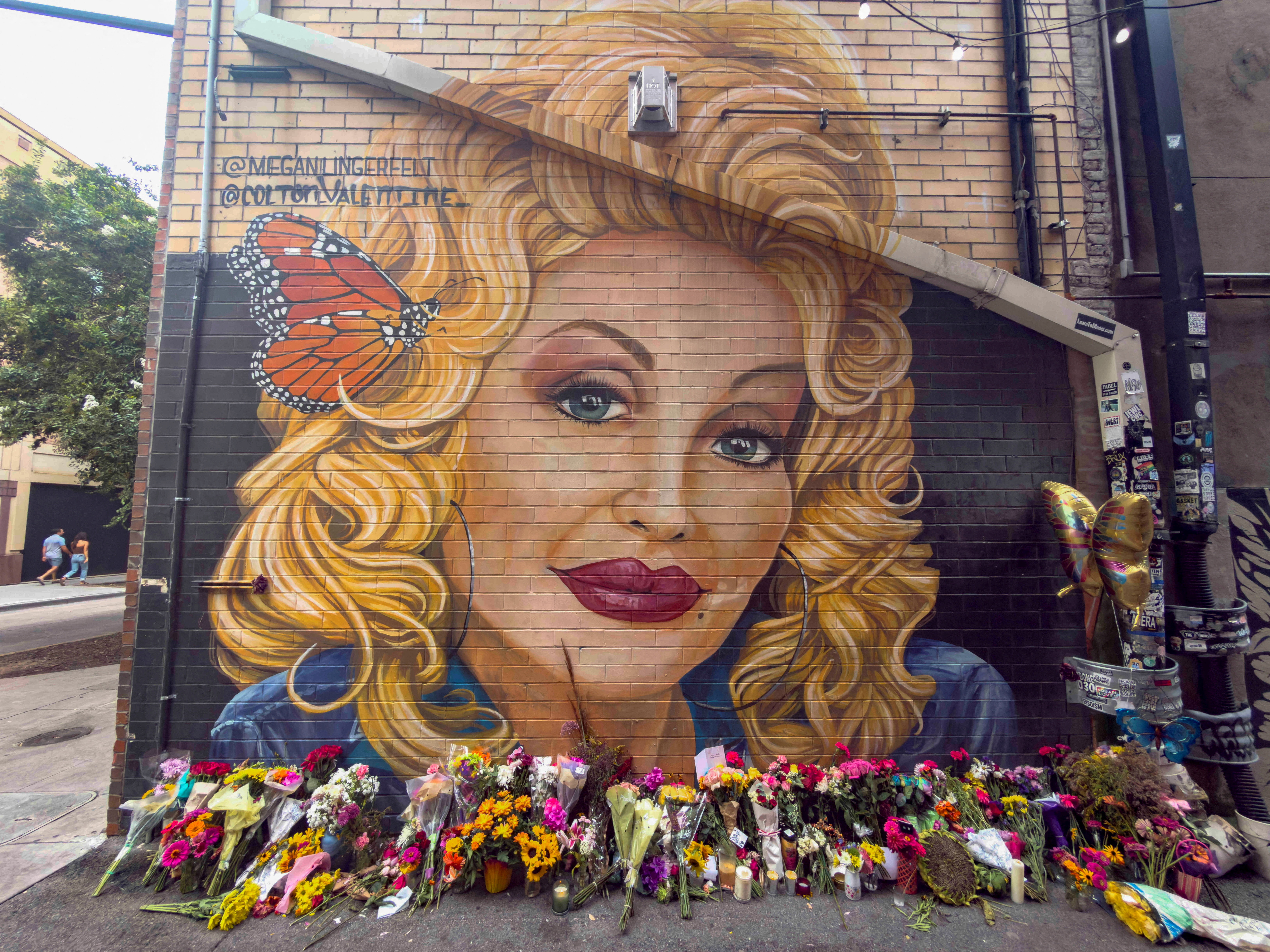
Dolly Parton and Donald Trump are same generation American entertainers. Self-made, a generous philanthropist, Dolly was smart, prolific musically, warmly loved. Trump, born to wealth, a wily taker, a prolific dispenser of apprehension.
Having corralled Venezuela, he’s gauging oil leverage in the Falklands, and with Israel, rattling verbal swords at the UK. If need arose of armed protection for the islanders, it could possibly trigger distraction from and disruption of weapons to Ukraine.
What’s changed since Homer wrote of warmongering men’s greed and expansionist ambitions facilitated by violence? Nothing, thus the work is timeless.
Dolly Parton was outspoken on behalf of women; ancient Greek democracy did not include women. Their place was caring for the home and meekly obeying husbands, like Trumpian era tradwives.
Irish creative greats like Joyce and Heaney were inspired by the ancient Greeks. Now another Irish-origin name is placed in that realm – film maker Christopher Nolan. Nolan borrowed The Odyssey, added a few divergences of his own and gave Odysseus a conscience.
Writing for the British Museum, Paul Cartledge wrote that in epics attributed to Homer, Greeks are not referred to as ‘Hellenes’ but as ‘Achaeans’, ‘Argives’ or ‘Danaans’. Irish myths tell Danaans came to Ireland, a people of wisdom and light. Is there a murmur of ancient Greeks in the inventive minds of creative Irish that draws them back to source?
Homer’s Odysseus was a cunning, ruthless warrior who voraciously took part in the carnage of Troy following pent-up, frustrating years of siege. That ancient atrocious rape of women and girls, the killing of children, looting, enslaving prisoners, are still part of modern warfare terror tactics. The Trojan Royals were slaughtered, humiliated. By contrast, when defeat looms for today’s endangered autocrats, they and their families take flight, with an illicit fortune secreted away for such an eventuality.
Classics Professor Mary Beard asked. “Does Odysseus offer an appropriate model for mankind? In short, the myth of Odysseus asks the most important question there is: how should a man behave?” Men in war vent savagery on innocent civilians and, individually, are seldom held to account.
Whether Troy or Homer are myth or real, is uncertain, war is certain. Democratic countries should be honest about their own lawlessness, truth is democracy’s greatest ally. Richard Pine in the Irish Times wrote about Greek pride in the successful evolution of the Greek state, and the historical connection between modern Hellenism and the “glories” of classical Greece being one of the big factors in education.
But, Pine says, modern history events are absent from the standard Greek secondary curriculum, no mention of the 1940s civil war or the military junta of 1967-1974. In Cyprus, questions also arose about how we teach recent history in schools.
The Irish Civil War following the independence struggle documents shameful actions by both the pro- and the anti-Treaty sides. When facts are willfully omitted out of guilt, shame or on purpose, truth is lost to youth, and those from homes fanatically aligned to a political party hear only one version of truth.
Truth in text books can lead to constructive debate in class with children taught to see the whole picture objectively rather than nurturing inculcated division through ignorance or party loyalty.
A man imprisoned by the British for political reasons said to me years ago. ‘I respect an enemy who tells me a truth I know is correct but I don’t want to hear. I don’t respect the friend who tells me a lie he wants me to believe is truth.’
On his revenge rampage, Odysseus killed Penelope’s maidservants who slept with her suitors, even though he knew as slaves they had had to acquiesce. Perhaps the answer to Mary Beard’s question about behaviour is the strongest man is one who shows merciful restraint in victory.




Click here to change your cookie preferences