
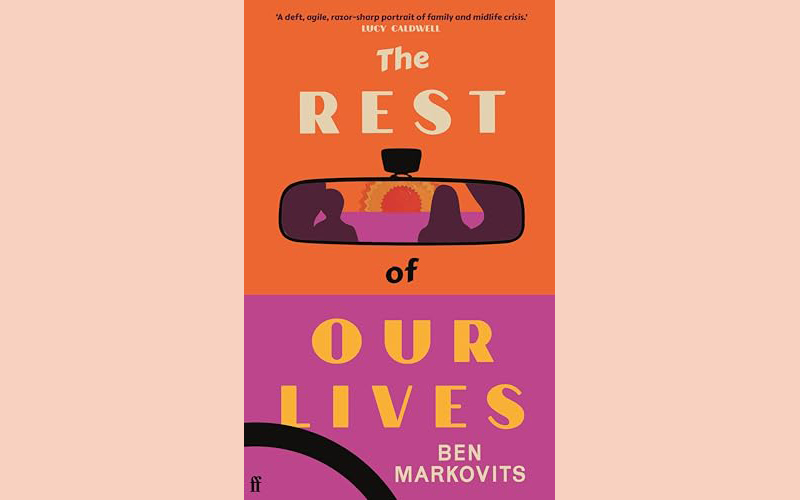
Book review: The Rest of Our Lives by Ben Markovits
By Philippa Tracy
The narrator of this novel is middle-aged law professor Tom Layward. His wife, Amy, had an affair, years earlier, with a man “she knew from synagogue.” This is the very first thing that Tom tells us, making it all sound so mundane. But the details about this man’s height, his grey chest hair, his proclivity for open linen shirts, and dancing with “old ladies and little pigtailed girls at a bar mitzvah,” suggest something much more depressing. Tom is observant. By the time Amy told him about the affair, Tom already knew. She didn’t want a divorce, at least not then or not until the kids left home, because the kids and the home were apparently, “all she had to show for the last 12 years of her life.”
When their youngest child, Miriam, is 18, Tom takes her to university, and decides to keep driving west across America. He had made a deal with himself that when Miriam went to college, he could leave too. But is that really what he wants? Tom never seems sure.
This is a road trip in which he revisits the past and reflects on the intricacies of his life choices, his personal and career disappointments and his relationships. His starting point is his relationship with Amy, “what we obviously had, even when things smoothed over, was a C-minus marriage, which makes it pretty hard to score much higher than a B overall on the rest of your life.”
It’s hard to know what Amy really thinks. But that is not the point of the novel. We are getting Tom’s version of the marriage. And Tom is struggling to move past the affair. He refers to Amy’s beauty with a mixture of pride and resentment. When they met in grad school, she was “an unusually beautiful woman but also nice about it.”
She was also going out with one of his friends at the time. Reflecting on their relationship now, there seems to be less pride and more resentment. Amy’s position on everything is always less reasonable than Tom’s. And his focus is often subtly on her failings, and disappointments “as a mother.”
Tom is experiencing some health issues, that he refuses to deal with. He is also having some issues at work, and is currently on a “leave of absence,” which he hasn’t told Amy about, yet. Like his medical symptoms, he minimises, or misunderstands, his work issues.
He puts it down to being, “a middle-aged white man who likes to teach dead white men. He really doesn’t know why his daughter calls him an “angry white male” and his son tells him he is on the wrong side of history. He gradually starts to hint at some recognition of his own failings.
During an encounter with a former lover, Jill, he admits to the reader, there “was just a flatness in our relationship, where she had kind of realised I didn’t have the guts to go all out for something I wanted, and I had realised about her … that this was how she saw me.”
This short novel about middle age is thoughtful and moving, its themes slowly and masterfully revealed through Tom’s narrative. At times, it is humorous too. The cattiness and the detail in Tom’s viewpoint are both smart and engaging. Tom’s illness and his flaws also make him deeply human.





Click here to change your cookie preferences