
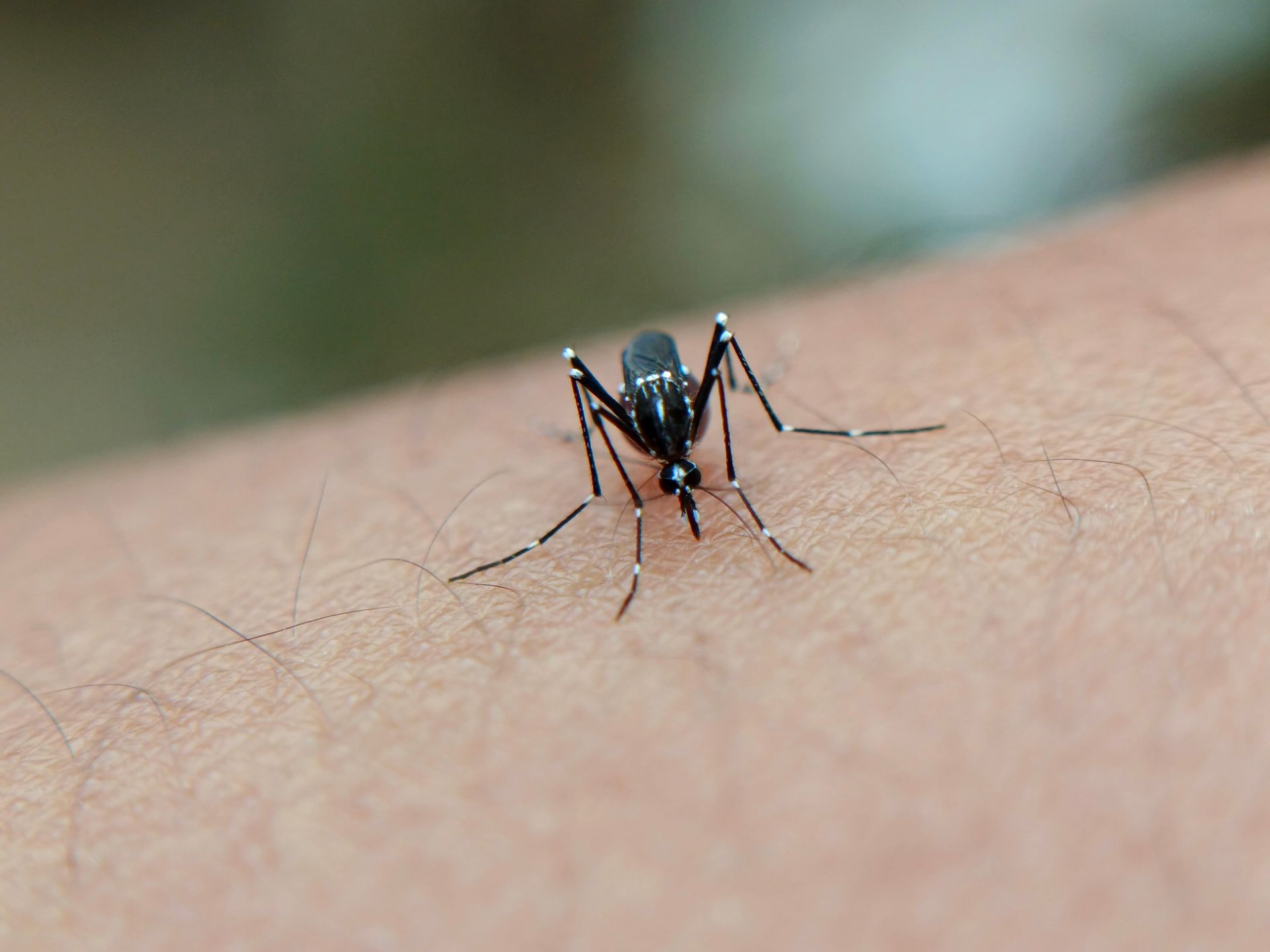
Persistently high temperatures and recent rainfall have created favourable breeding conditions for mosquitoes across Cyprus, while monitoring has shown their numbers increasing over the past three years, health services said.
The warning comes as Cyprus has recorded 14 cases of West Nile virus this year, a disease transmitted by the common Culex mosquito.
Speaking to the Cyprus Mail, health ministry health services official Irodotos Irodotou said the combination of high temperatures throughout much of the year and recent rainfall had led to the creation of more mosquito breeding sites.
“At the same time, over the last three years we have observed an increase in mosquito numbers in our traps,” he said.
West Nile virus is primarily transmitted to humans through the bite of an infected mosquito, which acquire the virus by feeding on infected birds – the primary hosts of the virus.
“It is very difficult for it to be transmitted from person to person,” Irodotou said.
Humans and mammals are considered “dead-end hosts” because they do not develop high enough levels of the virus in their blood to pass it back to uninfected mosquitoes.
Health services have been carrying out mosquito-control operations since the 1950s, when malaria was still present in Cyprus.
Treatments are applied to rivers and other areas where mosquitoes breed, with the substances used targeting mosquitoes while they are still at the larval stage.
But the mosquito picture in Cyprus has changed in recent years with the arrival of Aedes species.
Irodotou said Aedes mosquitoes appeared in Cyprus during the past two years. Aedes aegypti has so far been identified only in Larnaca, while Aedes albopictus, commonly known as the Asian tiger mosquito, is now found across Cyprus.
Both species are capable of transmitting diseases including dengue fever.
However, Irodotou stressed that the presence of mosquitoes capable of carrying a disease does not mean the disease itself is circulating in Cyprus.
“They can transmit these viruses, but these viruses are not present in Cyprus,” he said. If an infected case were introduced, however, transmission could potentially become possible.
The health services take immediate measures whenever a case requiring intervention is identified, including cases of West Nile virus. Action can follow either a confirmed human case or laboratory findings indicating the presence of the virus.
Measures have also been taken following the detection of the virus in a horse, Irodotou said.
Authorities have meanwhile held a meeting with municipalities in an effort to better coordinate mosquito-control measures across local authorities.
The arrival of Aedes mosquitoes has also changed the nuisance experienced by the public.
In previous years, when Culex was the predominant mosquito, people were mainly troubled by bites during the evening and night.
Aedes, however, bites during the day as well.
“It is in our neighbourhoods and there are many breeding sites,” Irodotou said.
This also means that mosquito control cannot be left solely to the authorities.
Irodotou advised that members of the public should remove standing water from around their homes, check drains and other places where water can collect, empty or securely cover barrels, check plant pots and containers, and ensure unused swimming pools do not become breeding grounds.
“We all need to take measures,” Irodotou said.
For protection against bites, he recommended mosquito screens on doors and windows, mosquito nets, fans and insect repellents.





Click here to change your cookie preferences