
By Ksenia Kozha
In 1958 French linguist Émile Benveniste took a fresh look at Aristotle’s ten categories – the list of everything that can be said about anything that exists. He could clearly see the Greek grammar behind them. Substance answered to the noun, quality and quantity to the adjective, relation to the comparative, place and time to adverbs, and the remaining categories to the voices and tenses of the Greek verb.
Aristotle, in Benveniste’s reading, believed he was listing the attributes of things. Actually, he set out the categories of his own language.
For a linguist, this is perhaps the most useful lesson to pass on to anyone who looks at another culture. The world is seen through the categories of our own language, it becomes so familiar it is taken for the shape of things. Europe’s long encounter with China is, among other things, a history of that habit – and of the way it keeps changing.
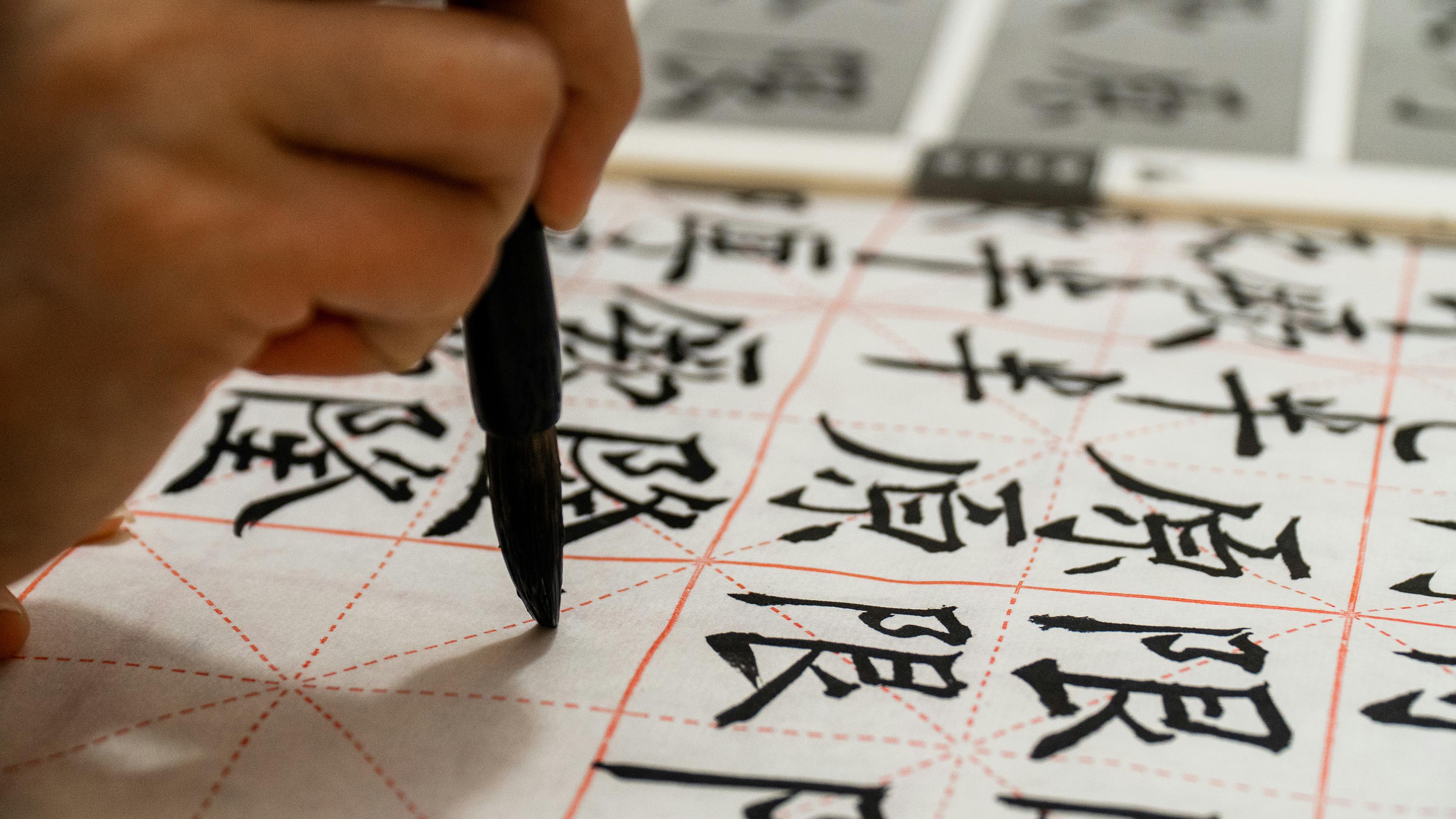
It began with enchantment. In 1605 Francis Bacon wrote that the Chinese used ‘characters real’, signs that stood for things and notions rather than for the words of speech. Seventeenth-century scholars, dissatisfied with Latin, were searching for the language spoken before Babel, one whose words would lie closer to the things themselves, and Chinese looked like a candidate.
The only task left was to discover a key to the script. In 1674 Andreas Müller offered a Clavis Sinica that would, he promised, teach a European to read Chinese in anything from eight days to a month. Leibniz, at work on a universal language of his own, the characteristica universalis, sent him questions and waited for answers, but answers never came. Müller would not reveal his method until he was paid, nobody paid, and in the last years of his life he burned the manuscript.
From admiration to linguistic prejudice
By the nineteenth century the enchantment had turned into a verdict. Comparative grammar ranked languages by their inflection, with Sanskrit and Greek at the top – the yardstick was, once again, the grammar Benveniste would later find in Aristotle.
August Wilhelm Schlegel placed Chinese among languages ‘without any grammatical structure’, and even Humboldt, who admired it more than most, granted in 1827 that ‘nothing would at first be more natural than to say’ that Chinese had stopped in the childhood of languages. In the twentieth century the characters came to be seen, in China itself as much as abroad, as an obstacle to modernisation, and the typewriter, a machine built around the alphabet, seemed only to confirm it.
The solution began with Leibniz. In 1679, the year he wrote to Müller, he also sketched a calculating machine that worked in nothing but 0 and 1. When the Jesuit Joachim Bouvet sent him from Beijing the 64 hexagrams of the Book of Changes, Leibniz was delighted to find his binary arithmetic, as he believed, already set out by the legendary sage Fu Xi, and in 1703 he wrote it up for the Paris Academy. Every computer now counts that way.
Two and a half centuries later those machines learned to handle characters through input methods that guess the next one from a few keystrokes, and the old obstacle became an everyday convenience. Once the script no longer had to be excused, it could be admired again.
The Chinese script and the DeepSeek debate
On January 20, 2025, when DeepSeek, a young company from Hangzhou released a reasoning model called R1. A week later Nvidia lost $589 billion of market value in a single day, and the Chinese script soon reappeared in the commentary, this time as a secret weapon.
‘Chinese characters achieve maximum information transmission with minimal cost,’ wrote a Chinese telecoms analyst, and the idea that the density of the characters had given the model its edge travelled from Chinese social media to the international press. It was Bacon’s dream in a new doublet – a script that goes straight to meaning, promising this time not a universal philosophy but cheaper intelligence.
However, the people who built the model explained its success differently. In their technical reports, the gains come from engineering. The model is a ‘mixture of experts’, it handles attention, the mechanism by which a model keeps track of what refers to what, and it does much of its arithmetic at low precision to save memory.
With choices like these the team trained its earlier V3 model on 2,048 Nvidia chips and put the final training run at about $5.6 million, a figure that leaves out research and salaries and still startled an industry used to spending far more. None of this depends on the script, for the model works in English as well as in Chinese. What deserved admiration was the work of a team of engineers and mathematicians, not the shape of the characters they happen to write.
Looking beyond language
There is a coda that Müller would have enjoyed. He held that the characters were pictures, a view that eventually cost him his post, since his critics argued that a picture of God in the word for God broke the Second Commandment. In October 2025 DeepSeek showed that a page of text could be fed to a model as an image, using roughly a tenth of the usual number of tokens with only a small loss of accuracy.
Writing treated as a picture turned out to be cheaper than writing treated as words, and the trick worked for English pages as well as for Chinese ones. Hostile or flattering, these explanations share a convenience. They let one feature of a language account for a whole civilisation’s successes or failures, and they spare us the slower work of looking at institutions, at firms and laboratories, at what people do and what their own documents actually say. Seeing China as it is requires neither admiration nor alarm. It requires proper reading.
Cyprus and China established diplomatic relations on December 14, 1971. President Nikos Christodoulides plans to visit China early next year. A Greek-speaking country has a particular reason to take Benveniste’s lesson to heart, since it was Greek grammar that gave Europe its categories in the first place. Before the visit, it may be worth pausing over Aristotle’s busiest word. When we ask what China is, through which of our own words are we about to see it?
Dr Ksenia Kozha is a sinologist and linguist based in Cyprus and an Honorary Research Associate at the American University of Cyprus




Click here to change your cookie preferences