
Can Britain ever reconcile its national instincts with the demands of European integration?
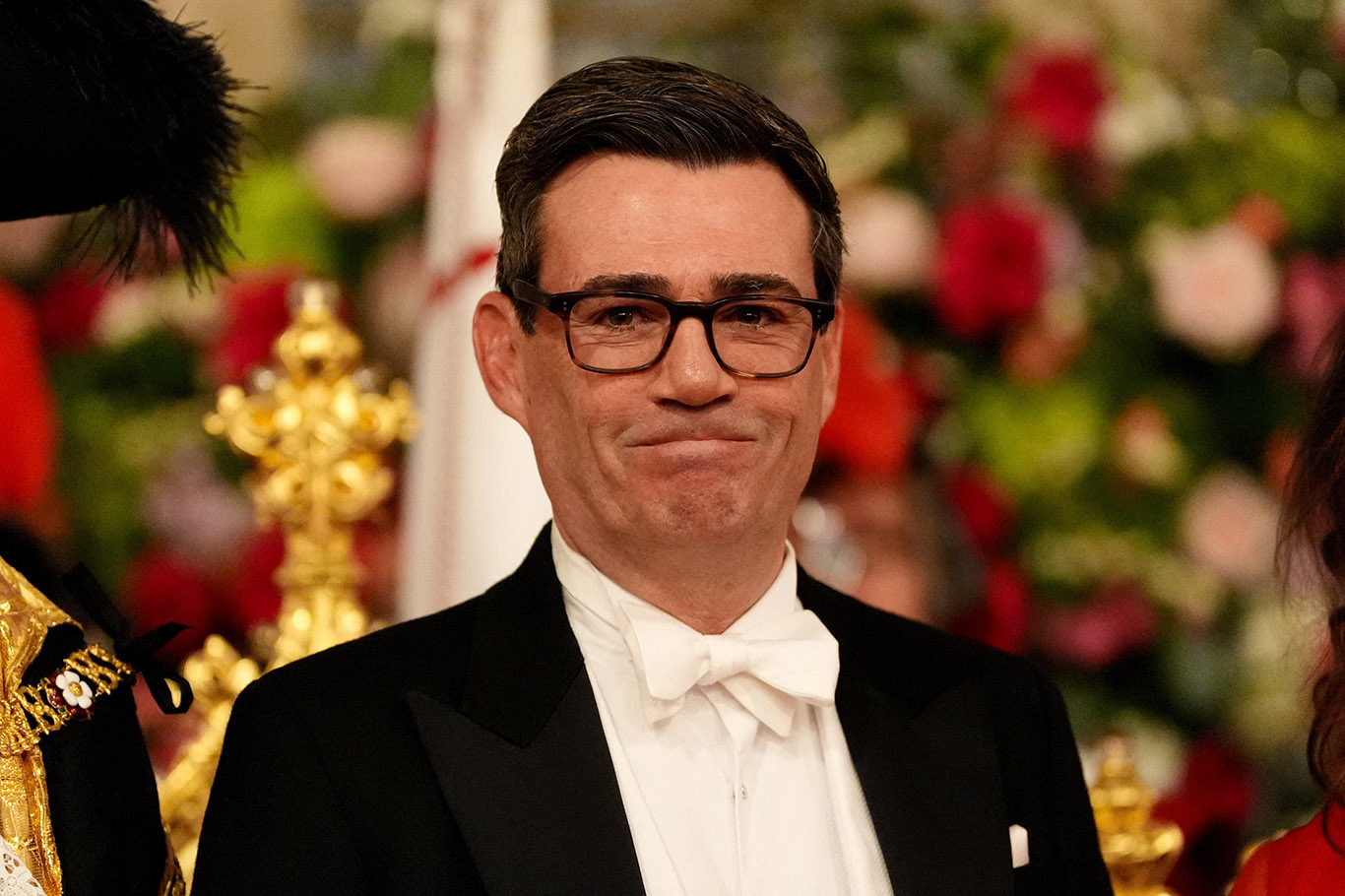
In his traditional annual speech on British foreign policy at the Lord Mayor’s banquet last Monday UK Prime Minister Andy Burnham spoke about the UK’s realignment with the EU because Brexit had not been good enough for Britain, he claimed.
Dressed in a penguin suit – white tie and tails – he used the Hans Christian Anderson story of the emperor’s new clothes to persuade his audience that Brexit was failing Britain.
The story of the emperor’s new clothes is an amusing allegory about narcissism, sycophancy, and a precocious little boy’s prerogative to speak truth to power. But whereas the little boy was the only one who spoke out that the emperor wasn’t wearing any clothes, many politicians, economists and others, before and after Brexit, had spoken many times about the obvious truth that Brexit would damage British trade.
As expected, trade with the EU turned out to be difficult and costly and the prime minister went off to Brussels last Friday to start the ball rolling and reset the 2020 Brexit deal. He returned with an agreement about CO2 emissions that is too complicated to describe, one that would reduce red tape for businesses engaged in cross border trade and a mutual youth experience scheme.
Andy Burnham walked back any idea he was minded to apply to rejoin the EU, but former finance minister, Rachel Reeves and other former Labour ministers were not so shy. They want the Labour Party to make a manifesto commitment to hold a referendum to rejoin the EU after the next election in 2029.
Burnham’s new approach to the EU generated a lot of discussion in Britain about the pros and cons of rejoining but not much among EU member states, all of whom would have to agree to readmit Britain. However, there is no guarantee that Britain would be welcome back with open arms by all 27 members, and it is by no means certain that the British people would be that keen to rejoin a club about which they have been ambivalent going back as long ago as the middle of last century.
Even those of us who were in favour of remain in 2016 would oppose applying to rejoin the EU for reasons of patriotic pride. The prospect of Britain pleading obsequiously to be readmitted into the EU is too awful to contemplate.
Britain had not joined the original six that formed the European Economic Community (EEC) known as the Common Market. It did not suit its status as a world power but after the Suez fiasco in 1956 the Conservative government of Harold Macmillan applied to join in 1961, albeit on condition the EEC accommodated British trade with the Commonwealth.
President Charles de Gaulle of France would have none of it and vetoed British entry in 1963. He was a bit of an Anglophobe and vetoed Britain’s second application for entry again in 1967 for much the same reasons. Non he used to say with relish!
De Gaulle knew the British well enough to know that being an island people they were too Atlanticist and too idiosyncratic to pool their economy let alone their soul with continental Europe.
He resigned in 1969, and Britain applied to join again under the Conservative government that came to power in 1970. This time France said yes, and the UK joined on January 1, 1973.
However, in 1974 the Labour Party under Harold Wilson was returned to power and his cabinet was seriously divided over Europe. So he held an in-out referendum in 1975 and 67 per cent of the electorate voted to stay in the Common Market.
UK membership of the EEC was not a problem for a while and although the right-wing British press continued to be anti European, the Common Market did not resurface as a serious political problem until the Treaty on European Union (TEU) in 1992.
The TEU changed the fundamental nature of the EEC from a common market into a political union that by 2009 included a defence obligation too. This was too much for Britain’s eurosceptic right that began to clamour for an in-out referendum, especially after EU enlargement in 2004 and 2007 compounded the problem owing to excessive immigration from the EU
In the end the Conservative government of David Cameron held an in-out referendum in 2016 and 52 per cent of the British people voted to leave the EU. As the BBC’s David Dimbleby pithily put it: we are out! The referendum result also set alarm bells ringing across the EU where there was a real fear that Brexit would have a domino effect leading to the break-up of the EU.
It is said that sometimes real life imitates art and at the time of the Brexit referendum many in the EU revisited the 1980s comedy series Yes Minister —as much for amusement as for insight into the British mindset —in which British policy on Europe was parodied.
Sir Humphrey Appleby is the permanent civil servant attached to the ministry of administrative affairs advising his minister. Sir Humphrey’s minister has been given the task of passing an unpopular EU law on identity cards through parliament, and there follows an insightful exchange between them about British policy on Europe.
Sir Humphrey: “Minister, Britain has had the same foreign policy objective for at least the last 500 years: to create a disunited Europe.”
Minister: “That’s all ancient history, surely?”
Sir Humphrey: “Yes, and current policy. We had to break the whole thing up, so we had to get inside. We tried to break it up from the outside, but that wouldn’t work. Now that we’re inside we can make a complete pig’s breakfast of the whole thing.”
Minister: “Surely we’re all committed to the European ideal?”
Sir Humphrey: “Really, Minister.”
Minister: “If not, why are we pushing for an increase in the membership?”
Sir Humphrey: “The more members an organisation has, the more arguments it can stir up, the more futile and impotent it becomes.”
Minister: “What appalling cynicism.”
Sir Humphrey: “Yes. We call it diplomacy, Minister.”
Margaret Thatcher who was prime minister at the time of Yes Minister said it was perceptive and accurate and absolutely marvellous!



Click here to change your cookie preferences