
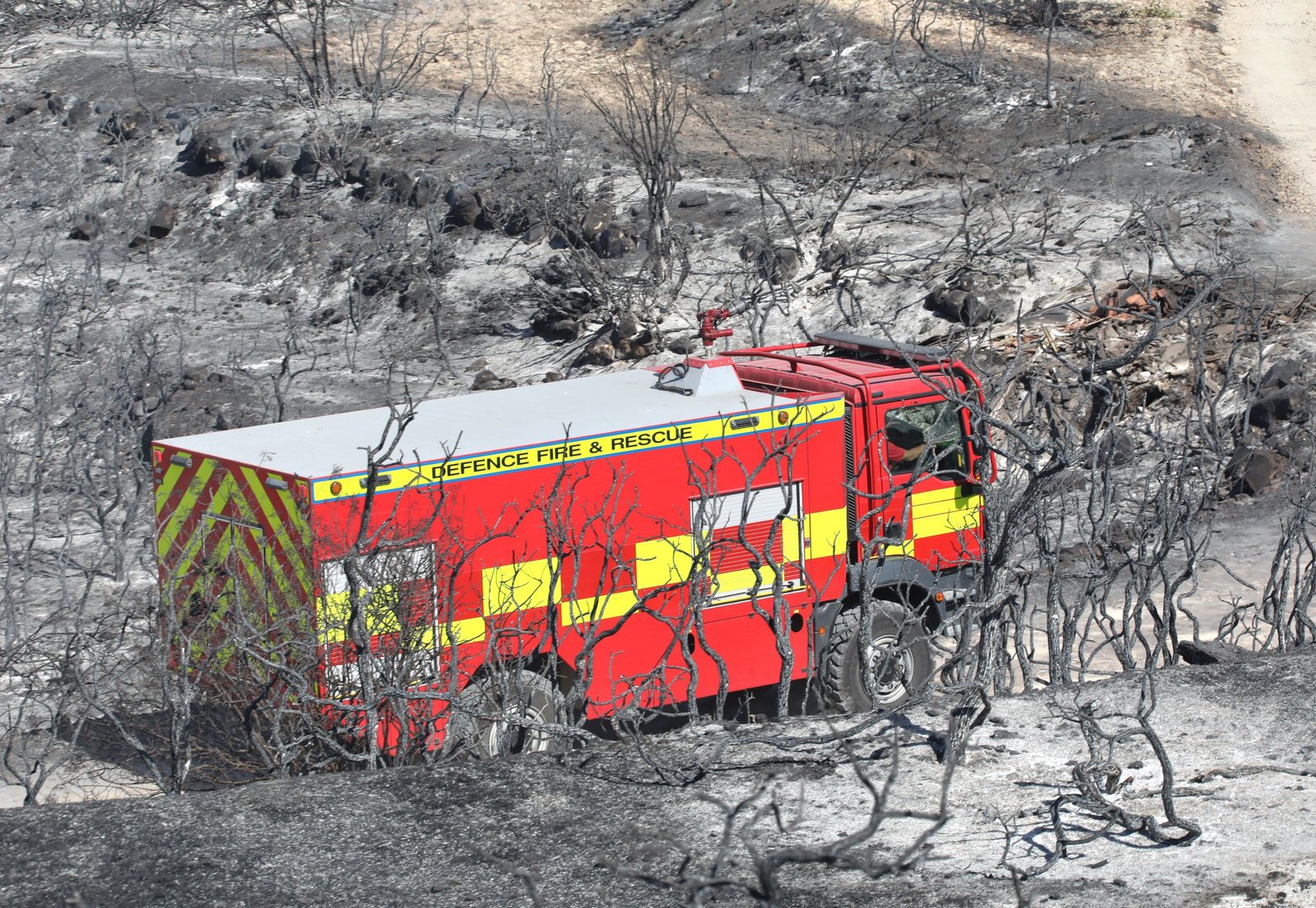
The total number of fires rose by 6.51 per cent last year, while estimated losses climbed to €134.6 million, largely driven by a devastating summer wildfire in the foothills of Limassol, according to figures released on Friday by the fire brigade.
More than 94 per cent of fires were attributed to man-made factors.
The brigade responded to 13,401 calls for assistance during the year, covering fires, special services and false alarms.
Wildfires accounted for 3,569 incidents, an 8.81% increase on 2024, while urban fires rose by 4.31 per cent to 3,585.
Scorched land expanded sharply to 133.46 sq km, up from 16.47 sq km the previous year.
The July wildfire in Limassol accounted for approximately 120 square kilometres of the total scorched area and proved to be the worst wildfire on record in the republic’s history.
Rural fires accounted for €120.6m of the total, with urban fires responsible for €14m.
By comparison, total losses in 2024 were €29.6m.
Fire brigade chief Nikos Longinos said the Limassol wildfire was the result of arson, citing eyewitness testimony that the fire was deliberately ignited at two separate points near the village of Malia.
Longinos reiterated the Limassol fire “had a decisive impact on the overall damage figure for the year”.
Additional data from the Fire Service shows that rural fire incidents surged unevenly throughout the year, with the most pronounced increases recorded in the first quarter.
January saw a rise of more than 30 per cent compared to the previous year, followed by increases of nearly 34 per cent in February and close to 19 per cent in March.
Officials linked this trend to the prolonged drought conditions that persisted from late 2024 into early 2025, combined with increased use of defective chimneys and fireplaces during colder months.
April recorded one of the sharpest single-month increases, with incidents rising by more than 40 per cent.
This spike was attributed mainly to seasonal practices during the Easter period, often without proper safeguards or permits.
Authorities underlined that these activities significantly heightened wildfire risk during a period of already dry conditions.
While wildfire numbers declined during the peak summer fire season, officials said this was not accidental.
The brigade credited prevention campaigns, public awareness through television and radio, and coordinated patrols with other authorities.
“These measures made a real difference during the critical months,” the spokesperson affirmed.
Unauthorised fire lighting accounted for 87.59 per cent of wildfires, which were categorised as arson.
Causes included deliberate burning, discarded cigarette butts, and cooking in prohibited areas.
Forty-five people were rescued, injured or killed in fires during the year, down from 61 in 2024.
The brigade also carried out 2,307 rescues linked to traffic collisions, workplace accidents and other incidents.
The fire brigade also reported an increase in false alarms made to the force, which rose by more than 34 per cent to 988 calls.
Despite this, 97 per cent were deemed to have been made in good faith, reflecting heightened public sensitivity to fire prevention and early reporting.





Click here to change your cookie preferences