
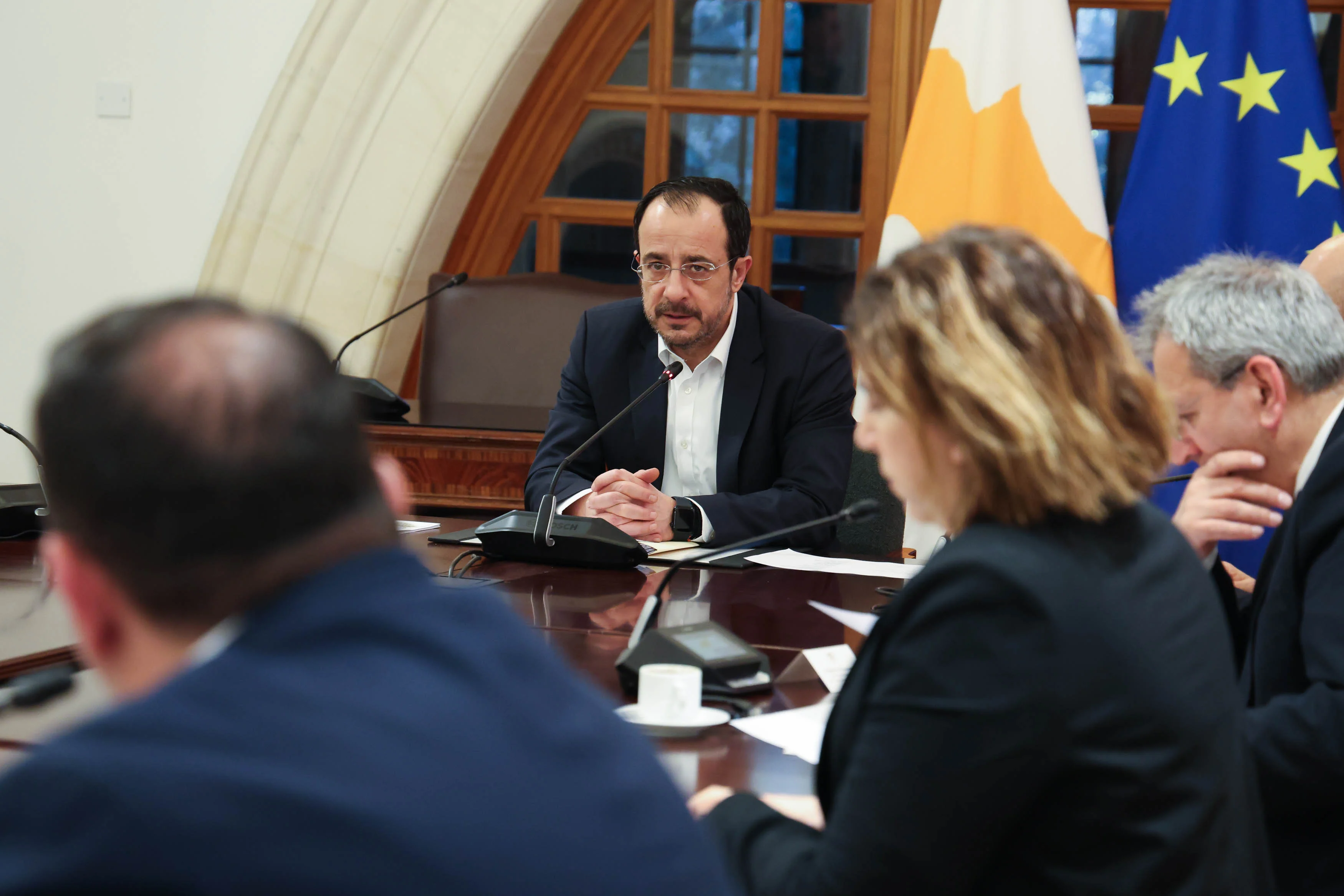
President Nikos Christodoulides assured on Wednesday that the government’s reform agenda will prioritise pension reform aimed at substantially increasing payments, particularly for low-income pensioners.
Speaking at the opening of the 30th congress of the workers’ federation (Sek) in Nicosia, the president said reform of the pension system forms a central element of the government’s policy programme alongside wider labour and economic measures.
Christodoulides described SEK as an important institutional partner in the government’s consultations on labour and social policy.
He pointed to cooperation with trade unions on several issues, including the cost of living allowance and the minimum wage, arguing that social dialogue has already delivered tangible outcomes.
“We have agreed the cost-of-living allowance at 100 per cent today after receiving it at 50 per cent in 2023, while the minimum wage has increased twice during the three years of our governance,” he said.
The president linked the government’s reform programme to what he described as the “strong performance of the economy”, arguing that stable public finances and sustained growth allow the state to implement social measures without undermining fiscal discipline.
“Our economy is strong and resilient,” he insisted, citing high growth rates, a fiscal surplus, low inflation and reduced public debt.
Christodoulides said unemployment has fallen to historically low levels, with full employment achieved for the first time in almost two decades.
“Healthy indicators attract quality investments that create better paid jobs,” he said.
He also pointed to Cyprus’s improved standing among international credit rating agencies, stating that the country has received 27 upgrades since the government assumed office in March 2023, returning it to investment grade for the first time since 2011.
“These upgrades are a vote of confidence in the policies we are implementing and in the resilience of the Cypriot economy,” he said.
The president’s remarks come as the government prepares legislative changes to the first pillar of the pension system linked to the social insurance fund.
Labour minister Marinos Mousiouttas has previously said the aim is to submit a preliminary reform bill to parliament by early June, with implementation targeted for 2027 following consultations with employers and trade unions.
Among the measures under discussion is a revision of the 12 per cent penalty currently applied to pensions for individuals who retire before the age of 65, a reduction the government has indicated could fall to between two and 10 per cent depending on the final model adopted.
Christodoulides said the government’s broader reform agenda is designed to strengthen both economic performance and social protection, emphasising that the objective remains to ensure that economic progress translates into improved living standards.
“Our goal is a common one,” he said, referring to cooperation between the state, trade unions and employers. “Even where we have different approaches, the purpose is to bridge those differences and serve society as a whole.”





Click here to change your cookie preferences