
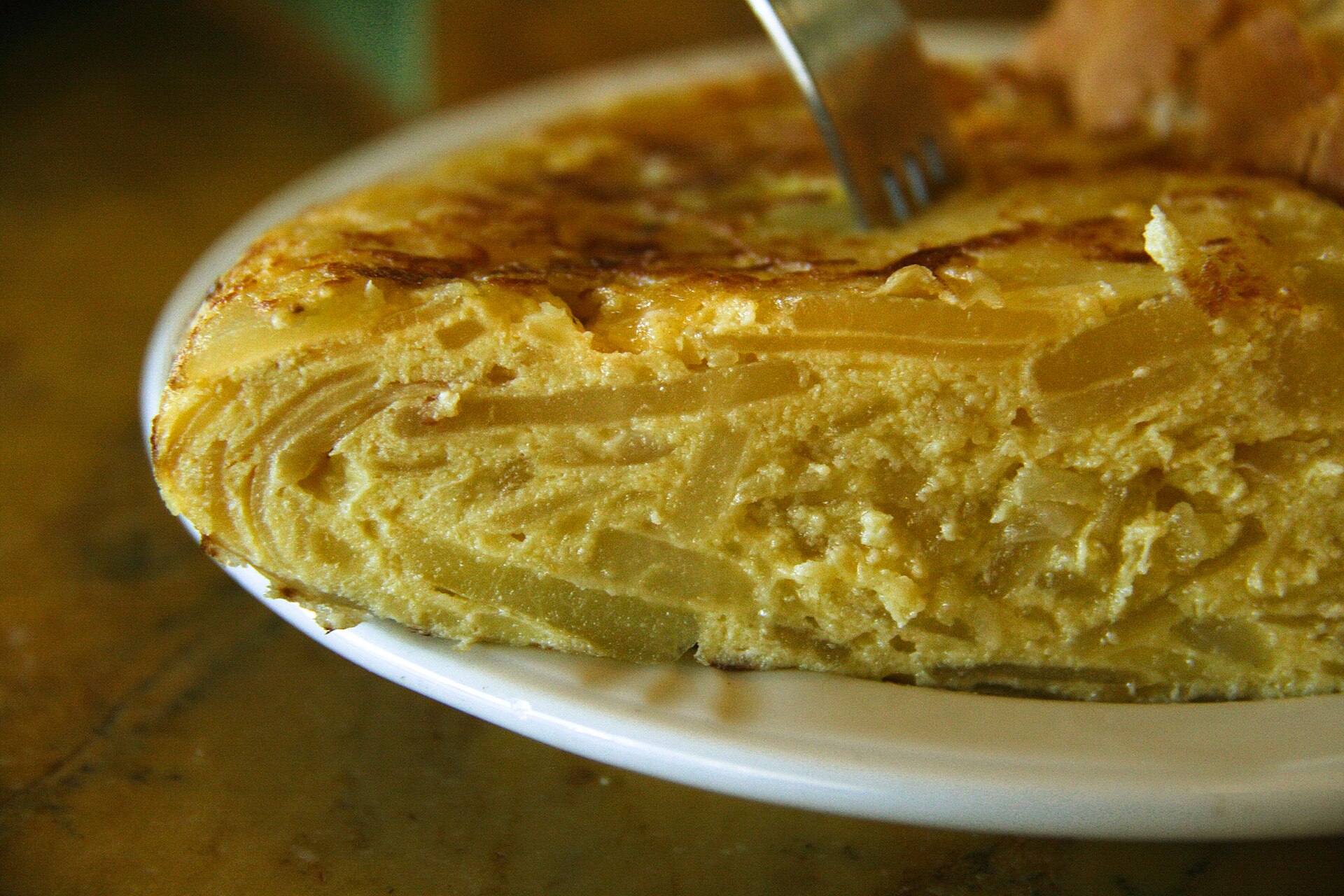
Tortilla Española is one of those dishes that seems almost too simple to be memorable, and yet it rarely is. Made with little more than eggs, potatoes, olive oil and salt, it has quiet confidence about it.
In Spain it is simply tortilla de patatas, and it appears everywhere – on kitchen tables, behind café counters, at family celebrations and in the glass display cases of tapas bars. Thick and golden, cut into wedges or neat squares, it feels both every day and faintly ceremonial.
Its origins are modest. Most accounts place its development between the eighteenth and nineteenth centuries, when potatoes had become a dependable part of the Spanish diet. For rural households, the combination of eggs and potatoes offered nourishment that was affordable and sustaining. It was practical food, designed to fill stomachs without extravagance. Over time, practicality gave way to affection. What began as necessity became comfort.
The method rewards patience. Potatoes are sliced and cooked slowly in generous olive oil until soft and yielding, never rushed, never crisp. They are folded gently into beaten eggs and returned to the pan to set. Then comes the moment that still unsettles inexperienced cooks, the flip.
With a plate pressed firmly on top of the pan, the tortilla is turned over in one decisive movement before sliding back to finish cooking. It is a small act of bravery that every Spanish cook learns sooner or later.
Debate often centres on onion. For some, finely sliced onion cooked down with the potatoes adds sweetness and depth. For others, it has no place at all.
The argument is affectionate but firm and speaks to how personal this dish has become. Beyond that, additions are rare. A little chorizo or pepper may appear, but the classic version remains the benchmark.
Tortilla Española adapts easily to the rhythm of the seasons. In spring and summer, it is served at room temperature, carried to picnics or sliced into sandwiches for the beach. In cooler months it feels reassuring and steady, a simple supper with bread and salad. It keeps well and travels well. It asks for nothing more than good olive oil and a little care.
In Cyprus, the tortilla feels immediately familiar. Olive oil, eggs and potatoes are staples here too, and the Mediterranean instinct to let ingredients speak plainly is shared. It may not be traditional, but it settles comfortably onto the table.
Perhaps that is the secret of Tortilla Española. It does not try to impress.





Click here to change your cookie preferences