
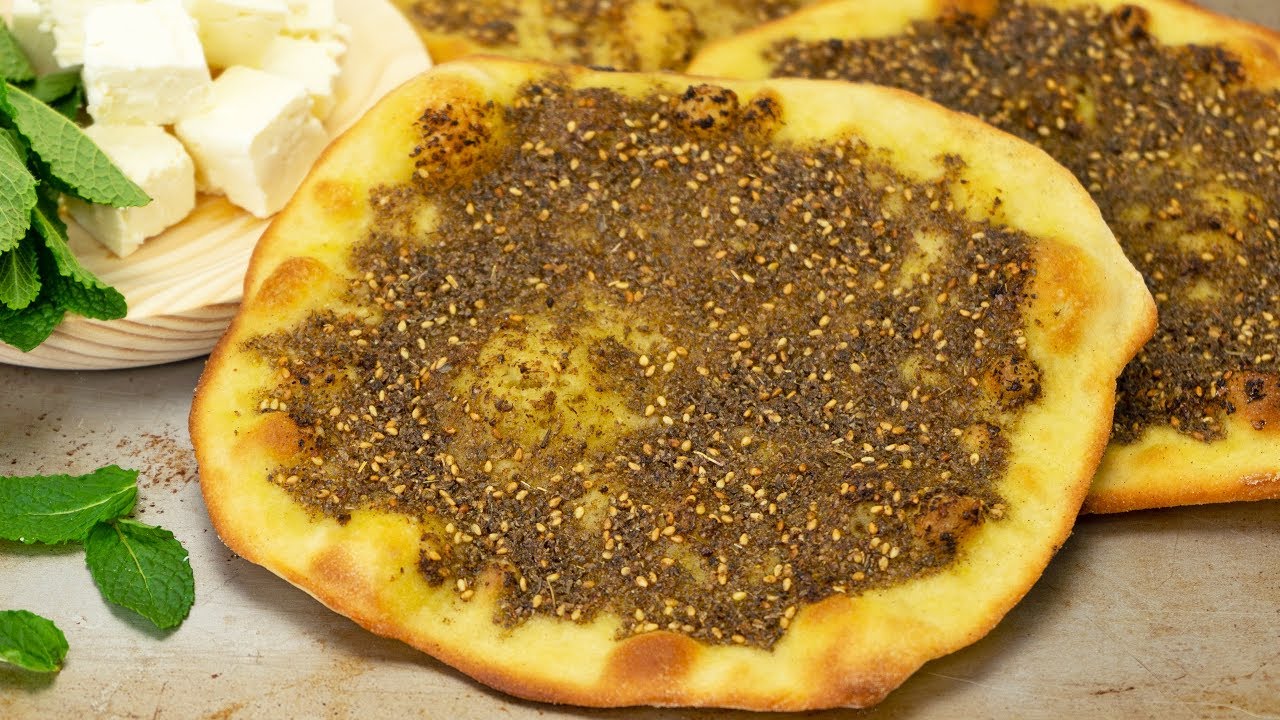
There is something comforting about the scent of man’oushe zaatar drifting through a neighbourhood at first light. Before traffic stirs and shop shutters rattle open, the ovens are warm, and rounds of dough are being stretched, pressed and scattered with herbs.
Across the Levant, this simple flatbread has long marked the beginning of the day, a modest dish whose history is woven into family routines, village life and the changing story of the eastern Mediterranean.
The origins of man’oushe lie in the ancient bread-making traditions of the Fertile Crescent. For thousands of years, communities baked flatbreads on hot stones or in clay ovens, using wheat that thrived in the region’s dry climate.
The name itself comes from the Arabic verb na’asha, to engrave or imprint, describing the way fingertips press small hollows into the dough before it meets the heat. Into these dimples goes zaatar, a blend built around wild thyme that grows abundantly on Levantine hillsides. Mixed with sesame seeds, sumac and olive oil, it captures the fragrance of the landscape in a single, vivid taste.
For generations, man’oushe was less a commercial product than a shared ritual. In towns and villages, women would prepare dough at home and carry it to the communal oven at dawn.
The bread emerged puffed and golden, the zaatar toasted and aromatic. Folded in half, it became a practical breakfast, easy to carry to school or into the fields.
As cities expanded in the nineteenth and twentieth centuries, dedicated bakeries began to specialise in man’oushe. What had once been a domestic routine evolved into a street-corner pleasure.
Although the classic zaatar and olive oil combination remains beloved, variations have flourished. Soft white cheeses such as akkawi are spread beneath the herbs; halloumi offers a saltier bite; minced lamb, tomatoes or even a freshly cracked egg can turn breakfast into a more substantial meal. Modern ovens and refined flours have altered textures slightly, yet the essential character, crisp at the edges, tender within endures.
Regional differences give the dish subtle personality. In parts of Lebanon the blend is tart with sumac, while in Syria it may be greener and more herb-forward. Palestinian olive oil, pressed from autumn harvests, lends a peppery depth.
In Cyprus, where thyme scents the hills and olive oil shapes the cuisine, man’oushe has found an easy welcome. Bakeries now prepare it alongside local breads, sometimes pairing Levantine zaatar with Cypriot halloumi. It feels less like an import than a cousin, reminding us that across this shared sea, food travels gently, carrying memory, flavour and the reassuring promise of another warm morning.





Click here to change your cookie preferences