
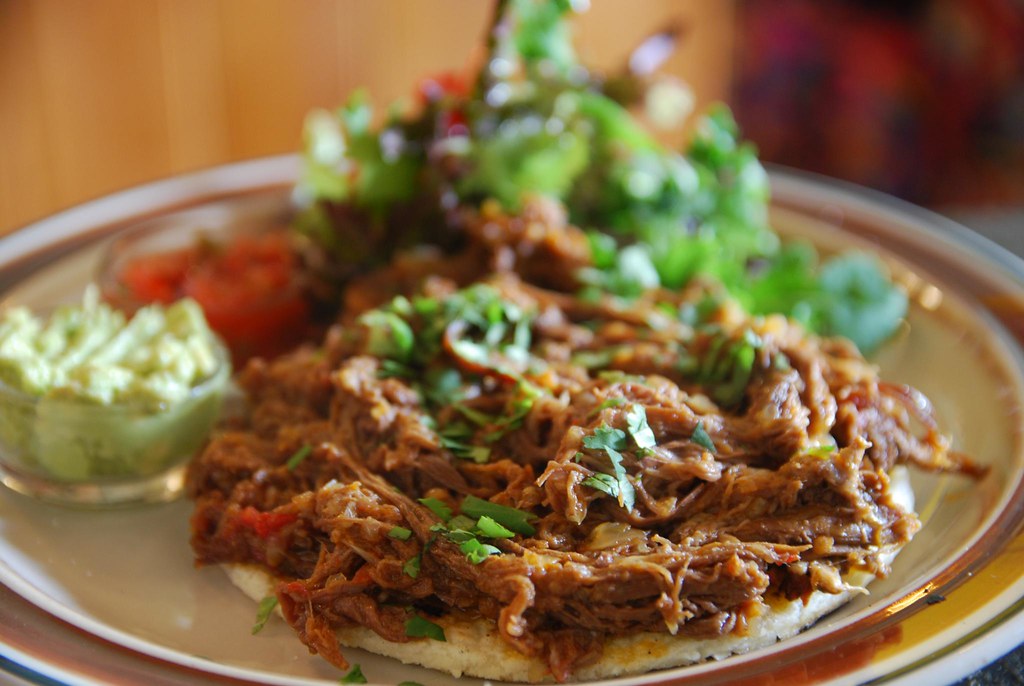
Ropa Vieja is one of Cuba’s most iconic dishes, a slow-cooked shredded beef stew in a rich tomato-based sauce that reflects centuries of cultural exchange across the Caribbean and the Spanish-speaking world. Its origins are often traced back to the Canary Islands, from where Spanish settlers carried culinary traditions to Cuba during the colonial period.
The name, meaning ‘old clothes’, is said in popular folklore to derive from the dish’s resemblance to torn fabric, though some legends also attribute it to a penniless man who once cooked and stewed his old clothes in desperation before a miracle transformed them into food.
In Cuba, Ropa Vieja developed into a defining element of Creole cuisine, shaped by Spanish, African and Caribbean influences. Beef, once a luxury ingredient, became central to celebratory and family meals, slowly simmered until tender and then shredded into strands that absorb the deep flavours of peppers, onions, garlic and tomatoes. Over time, it became a dish associated with home cooking and communal gatherings, often served with rice, black beans and fried plantains, forming a complete and comforting plate that reflects the island’s culinary identity.
During the 20th century, Ropa Vieja gained national prominence as part of Cuba’s broader gastronomic heritage, appearing in both humble households and restaurant menus across Havana and beyond.
Its preparation traditionally required long, slow cooking, but modern adaptations have introduced pressure cookers and more efficient methods without sacrificing its characteristic depth of flavour. Despite such changes, the essence of the dish remains rooted in patience and the transformation of simple ingredients into something richly layered and satisfying.
Regional variations exist not only within Cuba but also across the wider Caribbean and Latin America. In the Canary Islands, versions may include chickpeas and potatoes, reflecting European agricultural influences. In some parts of the Caribbean, chicken or pork replaces beef, adapting to availability and cost.
Contemporary interpretations have also emerged in international kitchens, including vegetarian versions that use jackfruit or mushrooms to replicate the shredded texture while maintaining the traditional seasoning profile.
In Cuba, it is often considered a Sunday dish, prepared in larger quantities to be shared among relatives and neighbours.
In Cyprus, while not part of traditional cuisine, Ropa Vieja finds echoes in the island’s appreciation for slow-cooked meats and tomato-based stews, highlighting a shared Mediterranean sensibility for long-simmered, flavour-rich cooking that brings people together around the table across generations and cultures.
From its disputed origins to its place at the heart of Cuban culinary identity, Ropa Vieja endures as a dish that speaks of migration, memory and adaptation, continuing to evolve in kitchens across the world while retaining the slow-cooked warmth and shared tradition.





Click here to change your cookie preferences