
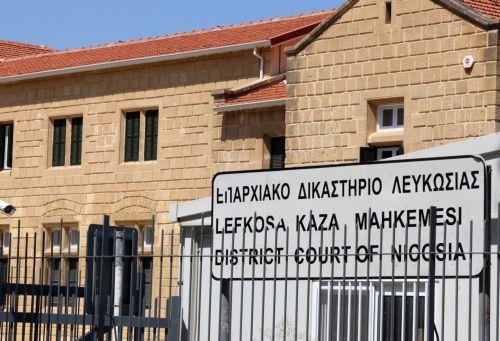
The defence in the trial of Georgios Christodoulou Zavrantonas – accused of possessing 15kg of cocaine with intent to sell – wrapped up presenting its case on Monday, with the court setting November 17 as the date for closing arguments from both sides.
During a previous hearing, the defendant’s attorney Christos Poutziouris had told Nicosia criminal court that his client would make an unsworn statement, as opposed to testifying under oath.
However, on Monday the lawyer informed the court that Zavrantonas decided against making an unsworn statement.
Zavrantonas has pleaded not guilty.
In January 2019, following a surveillance operation, police discovered 15kg of cocaine in Lakatamia.
Zavrantonas was sentenced to 22 years in prison in December 2022.
But in May 2026, the appeals court annulled the conviction due to an issue concerning the composition of the trial court and ordered the case to be tried again.
As in the original trial, the testimony of prosecution witness Yiannis Andreou, also known as ‘Maronas’, featured prominently in the case.
Andreou was convicted in connection with the same drug case before later providing a statement identifying Zavrantonas as the person allegedly involved in the importation of the cocaine.
The credibility of the prosecution’s key witness became a major point of contention.
The defence pointed to alleged inconsistencies between Andreou’s earlier and later statements, arguing that these undermined his credibility.
In court on Monday, Zavrantonas’ attorney called two witnesses to the stand.
The first was Viktoras Akamas, who in 2019 had acted as Andreou’s attorney during the first trial.
Poutziouris presented to the court an invoice with the amount of €4,300 – the fee paid to Akamas by his client Andreou at the time.
Cross-examining the witness, lead prosecutor Vasilis Bisas questioned the veracity of the invoice, asking how it was possible for Andreou to have made the payment on January 17, 2019 – the date on the invoice – as Andreou was behind bars at the time.
Responding, the witness said the payment was made by a relative of Andreou’s.
However, the prosecutor submitted to Akamas that in fact he never received any funds either from Andreou or a relative. Rather, the prosecutor said, the money was paid by Zavrantonas.
“If indeed his brother [meaning Andreou’s brother] had given you the money, you would have written down his name,” Bisas told the witness.
“But you didn’t, because you didn’t want it showing who paid you.”
The second witness for the defence taking the stand was Yiannis Kofteros, an employee with Epic Ltd – the telecoms provider for the mobile numbers held by Andreou at the material time.
Zavratonas’ lawyer presented a CD with telecoms data. Specifically, the CD contained three files – the court warrant lifting telecommunications confidentiality, technical data pertaining to the mobile phone numbers, and an analysis of the telecoms data.
The defendant’s lawyer focused on two mobile phone numbers attributed to Andreou, as well as on the movements of Andreou and Zavrantonas on January 16, 2019 between 5pm and 10pm.
Citing the data, the attorney said that four calls had taken place during the time in question. The telecoms data pointed to a route that included Lakatamia, the Tseri industrial area, Nisou, Ayia Varvara, then Lakatamia again and finally Aglandjia.
The witness was asked whether Epic’s mobile tower in Kalo Chorio picked up a signal from Andreou’s mobile phone. The witness said no.
The point about Kalo Chorio was intended to question the testimony of Andreou concerning the route he took to pick up the narcotics.
Earlier during the trial, the lawyer had questioned Andreou’s testimony, given that Andreou had changed his initial statement where he stated having passed by the Rizoelia roundabout. But subsequently, Andreou crossed out Rizoelia and wrote down Kalo Chorio roundabout.
The prosecutor next asked the same witness in what circumstances does a mobile tower record a signal from a phone.
Is it necessary for someone to make or receive a call, or send or receive a test message, he asked.
The witness said yes.
The court adjourned to November 17, while also ordering that the defendant remain in police custody until then.


Click here to change your cookie preferences