
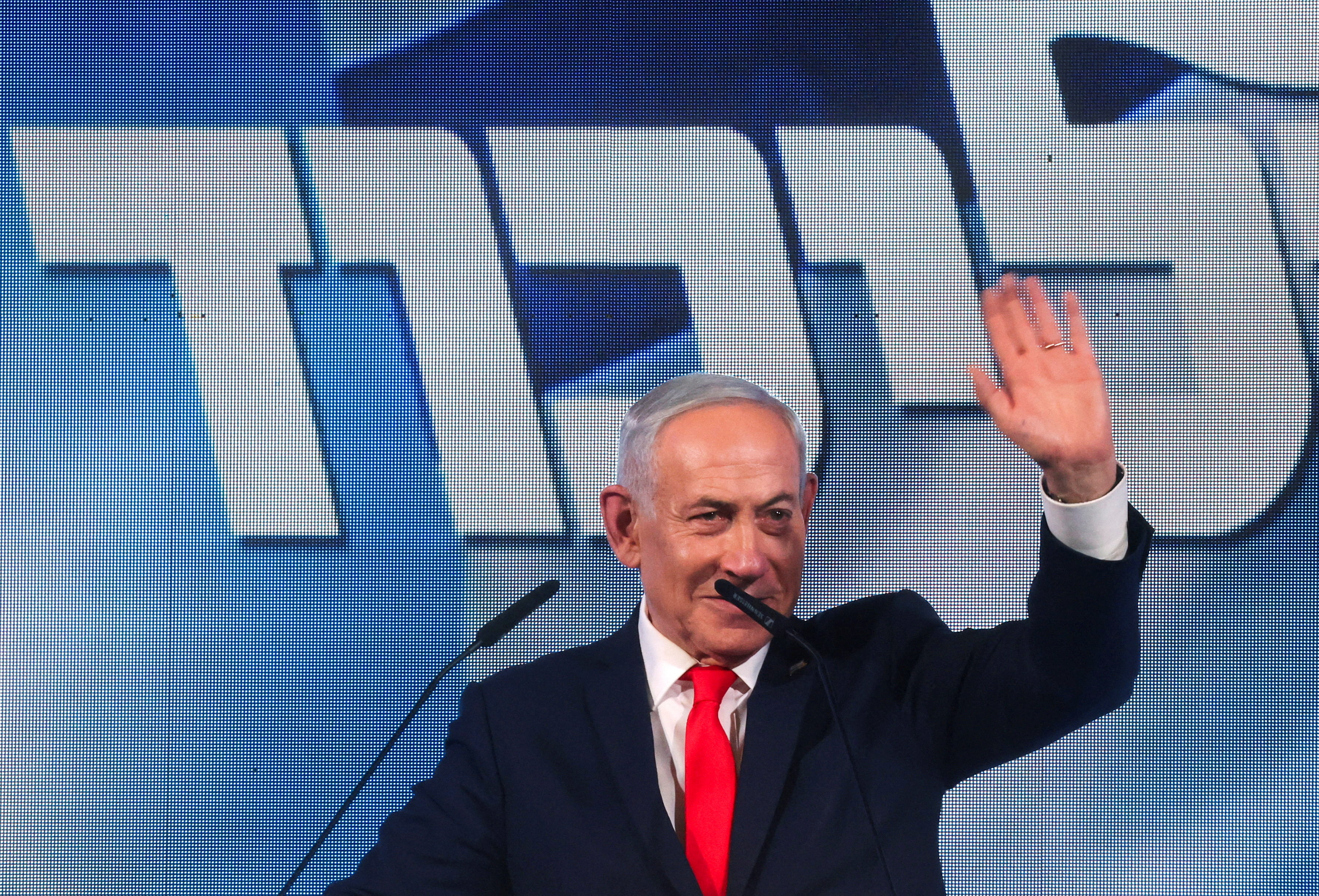
Israeli Prime Minister Benjamin Netanyahu has called for a broad coalition government under his leadership, ruling out cooperation with Arab parties despite their combined 19 seats potentially giving the opposition a parliamentary majority following last week’s election.
“We seek to form an expanded government with our partners and with any party that wishes to join us and does not support terrorism. I am open to dialogue on this issue,” Netanyahu said in a statement published on Likud’s official Telegram channel on Monday.
He said Israeli voters did not want a government dependent on Raam and the Joint List, the two Arab political alliances that secured a combined 19 seats in the 120-member Knesset, accusing the parties of supporting terrorism and rejecting the existence of a Jewish state, claims they have rejected.
The October 27 election left neither Netanyahu nor his main challenger, Gadi Eisenkot, with the 61 seats required to form a majority government.
Netanyahu’s coalition fell to 53 seats, while the opposition bloc led by Eisenkot secured 48. However, with the support of Raam and the Joint List, the opposition could command 67 seats, giving it a potential parliamentary majority.
The result has left Israel facing weeks of political uncertainty, with Netanyahu seeking to prevent the Arab parties from supporting an alternative government that could end his time in office.
Since the election, Netanyahu and Likud allies have also alleged widespread irregularities involving Arab parties, including bribery, foreign funding and electoral fraud. They have called for investigations, arrests and, in some cases, the annulment of the vote.
However, Israel’s Central Elections Committee has dismissed claims of widespread fraud as baseless, saying there is no evidence of systematic interference in the election.
The committee’s chairman, Supreme Court Deputy Chief Justice Noam Solberg, appeared alongside the heads of the Shin Bet security service and the attorney-general on Sunday to defend the integrity of the electoral process.
They said that even if suspicions concerning foreign funding were substantiated, this would not overturn the election result.
Netanyahu’s allegations have drawn criticism from opposition figures, with Eisenkot describing them as a “despicable and malicious influence operation” intended to undermine the election outcome.
The Joint List also rejected attempts to question the legitimacy of its electoral support, saying no campaign could erase the achievement of Arab voters.




Click here to change your cookie preferences