
Doing the unthinkable. Yes, some movies are actually better than their source material
I can almost hear the cries of “HEATHEN!” from the angry mob of people who read the title. Furious book-readers who are now sharpening their pitchforks and igniting their torches to come burn my house down.
Take it down a notch, will you?
Look, I’m just like you. In almost every instance, the book, or any source material for that matter, is better than the movie. Thing is though, celluloid constructs a rich, beautiful world, but it has its limitations. There is no limit to your imagination. The world constructed in your head, born into existence from the words you just read, could never, ever be compared to the cinema screen.
Exceptions do apply, though.
Today we are doing the unthinkable and looking at movies that are actually better than the books. Put down that pitchfork, grab a popcorn bucket and let’s go!
The Godfather (1972)
Let me make it absolutely clear. It’s not like the books on this list are bad. Some are excellent, zero notes. The thing is that when translating a work of art to a different medium, one gets to utilise tools that were not there for the original creator and thus improve upon that work.
Francis Ford Coppola did exactly that with Mario Puzo’s 1969 novel, “The Godfather”. However good a writer Puzo was, there is no way he could make his readers hear the emblematic score by Nino Rota. The Godfather theme is instantly recognisable even today, half a century after the movie was made, a testament to the impact it had.
Nor could Puzo get the seminal performances by Marlon Brando and Al Pacino. Before the movie, people probably had different ideas about how those characters looked and sounded. Afterwards, though, one cannot possibly imagine anyone other than these two actors.
Puzo wrote a sprawling, entertaining saga of a world of organised crime. Coppola perfected it.
Coppola also made some changes and deviated from the source material in ways that made the movie far better.
First off, pacing. Puzo created a world filled with characters, each with their own backstory. Whenever he took time to expand on each one, though, the action came to a halt. Coppola cut a lot of those subplots, like why Luca Brasi was so devoted to Vito, Sonny’s love life and Johnny Fontane’s far lengthier storyline, to name a few. Coppola trimmed those out and focused on pacing and rhythm.
One major cut he made, which had fans raging, was cutting out the flashback to Vito’s earlier years with the Sicilian Mafia and how he came to power. That part Coppola saved for the sequel, arguably one of the best movies ever made.
Fight Club (1999)
The first rule of Fight Club is that you do not talk about Fight Club.
The second rule of “Fight Club” is that the movie is better than the book. That’s not me saying that. That’s author Chuck Palahniuk.
In a 2000 interview, Palahniuk praised director David Fincher’s artistic approach, saying that the movie streamlined the plot and made it much more effective.
If you thought the movie was confusing and hard to follow, you haven’t read the book. Palahniuk is a great writer, but understandably, he is not everyone’s cup of tea.
Released in 1996, Palahniuk’s book is a dark satire of consumerism, masculinity and modern society.
Fincher took those ideas and turned them into a coherent plot.
Much like our first entry, the actors’ memorable performances bring those characters to life in a way that makes it impossible to picture them differently. Brad Pitt’s chaotic Tyler Durden, Edward Norton’s meek narrator and Helena Bonham Carter’s troubled Marla.
The film also changed the ending, which was somewhat controversial at the time but, in the end, was considered to be a wise move, as it was far bleaker.
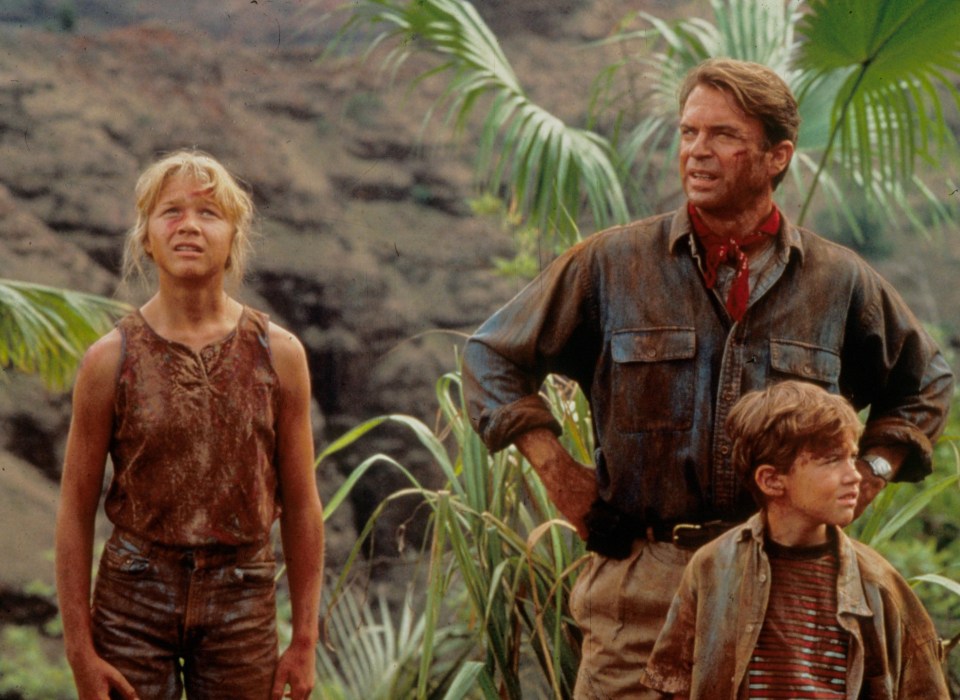
Jurassic Park (1993)
This one is not even close. “Jurassic Park” was an OK book based on an amazing idea: what if we could duplicate dinosaurs using DNA found in preserved mosquitoes?
The book is a maze of scientific explanations about genetic engineering, with the author having characters analyse difficult concepts, grinding the action to a halt.
Talking about characters, Crichton’s book is very different from the movie. In the book, the billionaire owner of InGen, John Hammond, is an incredibly unpleasant character. Narcissistic to a degree that could be considered criminal, arrogant and solely focused on profit over everything else. A very accurate depiction of the billionaire class, but miles away from the John Hammond Steven Spielberg brought to audiences. Affable, kind-hearted, a boy explorer in an old man’s suit, perfectly played by Richard Attenborough.
The mathematician Malcolm is also completely different from the raw sexual charisma and chaotic energy brought by Jeff Goldblum. In the book, he is sarcastic, elitist and devoid of any likeable qualities. Amplified by the fact that Malcolm shares many of Crichton’s controversial opinions on climate change, specifically the “humans had little to do with it” part.
Steven Spielberg ironed those issues out, cut a significant part of the jargon, made some changes to the characters and invested heavily in animatronics instead of CGI.
The result is arguably one of the best sci-fi movies ever made, one that launched a billion-dollar franchise that is still going strong today.
The scene with the Brachiosaurus, when Grant sees his first dinosaur, will live in our minds rent-free for eternity.
Spielberg, it would seem, spared no expenses.





Click here to change your cookie preferences