
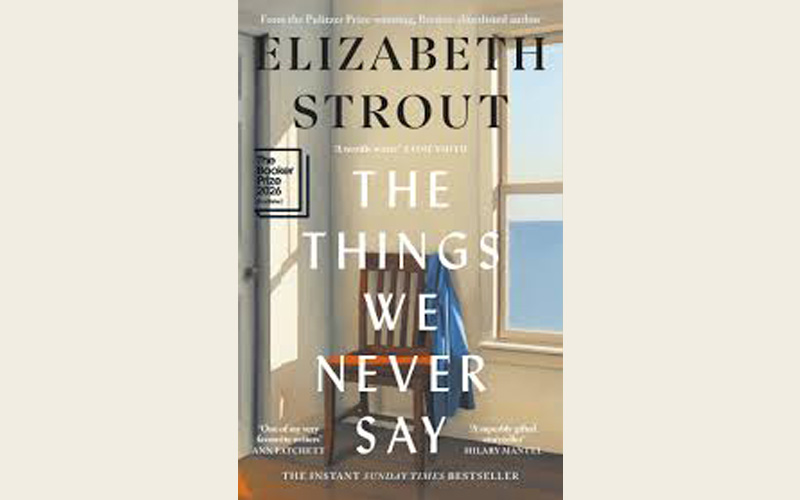
Book review: The Things We Never Say by Elizabeth Strout
By Philippa Tracy
At fifty-seven, Artie Dam is confused. He can’t decide if it is the upcoming 2024 election that is making him feel as if a noose is “tightening each day around his neck” or loneliness. The book starts with a quote from Carl Jung about loneliness coming from an inability to communicate things that are important. Artie is often unable to communicate what he feels; it is not always clear, even to him, although he spends a lot of time reflecting and analysing his feelings. He has been obsessively thinking about suicide for a while. It is not clear why. Just that he is agonising over how to do it without his wife, his son, or his students, finding out.
Artie is a high school history teacher, and coaches the school soccer team. On the surface, he appears to have plenty of reason to feel content. “Artie had made it; he understood this. He was, in many ways, the embodiment of the American dream.” He lives in a lovely house on the shoreline in Massachusetts with his wife, Evie. He has a “modest” sailing boat that he uses at the weekends in good weather. He loves his students, but notices how they have become more anxious since the pandemic. They affectionately call him, “Damn-dam” and he was named state Teacher of the Year.
There are a number of things going wrong in Artie’s life. He is shocked by the result of the election. When he tries to discuss work with Evie, he can see that, after years of marriage, she is “no longer interested.” She is suffering in her own way, but Artie doesn’t notice. Artie lets things go. Evie and Artie come from different class backgrounds. They inherited the house they live in from his in-laws, people he thought of as “vulgar.”
Evie and Artie suffered a great tragedy 10 years earlier, “as many people do.” So Archie is, in many ways, a regular guy. But now time is measured very much before and after the tragedy. Evie used to be “warm.” She has since become a therapist and is now so wrapped up in her work, they barely communicate. At one point, Artie notices that her face is “more familiar to him than his own” but she has “the eyes of a stranger.” And their only son, Rob, is now “a person who remained deeply inside himself.” Artie goes to parties and instead of making small talk or gossiping, he asks his friends and colleagues if they believe there is free will in the world.
After the accident, Rob has another secret tragedy to contend with that devastates him again. When he tells his father, Artie cannot bring himself to talk to Evie about it. Instead, he asks her, “Did Carl Jung believe in free will?” He catastrophes about the election result and wonders why people lie to each other. On the other hand, Evie believes that “living honestly comes in many different forms.” There is a lot going on in this incredibly moving short novel shortlisted for the Booker Prize 2026.





Click here to change your cookie preferences