
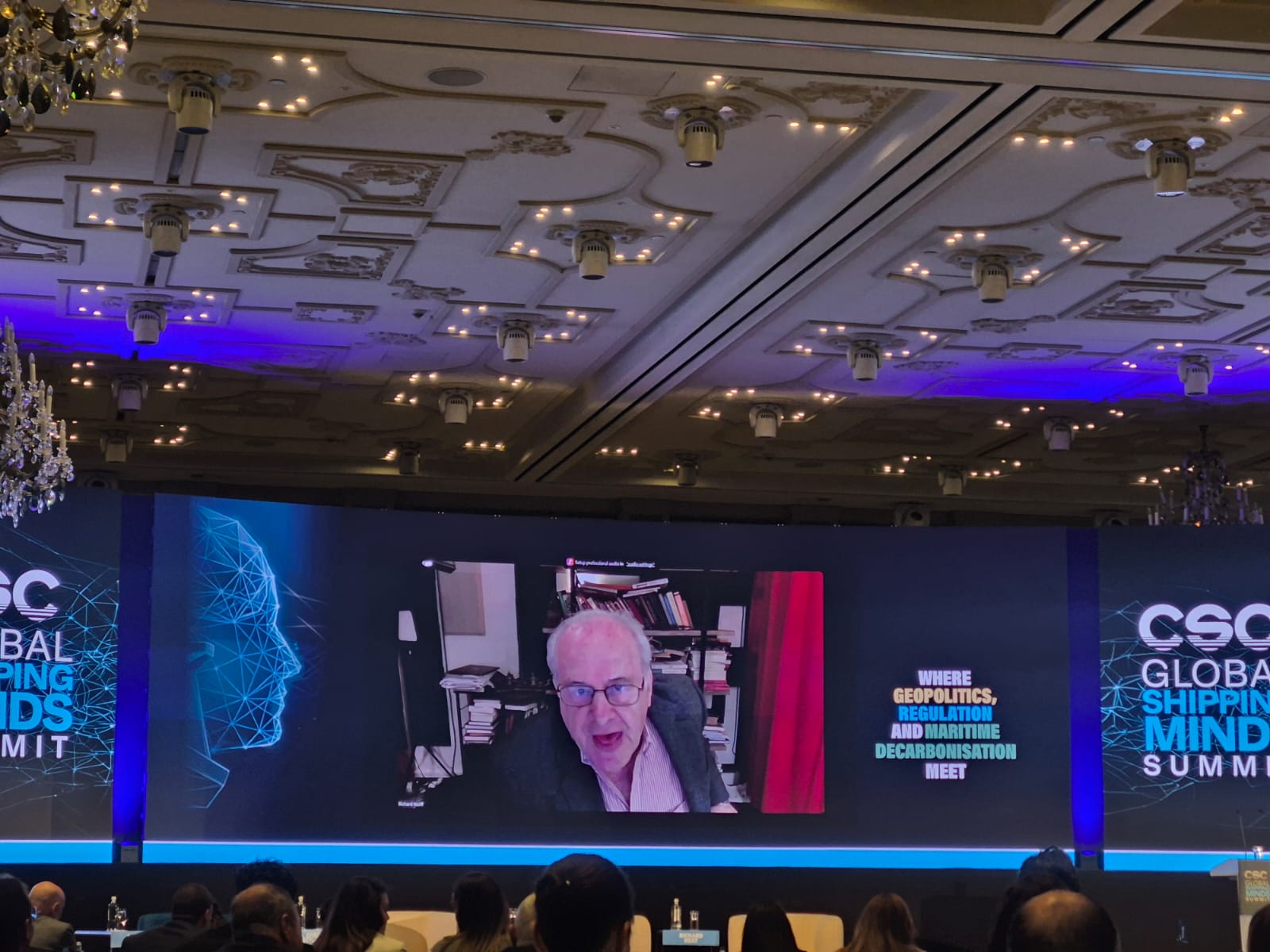
The global shipping industry must prepare for a fundamental shift in trade routes, manufacturing and consumption as China’s economic rise challenges US dominance and developing economies seek a greater share of global wealth, American economist Richard D. Wolff said on Friday.
Addressing the inaugural Global Shipping Minds Summit in Limassol, organised by the Cyprus Shipping Chamber (CSC), Wolff argued that the redistribution of economic power would have far-reaching consequences for maritime transport, with geopolitical developments becoming an increasingly important part of everyday business decisions.
Speaking live from New York, in a keynote address entitled “Hormuz in the Context of Historical Anti-Colonialism: The Future of the Shipping Industry”, the economist placed the challenges facing shipping within the context of four centuries of capitalism, colonialism and economic inequality.
He described the present period as a “profound and rapid historical change from one era to another”, arguing that many of the economic and political assumptions on which businesses had operated for decades no longer applied.
Industries across the world, including shipping, he said, were undergoing “momentous changes that require you to be open to thinking in new ways about new opportunities and also new dangers”.
Wolff, a prominent American Marxian economist, is professor emeritus of economics at the University of Massachusetts Amherst, where he taught between 1973 and 2008. According to his official biography, he also serves as a visiting professor at The New School in New York.
Educated at Harvard, Stanford and Yale, where he obtained his doctorate in economics in 1969, Wolff has also taught at Yale, the City College of New York and the Sorbonne in Paris.
He co-founded Democracy at Work, a non-profit organisation examining alternatives to capitalism, hosts the syndicated programme Economic Update and has authored several books, including Understanding Capitalism, Understanding Marxism and Understanding Socialism.
Turning to the historical relationship between capitalism and shipping, Wolff explained that the transition from feudalism to capitalism in Europe created an economic system dependent on continuous expansion.
“The successful business is not only one that makes a profit, but that is able to plough that profit back into the business to make it larger,” he said, adding that “growth is a condition of survival”.
Between the 17th and 20th centuries, capitalism expanded beyond Europe, bringing different parts of the world into an increasingly interconnected economy, a process in which maritime transport played a central role.
However, Wolff argued that the benefits of that expansion were distributed unevenly, with Europe, North America and Japan accumulating wealth through access to the resources, labour and productive capacity of Asia, Africa and Latin America.
“A tiny corner of that world economy became incredibly wealthy,” he said, describing the resulting economic inequalities as increasingly unsustainable.
According to Wolff, competition between colonial powers for resources and economic expansion contributed to the outbreak of the two world wars, which subsequently weakened European empires and accelerated independence movements across their former colonies.
Citing India’s independence in 1947, he argued that “much of Europe’s subsequent economic decline could be traced to the loss of the colonies on which its historical wealth had partly depended.”
The US, by contrast, emerged from the Second World War with its domestic productive capacity largely intact and was able, in Wolff’s assessment, to extend its economic and political influence into markets previously dominated by European powers.
“The US inherited all of the other empires,” he said, arguing that American companies and political institutions benefited from the retreat of European colonial powers.
However, the development that fundamentally altered this arrangement, according to Wolff, was the rapid economic expansion of China.
Presenting a graph comparing the American and Chinese economies, he acknowledged that the United States remained wealthier by several measures but argued that the difference in their respective growth rates was more significant for understanding future economic developments.
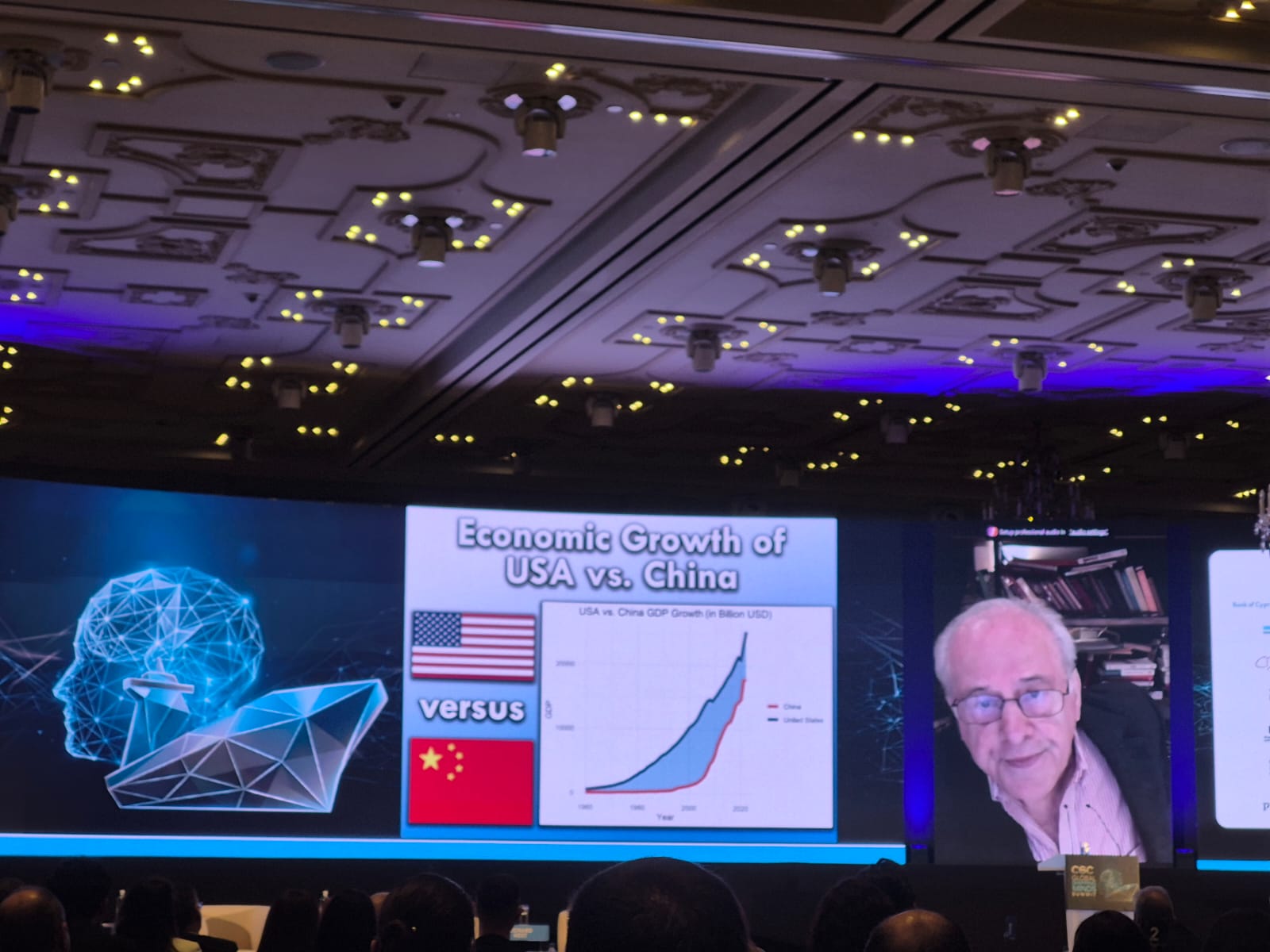
Wolff said China’s gross domestic product had grown at two to three times the pace of the US economy over much of the past three decades.
“This is the first time in a century that the US has a peer economic competitor,” he said.
China’s emergence as an industrial and economic power, he added, had also given countries across the Global South access to an alternative economic partner with substantial financial, technological and political resources.
He interpreted recent US foreign policy, including the actions of president Donald Trump, within this broader context, arguing that Washington was struggling to adjust to a decline in its relative economic influence.
For shipping companies, Wolff drew particular attention to the Strait of Hormuz, describing the dispute over control of the strategic waterway as part of a much wider struggle over the distribution of global economic wealth.
He argued that countries historically excluded from the economic benefits generated by international trade were increasingly seeking greater control over the resources and commercial routes within their regions.
Wolff suggested that similar developments could have implications for other strategically important maritime passages, including the southern entrance to the Red Sea and the Strait of Malacca.
In his assessment, competition over access to these routes, including the potential imposition of transit charges, reflected growing demands by developing economies for a greater share of the wealth generated through international commerce.
Beyond maritime security, however, Wolff identified the geographical distribution of manufacturing as another factor that could fundamentally alter the shipping business.
“The production is going to be redistributed around the world,” he said, arguing that industrial activity would not necessarily remain concentrated in North America, Western Europe, Japan or even China.
He estimated that China’s manufacturing base was already twice the size of that of the US, raising the question of whether Beijing would support a wider distribution of industrial production across developing economies.
Such a development, he explained, would affect not only where goods were manufactured but also where people lived, worked and consumed them, with direct consequences for international cargo flows and shipping routes.
Military conflicts and restrictions on maritime transport could also encourage businesses to examine alternative means of moving goods, including rail and road transport, particularly where exposure to geopolitical risks made established sea routes less attractive.
During a subsequent discussion with summit participants, Wolff’s assessment of European economic decline was challenged by an audience member of Cypriot descent, who pointed to improvements in living standards over the past four decades, the contribution of Commonwealth migrants to Britain’s post-war reconstruction and Europe’s continuing role in international affairs.
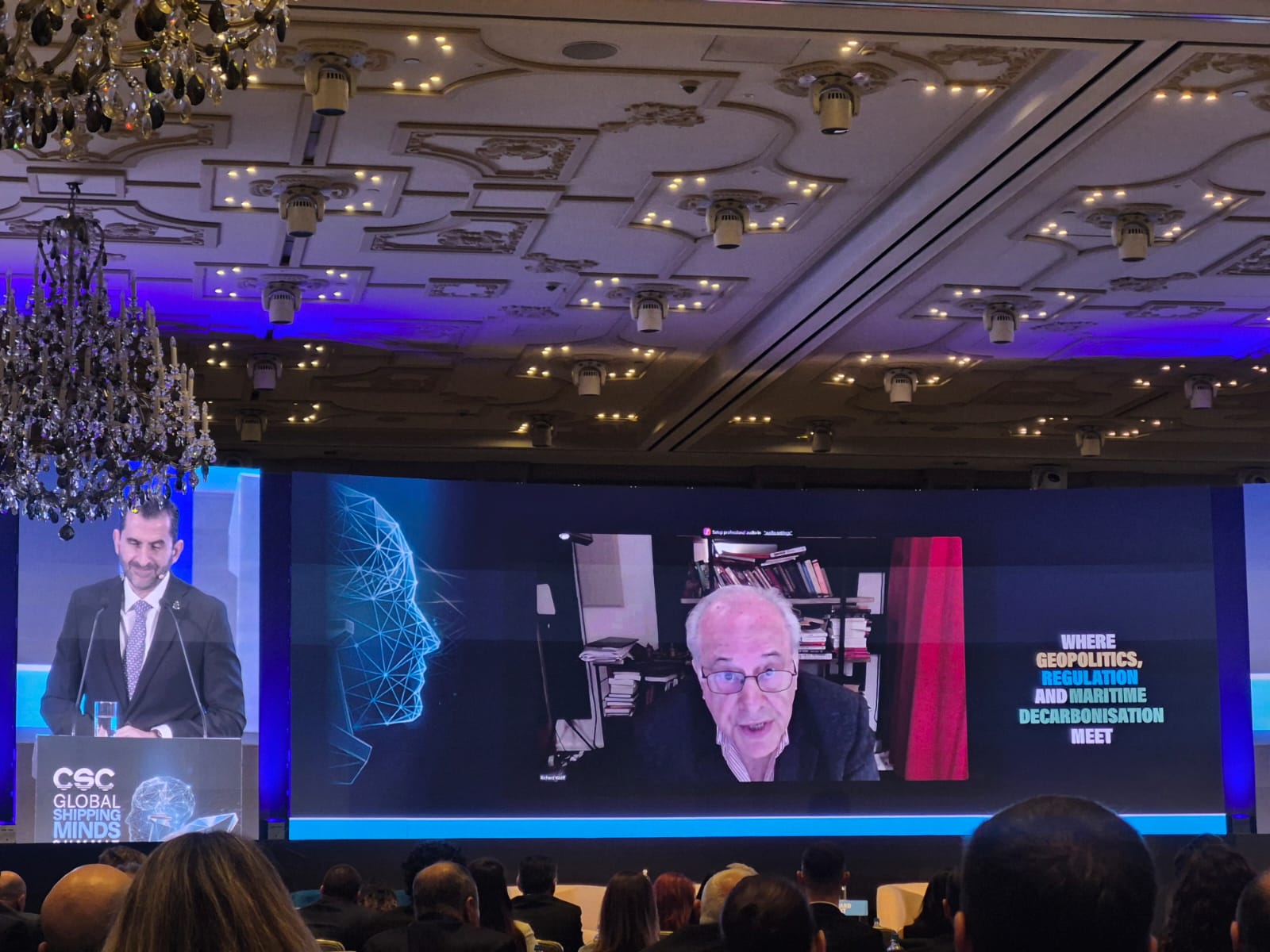
Wolff acknowledged that historical improvements had occurred but argued that the issue facing households today was the deterioration in their immediate economic circumstances rather than how their living standards compared with those of previous generations.
He also argued that wealthier sections of society were better positioned to protect their assets during periods of economic decline, leaving middle- and lower-income households to absorb a disproportionate share of the costs.
In his view, those economic pressures had contributed to Trump’s political success in the United States and the growing popularity of nationalist political movements in Europe.
Asked whether the changes he described could ultimately produce positive outcomes for future generations, Wolff rejected the suggestion that economic and geopolitical developments would inevitably lead to catastrophe, stressing instead the importance of education and an informed understanding of international affairs.
“I think we can find solutions, but we have to begin by admitting what the problems are,” he said, identifying relations between Western Europe and Russia, and between the US and China, as two major potential sources of escalating conflict.
Responding to a separate question on Ukraine, Wolff said he was not a supporter of Russian president Vladimir Putin, but argued that Europe had missed an opportunity to reconsider its security arrangements following the collapse of the Soviet Union.
He cited NATO’s eastward expansion and Russian security concerns, calling for a reassessment of Europe’s relations with Moscow to prevent further military escalation.
His interpretation of the conflict contrasts with the position expressed by the UN General Assembly, which in March 2022 condemned Russia’s aggression and demanded the withdrawal of Russian forces from Ukraine.
Wolff also disclosed his personal connections to Europe, explaining that his mother was born in Berlin, his father in France and that German and French were his first two languages.
“I was born in the US, but as a child of refugees,” he said, explaining that his family background had maintained his close connection with Europe throughout his life.
For the shipping executives gathered in Limassol, his message was that understanding geopolitics would increasingly become a commercial necessity, rather than a matter separate from the operation of their businesses.





Click here to change your cookie preferences