
Greek government spokesman Pavlos Marinakis on Thursday questioned the legality of Turkey’s decision to deploy six F-16 fighter jets to Cyprus, saying that it is “prohibited” for Turkey to use the aircraft for “offensive actions outside the country”.
“The invasion and occupation of the northern part of Cyprus is illegal and does not legitimise any presence of a military force on the island. The F-16s, in fact, are prohibited from being used for offensive actions outside the country by the US supply contract,” he told a press conference.
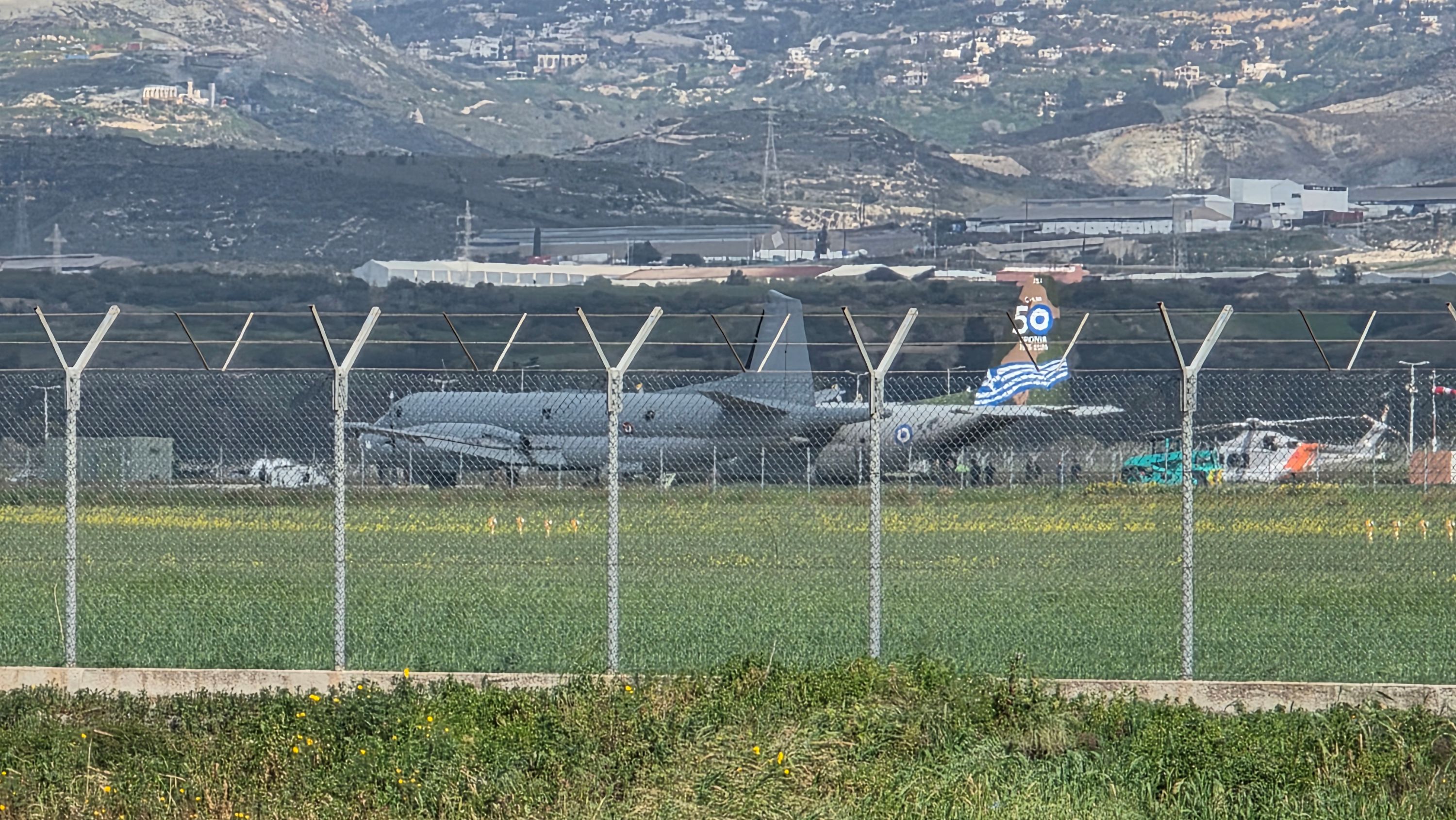
Turkey’s deployment of six F-16s came a week after Greece had deployed four F-16s of its own to Paphos in the aftermath of an Iranian-made drone hitting Cyprus’ British Akrotiri air force base.
Greece’s foreign ministry’s spokeswoman Lana Zochiou had insisted on Thursday that her country’s own deployment was “purely defensive in nature”, while Omer Celik, the spokesman of Turkey’s ruling AK Party, said of his own country’s deployment that “we have to consider the security of the TRNC”.
F-16 fighter jets were manufactured by companies from the United States, with US governments typically setting out conditions regarding their use when they are sold to other countries, though no explicit conditions regarding their use in Cyprus has ever been made public.
The most recent procurement of F-16s by the Turkish government took place in 2024, with the $23bn sale having hinged on Turkey’s parliament ratifying Sweden’s application to join Nato in the aftermath of Russia’s invasion of Ukraine.
Prior to that, the Turkish air force had operated F-16s since 1987, with Turkish Aerospace Industries even manufacturing its own F-16s between 1987 and 2011. Greece acquired its own F-16s for the first time in 1989.
Before this week, Turkey had once before stationed F-16 fighter jets in Cyprus, deploying them to Gecitkale (Lefkoniko) airport in 1998 in response to Greece’s positioning of four F-16s and two Lockheed C-130 Hercules military transport aircraft at Paphos airport amid rising tensions between the two countries.
On this occasion, however, the deployments to Cyprus have, at the very least, not raised tensions to the levels some had feared.
Following the arrival of the Greek F-16s last week, Turkey lodged no protest, and the country’s defence ministry spokesman rear admiral Zeki Akturk instead announced that a delegation from the Greek air force would visit Turkey this week.
Akturk on Thursday confirmed that the delegation had spent three days this week at the headquarters of Turkey’s air force, saying that the visit had taken place “within the framework of confidence-building measures”.
In addition to the F-16s, Turkey has deployed Hisar-A surface-to-air missiles to the island, with Turkish newspaper Sabah having reported that Bayraktar Akinci and Bayraktar TB2 unmanned combat drones are also stationed in Cyprus. They are likely located at Gecitkale (Lefkoniko).
Greece, meanwhile, sent two frigates, including the Kimon, which was described by Mitsotakis during his visit to the island as the “pride of the Greek fleet”, to Cypriot waters.





Click here to change your cookie preferences