
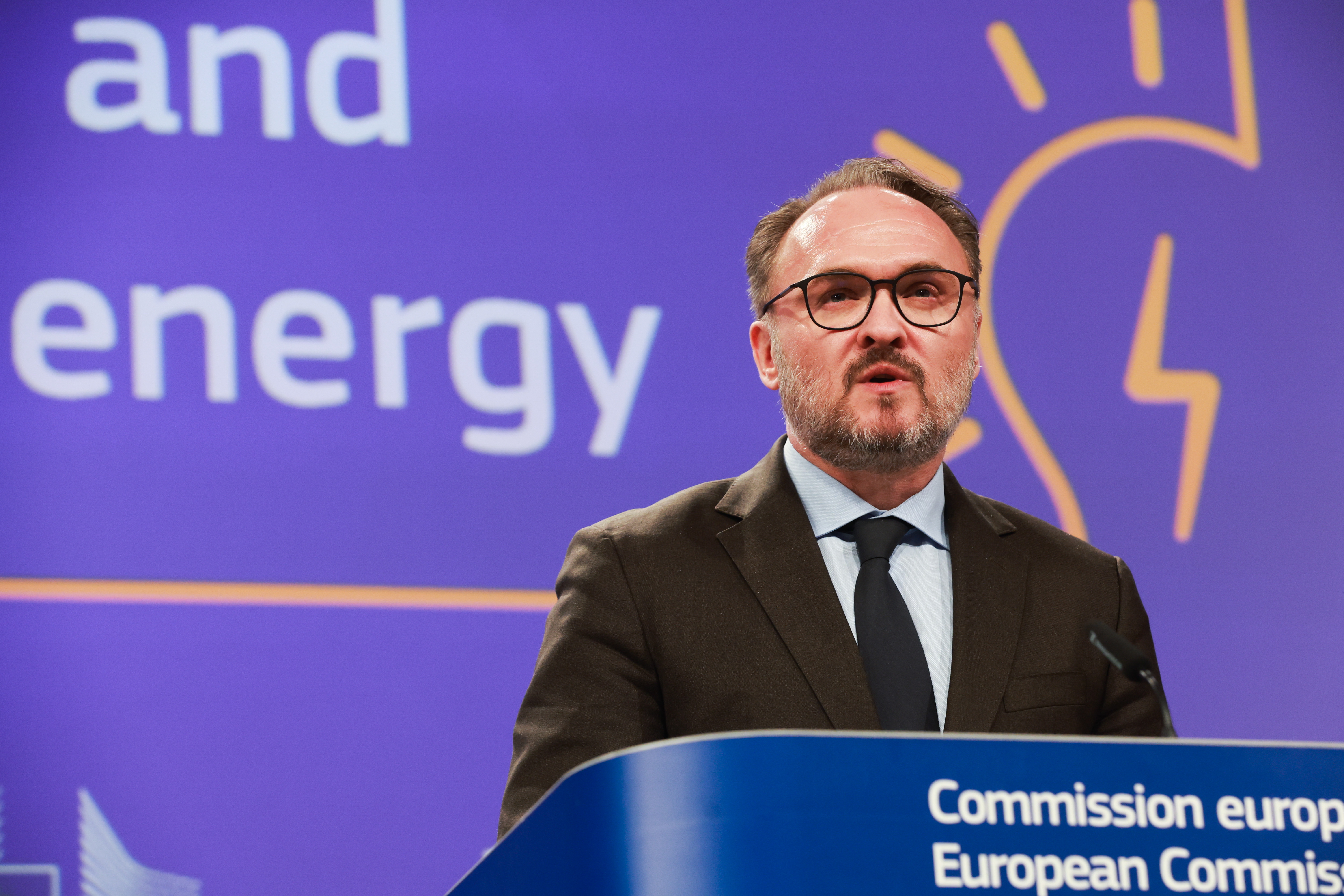
European Energy Commissioner Dan Jorgensen on Tuesday stressed the European Commission’s “crystal clear” commitment to the planned Great Sea Interconnector project, which, if completed, will link the energy grids of Cyprus, Greece, and Israel.
“The European Commission has always supported and keeps supporting the Great Sea Interconnector as a key strategic energy link,” he told the Cyprus Mail.
He added that the project will “end Cyprus’ energy isolation”, “secure the stability of the electrical network throughout the entire island”, and “fundamentally, lower energy prices”.
The mention of the “entire island” comes with Turkey and the Turkish Cypriot community having developed plans in recent years for a cable to be constructed to connect Cyprus’ energy grid to that of Turkey, and with this in mind, he was also keen to highlight the regional impact of the EU’s preferred interconnector.
“Beyond Cyprus, this is a project which can really enhance the regional security of supply and market integration, as well as accelerating the integration of cheap and sustainable renewable energy in the eastern Mediterranean,” he said.
He added that these foreseen benefits will come about “at a time when we are facing yet another energy crisis related to our dependency on fossil fuels”, with the closure of the Strait of Hormuz in light of the United States’ and Israel’s war with Iran having destabilised global oil supplies in recent months.
“The commission’s commitment has been crystal clear: to facilitate the implementation of the Great Sea Interconnector, we have granted the project the status of project of common interest,” he said, with this status having come alongside the awarding of almost €658 million worth of grants from the commission.
This grant, he said, is “one of the biggest grants ever” to be awarded under the EU’s “Connecting Europe Facility” – a funding instrument aimed at developing infrastructure across the bloc.
He went on to say that “more recently, we have doubled down on our support by designating this project as one of the eight energy highways we wish to prioritise to complete our energy union”, with the other highways including other electrical interconnectors and hydrogen and gas pipelines stretching fro Denmark in the north to Tunisia in the south.
With this in mind, he said that “in this spirit”, he convened a meeting with Cypriot Energy Minister Michael Damianos and his Greek counterpart Stavros Papastavrou, while all three also met representatives of the European Investment bank with the aim of giving “new impetus to its implementation”.
The meeting with representatives of the European Investment Bank comes after the governments of Greece and Cyprus had last month jointly penned a letter to the bank to request a new diligence study into the Great Sea Interconnector project.
Sources close to the matter told the Cyprus Mail that should the study deem it appropriate, funding for the project’s completion may be provided by the Luxembourg-based bank in due course.
That new diligence study comes after the governments of Greece and Cyprus had announced in November last year that the “economic and technical parameters” of the project would be “updated” with a view to attracting more investors to the project.
Those new economic and technical parameters are to come alongside a fresh feasibility study,
Papastavrou said at the time the plans for a new feasibility study and updated “economic and technical parameters” were being devised “in view of the potential investment interest”.




Click here to change your cookie preferences