
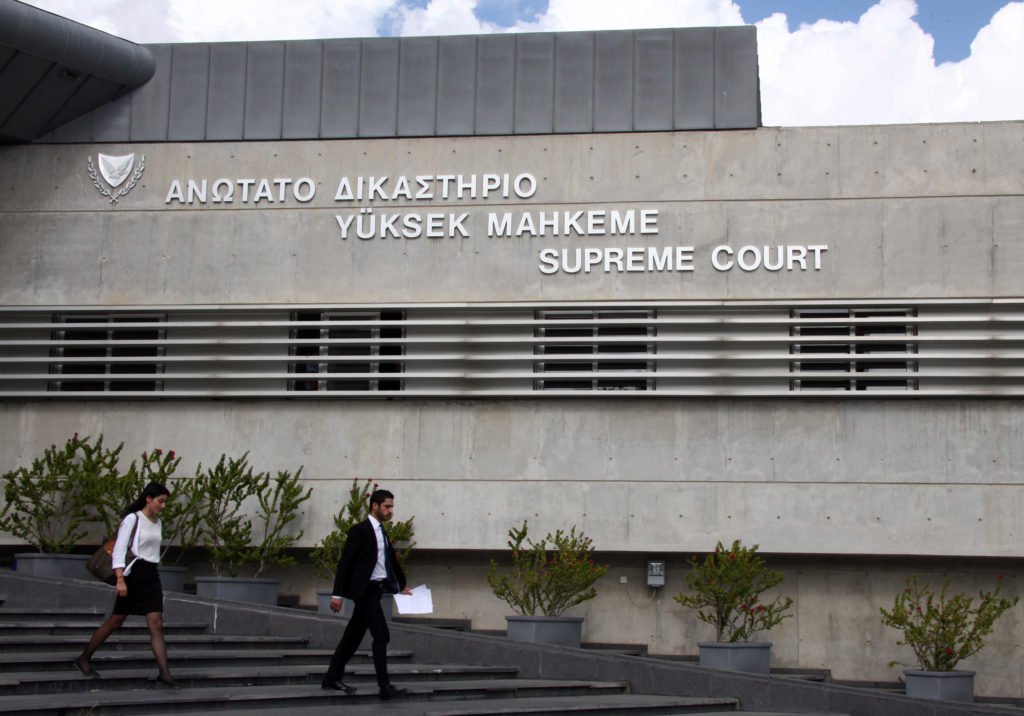
The Supreme Court on Tuesday annulled a district court order authorising the compulsory collection of biometric data from a man arrested on suspicion of arson, ruling that the lower court acted ultra vires (beyond its authority) and failed to justify the necessity and proportionality of the measure.
The case concerned an individual arrested last February on suspicion of arson who refused to consent to saliva samples, fingerprints, palm prints and photographs.
Police subsequently applied to the Nicosia district court, which issued an order on February 24 authorising the collection of the biometric material.
Although the applicant initially complied with the order, he later filed to seek its annulment.
On Tuesday, the Supreme Court found that the lower court had failed to carry out the required assessment under both domestic law and European directives, which has been incorporated into legislation governing the processing of personal data.
The judgment stressed that European law requires a strict examination of “necessity and proportionality” before biometric or genetic data can be collected without consent.
The court found that the district court had provided no reasoning explaining why the collection of saliva, fingerprints and photographs was considered proportionate in this case.
“The judge does not act automatically in such cases,” the supreme court stressed, adding that the court must be “fully satisfied that both reasonable suspicion and necessity exist”.
It further stated that reasonable suspicion “is not determined by the police officer who administers the oath but is established by the judge after careful examination of all the evidence”.
The Supreme Court also said the absence of any recorded judicial reasoning created “uncertainty” as to whether the lower court had undertaken the required legal assessment before issuing the order.





Click here to change your cookie preferences