

There’s a quiet but decisive shift underway in crypto trading.
A few years ago, success depended on strategy—timing entries, reading charts, managing emotions. In 2026, those factors still matter, but they are no longer the determining edge. What matters more is execution consistency, data processing speed, and risk control under volatility.
This is why a growing share of market activity is now driven by automated systems. Not because they predict perfectly, but because they operate without hesitation, fatigue, or inconsistency.
The more relevant question today is no longer which trading bot is the best, but rather:
Which type of system gives you a structural advantage in an increasingly automated market?
This guide examines the most widely used AI crypto trading bots globally, not simply as a ranking, but as a reflection of how trading itself is evolving.
AI trading bots in 2026: Two different philosophies
Most platforms today fall into two distinct categories.
Tool-based platforms provide strategies, signals, and controls, but the user remains responsible for decision-making.
System-based platforms reduce or eliminate the need for user intervention. Execution, adjustment, and risk management are handled internally by the system.
This distinction is subtle but important. Tools amplify decisions, while systems replace them. In fast-moving markets, fewer manual decisions often lead to fewer errors.
Quick overview: Top 10 AI Crypto trading bots (2026)
| Platform | Company Background | Key Strength |
| BulkQuant | AI quant trading platform | Fully managed AI system |
| AriseAlpha | Automation platform | One-click AI execution |
| 3Commas | Established trading tools provider | Multi-exchange strategies |
| Cryptohopper | European fintech platform | Strategy marketplace |
| Coinrule | UK-based company | No-code automation |
| Pionex | Exchange-based platform | Built-in bots |
| Bitsgap | Quant trading tools | Arbitrage & portfolio control |
| TradeSanta | SaaS trading tool | Beginner-friendly automation |
| WunderTrading | Social trading platform | Copy trading |
| Dash2Trade | Analytics platform | AI-driven signals |
The 10 most popular platforms—What actually sets them apart
1. BulkQuant
While many platforms focus on adding features, BulkQuant follows a different direction by removing complexity from the user experience.
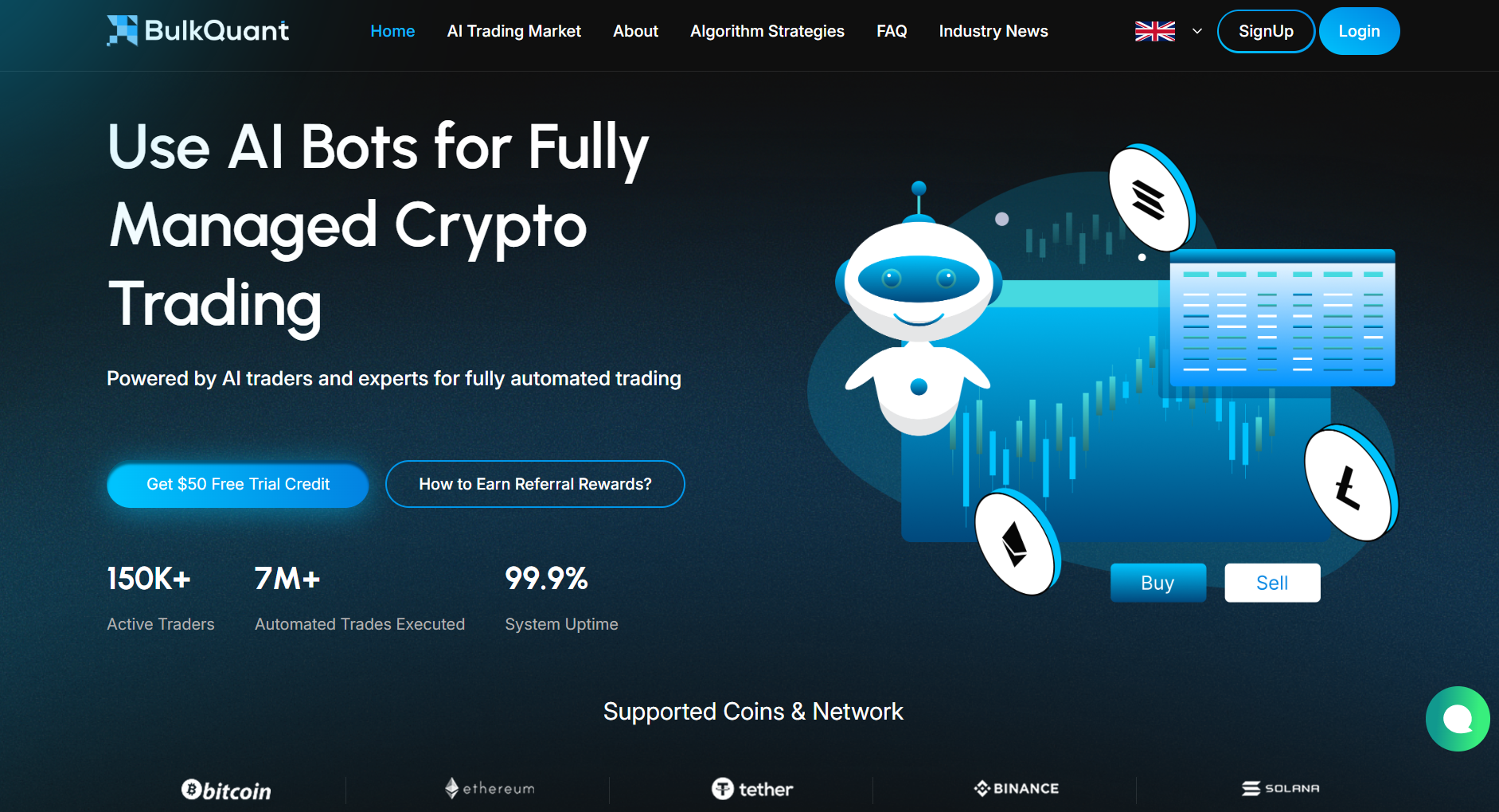
New users who register will receive$50 in trial credit for free!
Operated by Ai Mistral Limited, a London-based technology firm established in 2016, BulkQuant is designed as an AI-driven financial system for digital asset trading rather than a traditional bot platform.
According to its architecture, BulkQuant functions as a fully managed AI trading system where users are not required to configure strategies, monitor markets, or execute trades manually.
The system integrates multiple core components:
- Aggregated data from multiple exchanges
- Machine learning models that adapt to market conditions
- Real-time risk management, including automated position adjustments
- Continuous execution without manual input
What makes this approach relevant in 2026 is not automation alone, but consistency.
As markets become faster and more fragmented, human reaction time becomes a limiting factor. BulkQuant addresses this by minimizing human involvement in execution.
From a structural perspective, it behaves less like a tool and more like an autonomous trading layer.
The platform also aligns with evolving regulatory expectations, emphasizing transparency, system reliability, and AML-aligned operational standards.
Users can begin with a $50 free trial credit to experience how a fully managed system operates under real market conditions.
2. AriseAlpha
AriseAlpha positions itself as an accessibility-first AI trading platform, focusing heavily on lowering the barrier to entry for automated trading.

The platform’s core strength lies in its minimal setup architecture. Users can activate pre-built AI strategies without needing to configure parameters, connect complex APIs manually, or understand trading logic in depth. This makes it particularly attractive for first-time users who want exposure to algorithmic trading without the learning curve typically associated with quantitative systems.
From a technical perspective, AriseAlpha’s automation relies on pre-trained models and simplified execution frameworks, which prioritize ease of use over transparency. As a result, users benefit from fast onboarding but often lack detailed insights into how strategies adapt to market conditions, including entry/exit logic, risk thresholds, or model retraining cycles.
In short, AriseAlpha is best understood as a “black-box automation layer”—highly convenient, but with limited analytical control.
3. 3Commas
3Commas is one of the most established platforms in the crypto trading automation space, known for its comprehensive toolset rather than full automation.
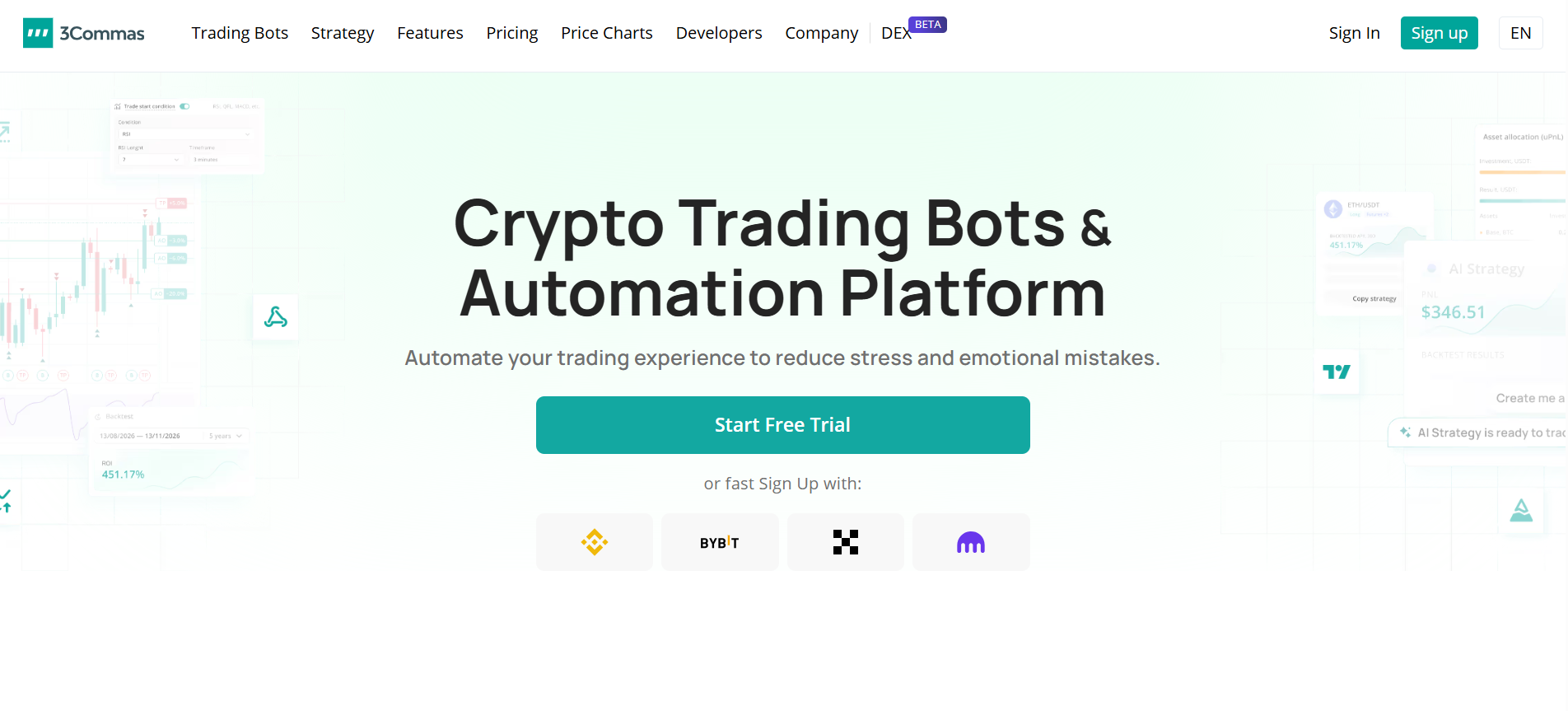
Its ecosystem includes:
- DCA (Dollar-Cost Averaging) bots
- Grid trading bots
- Smart trading terminals
- Signal-based automation (via TradingView integration)
Unlike fully managed AI platforms, 3Commas operates primarily as a multi-exchange control hub, allowing users to execute and manage strategies across exchanges like Binance, Coinbase, and Kraken.
A key advantage is granular control—users can fine-tune parameters such as take-profit levels, stop-loss triggers, and position scaling. However, this also means the platform requires:
- Ongoing monitoring
- Strategy adjustments
- Basic understanding of market behavior
3Commas is therefore best suited for users who want semi-automation with control, rather than a fully hands-off AI trading experience.
4. Cryptohopper
Cryptohopper is built around a large strategy marketplace. Users can select, customize, or copy trading strategies.
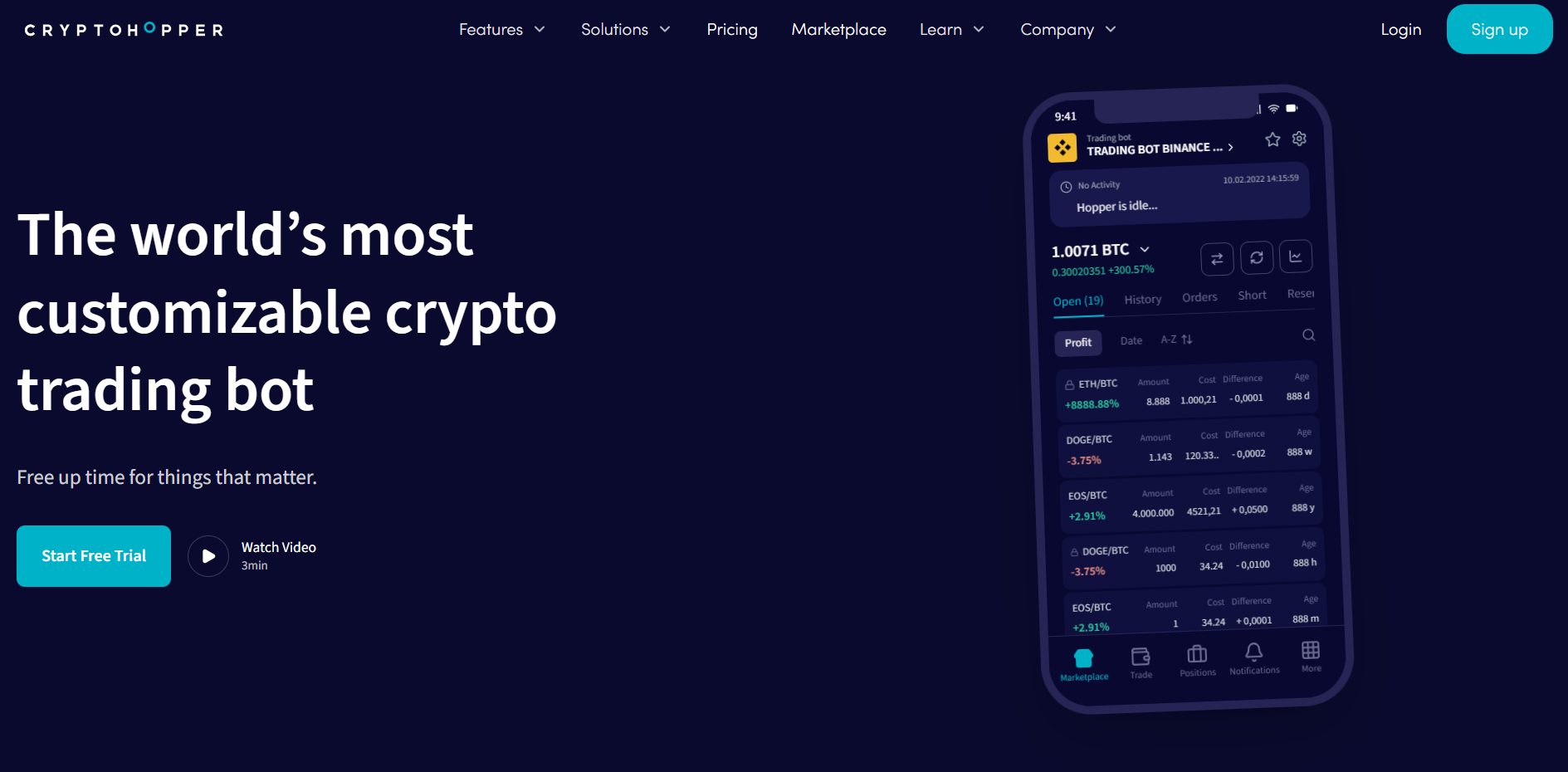
While flexible, performance can vary depending on the quality of chosen strategies.
5. Coinrule
Coinrule approaches trading through rule-based logic. Users define conditions visually, making it suitable for structured strategy design.
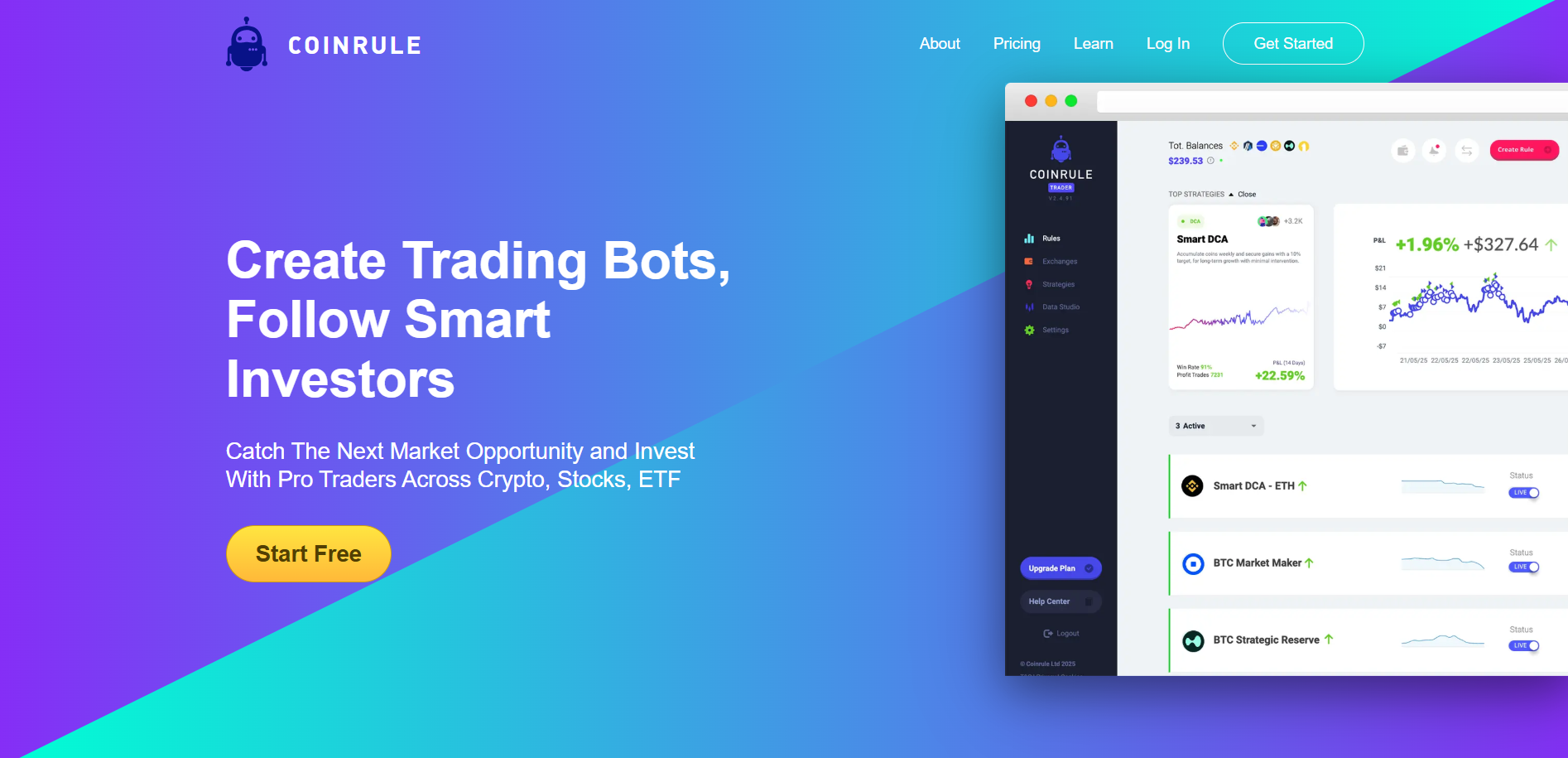
However, it still depends on user-defined inputs rather than full automation.
6. Pionex
Pionex integrates trading bots directly into its exchange, offering low-cost automation such as grid trading.

These systems are rule-based rather than adaptive AI-driven models.
7. Bitsgap
Bitsgap focuses on arbitrage opportunities and portfolio management across exchanges.
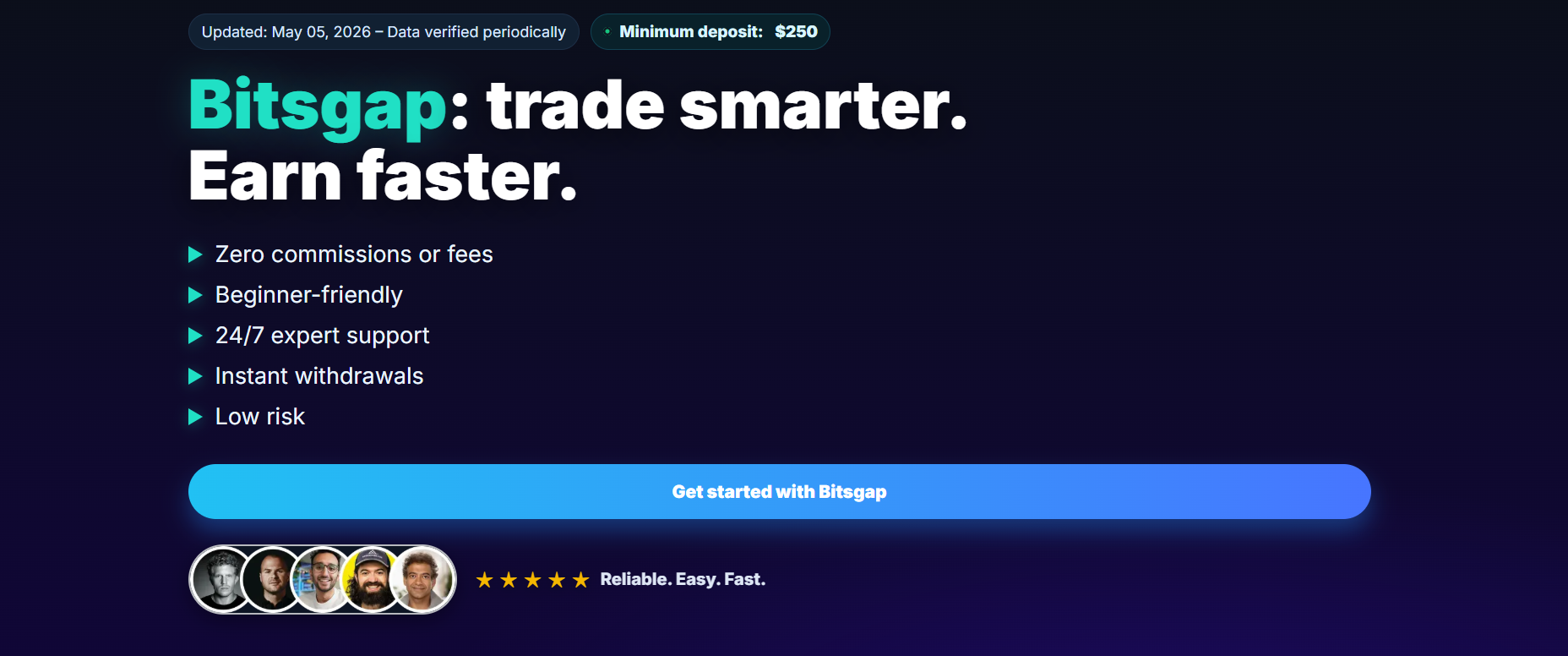
It is generally better suited for experienced users familiar with execution timing and market structure.
8. TradeSanta
TradeSanta simplifies automated trading with easy-to-use bot configurations.
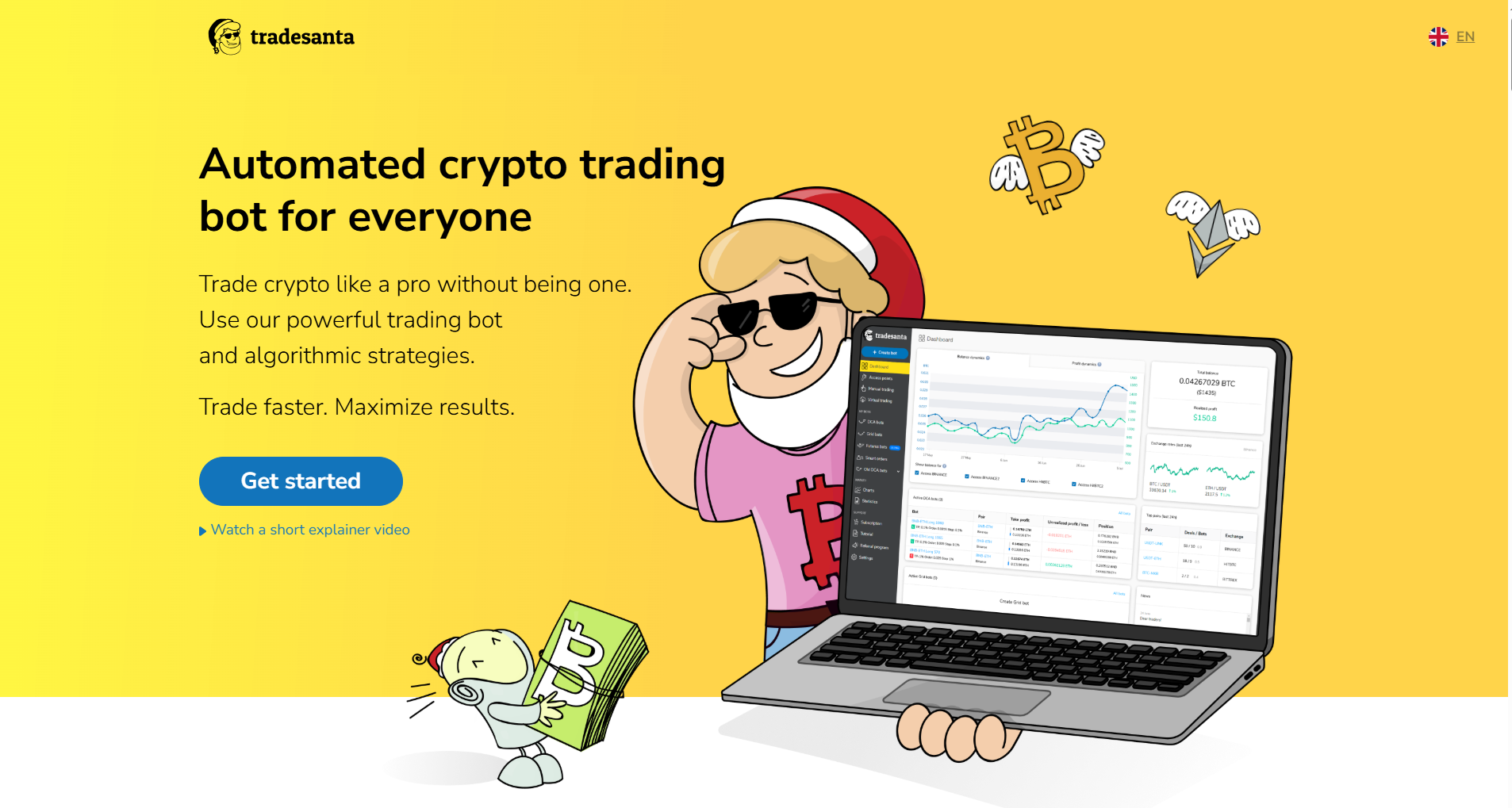
It is widely used by beginners but is typically considered an entry-level solution.
9. WunderTrading
WunderTrading emphasizes social trading, allowing users to copy strategies from other traders.
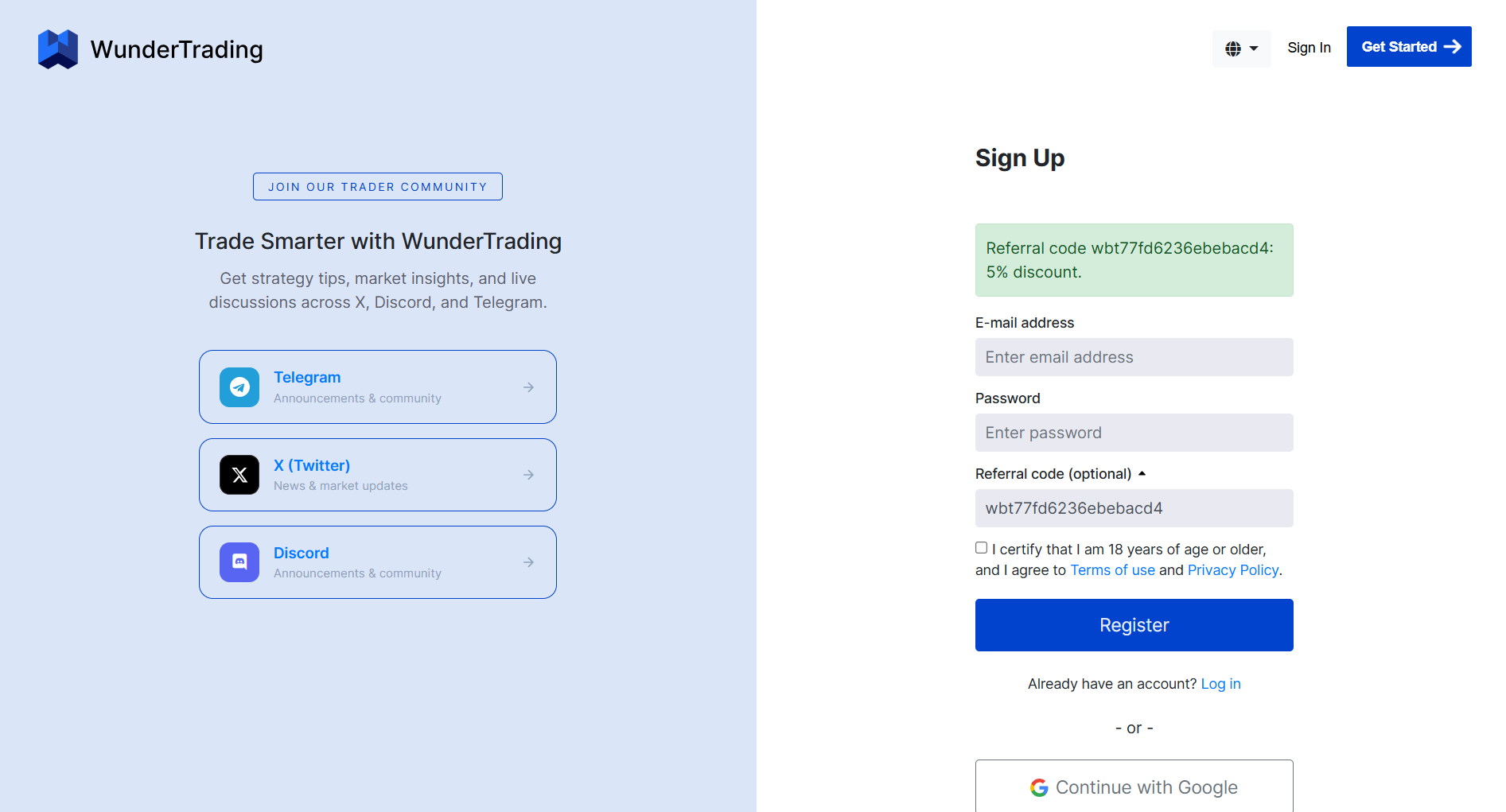
This reduces learning barriers but introduces reliance on third-party decision-making.
10. Dash2Trade
Dash2Trade functions as an analytics platform, providing AI-driven signals and market insights.
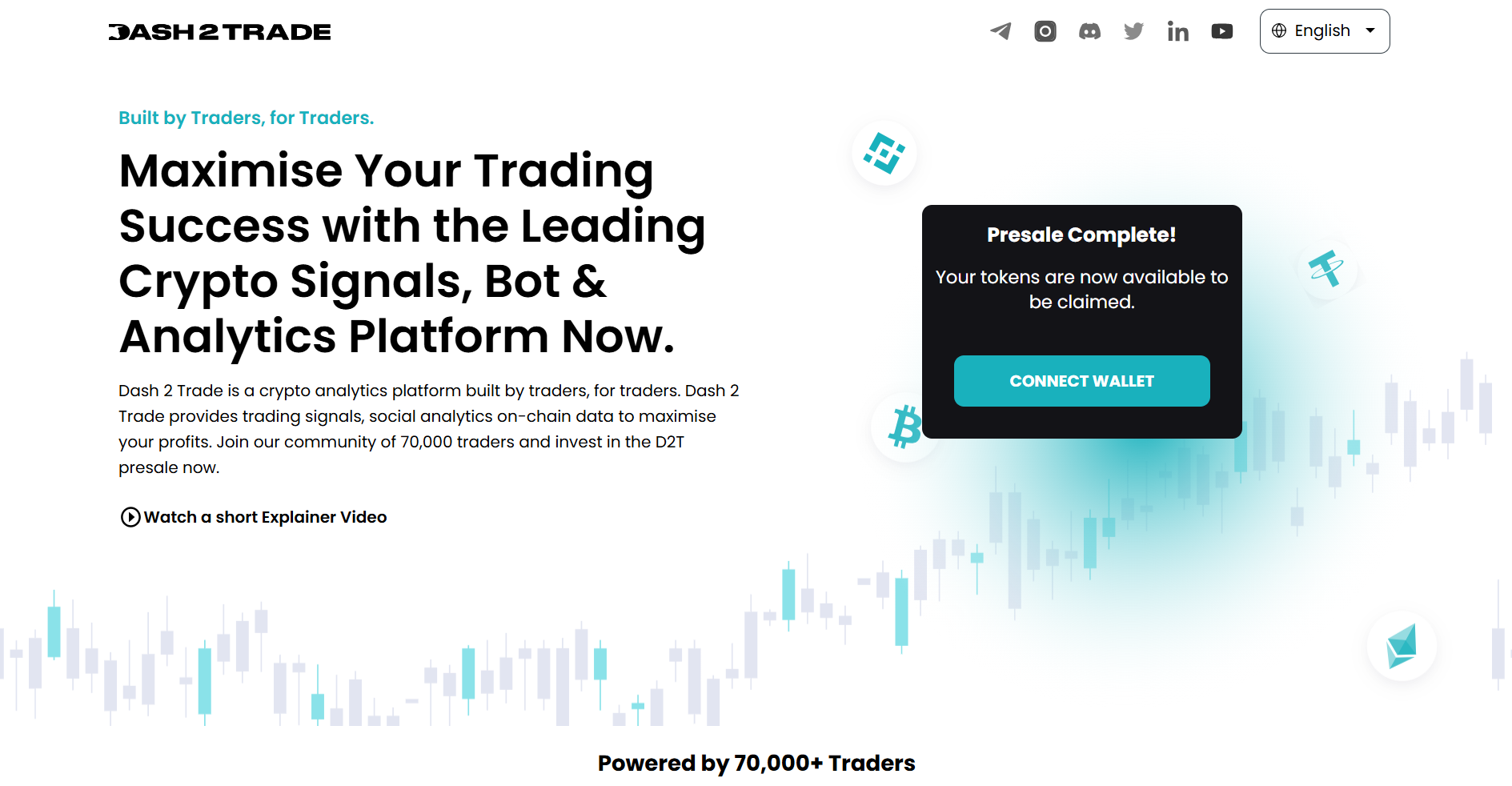
It does not execute trades directly, making it more suitable for users who prefer to remain actively involved.
Regulation in 2026: Standardization rather than restriction
Regulatory attention toward AI-driven trading is increasing, but the direction is often misunderstood.
The focus is not on limiting automation itself, but on ensuring:
- Risk transparency
- System accountability
- Compliance with AML and KYC standards
This creates a natural filtering effect in the market. Platforms built on stable systems and transparent operations are more likely to adapt, while less robust models may struggle.
At the same time, exchanges are increasingly integrating AI into fraud detection and risk monitoring, further embedding automation into the financial ecosystem.
AI trading is no longer an optional layer. It is becoming part of how markets function.
Conclusion: The real choice is your level of involvement
What appears to be a choice between trading bots is, in reality, a choice about participation.
Greater control introduces greater complexity. Reduced involvement increases reliance on system design.
As markets accelerate, minimizing human error becomes an advantage. This is why fully managed AI systems are gaining traction—not because they guarantee higher returns, but because they deliver more consistent execution.
FAQ
Can AI crypto trading bots generate consistent profits?
They can, but consistency depends on system design rather than AI alone. Execution discipline and risk control are key factors.
Why do users still lose money with trading bots?
Losses often occur when users rely on tool-based platforms while expecting system-level performance. Manual adjustments introduce errors.
What type of AI trading bot is best for beginners?
Platforms that reduce decision-making tend to be more suitable. Less manual input generally leads to more stable outcomes.
Will AI trading face stricter regulation?
Regulation is likely to increase, but mainly in the form of standardization and compliance requirements rather than outright restriction.
Is it still worth starting AI trading in 2026?
As automation becomes more widespread, the more relevant question is whether it is viable to trade without it.
DISCLAIMER – “Views Expressed Disclaimer – The information provided in this content is intended for general informational purposes only and should not be considered financial, investment, legal, tax, or health advice, nor relied upon as a substitute for professional guidance tailored to your personal circumstances. The opinions expressed are solely those of the author and do not necessarily represent the views of any other individual, organization, agency, employer, or company, including NEO CYMED PUBLISHING LIMITED (operating under the name Cyprus-Mail).





Click here to change your cookie preferences