
As of next year, the government plans to start paying back the some €12 billion it has borrowed from the Social Insurance Fund (SIF) over the decades, the labour minister signaled on Thursday.
Marinos Mousiouttas said a special-purpose vehicle, akin to a sovereign wealth fund, would be set up for the SIF by the end of 2027.
The government would pay into this fund the surpluses of the SIF as well as yearly instalments of its debt.
The minister cited an actuarial study, which calculated that within 40 years – 2026 to 2066 – the state will be able to fully repay its accumulated €12 billion debt to the SIF.
In terms of the debt, this will be repaid gradually, via instalments once a year.
The instalment might be three-thousandths of GDP, Mousiouttas said.
This year nominal GDP is projected to reach approximately €36 billion. Three-thousands of that would work out to about €108 million.
“Today, this amount translates into €100 to €120 million. So, there will be the €100 million, plus the surpluses [of the SIF], and these two amounts will go directly into the account of the Social Insurance Fund.”
In this way, the state’s debt to the SIF will be gradually reduced, and in the meantime no more borrowing will take place.
“It is the intention of this government that the long-running practice of borrowing from the fund, in place since 1960, should stop,” said Mousiouttas.
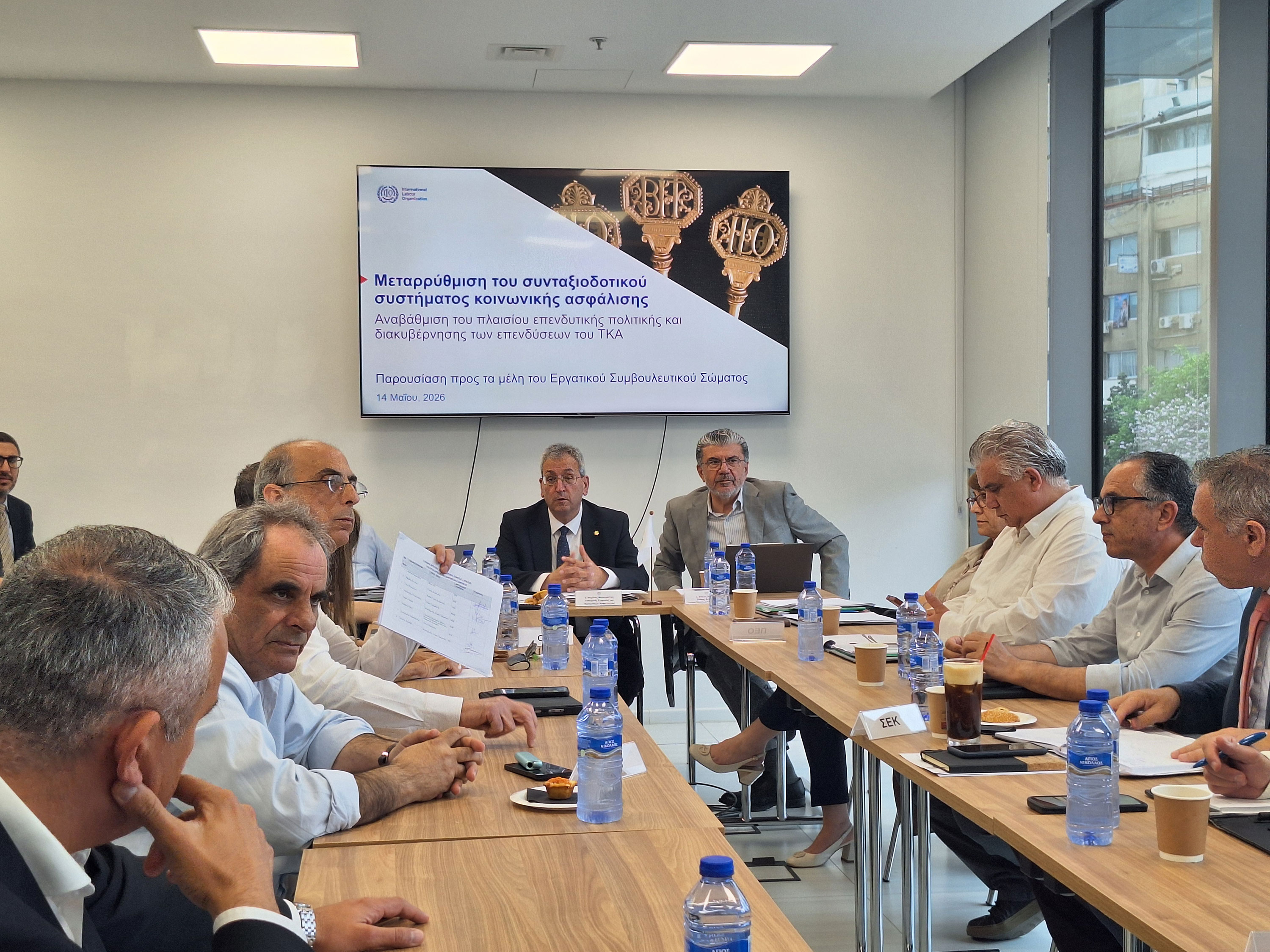
His comments came after a meeting of the labour advisory board, consisting of representatives from government, employer organisations and trade unions.
They were discussing the planned pension reform, which the government hopes to implement at the beginning of 2027.
Mousiouttas said the administration plans to table to parliament the relevant legislation prior to mid-July, when the House breaks for the summer recess.
During the summer, the government will inform the political parties of the ins and outs of the pension reform, so that they have a grasp of the blueprint by the time parliament reconvenes in September.
There are two ‘pillars’, or tracks, to pension reform. The first concerns state pensions; the second concerns provident funds, as well as the cash reserves of the SIF and its investment policy.
On Thursday, Mousiouttas introduced a new term, calling it ‘pillar zero’.
“Pillar zero is the social policy that exists today, and we’re talking about the small cheque, the social pension, which is the money given by the state and not by the SIF.”
The so-called small cheque is an allowance given to low-income pensioners.
The social pension is a monthly grant given to persons aged 65 and over who are not entitled to a statutory pension from the SIF. It covers for example housewives who never worked.
At the moment, the statutory pension system in Cyprus consists of two main components: a fixed (basic) pension and a proportional (supplementary) pension, calculated based on contributions.
As part of the coming reform, the government intends to combine the ‘small cheque’, the social pension and the basic pension into a single remittance.
The last major reform of the pension system took place in 1980, with additional changes introduced during 2012-2013 as part of Cyprus’ agreement with international lenders.





Click here to change your cookie preferences