
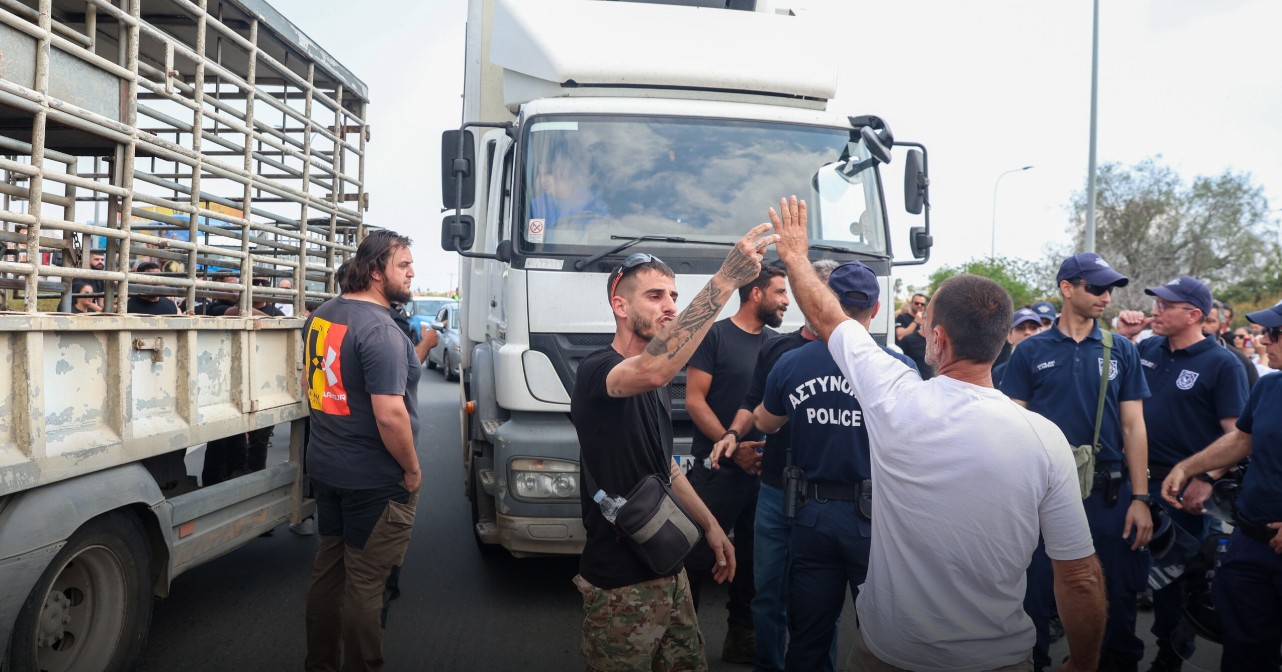
Livestock farmers are prepared to march on the presidential palace on Friday as frustration grows over the government’s handling of the foot-and-mouth disease outbreak.
The farmers demand an immediate halt to animal culls, faster compensation payments and direct intervention from President Nikos Christodoulides.
The protest was confirmed came after Christodoulides announced yesterday that he would hold meetings with scientific experts and agricultural organisations next week in an effort to address the worsening crisis.
Members of the newly former’s farmers’ union “the voice of the livestock breeders” have gathered at the GSP stadium in Nicosia where they intend to progress onwards, some by tractor, to the presidential palace by 11am.
Association spokesperson Stella Petrou said farmers expected to be received by the President and present their concerns directly.
“We expect that the president will accept that we enter the Presidential Palace to discuss with him,” Petrou said.
She added that livestock breeders were calling for an immediate end to the killing of animals, a suspension of further sampling and “proper compensation” for affected producers.
The protest took place as the outbreak spread to 120 livestock units across the island, with some three new cases confirmed yesterday in the Nicosia district.
Speaking on Thursday evening, Christodoulides emphasised the importance of dialogue in responding to the outbreak.
“Without cooperation, this challenge will not be met,” he said, confirming that an internal meeting had already been held with senior officials, Veterinary Services representatives, and appointed scientific adviser Stavros Malas.
The President said a meeting with the epidemiological team assisting in managing the outbreak would take place at 9.30am on Tuesday, followed by discussions with agricultural organisations at 11am.
Agricultural organisations welcomed the prospect of direct talks with the President, having requested intervention on issues they argue now extend beyond veterinary management and threaten the economic viability of the sector.
Concerns raised by farming groups include delays in compensation payments, operational restrictions on farms and the wider impact of the outbreak on livestock production.
Panagrotikos president Petros Kkailas described the situation as deeply concerning and called for a reassessment of current procedures, particularly those governing animal culls, transportation and the operation of farms under restrictions.
While expressing support for the substance of the farmers’ demands, he said demonstrations alone would not resolve the crisis.
Police implemented extensive security and traffic measures ahead of the protest, deploying officers along the route and around the presidential palace to facilitate traffic flow, maintain public order and ensure the demonstration proceeded peacefully.
Despite the government’s decision to convene meetings next week, organisers insisted the protest would go ahead, arguing that urgent action was needed to prevent further losses and protect the future of the livestock sector.





Click here to change your cookie preferences