
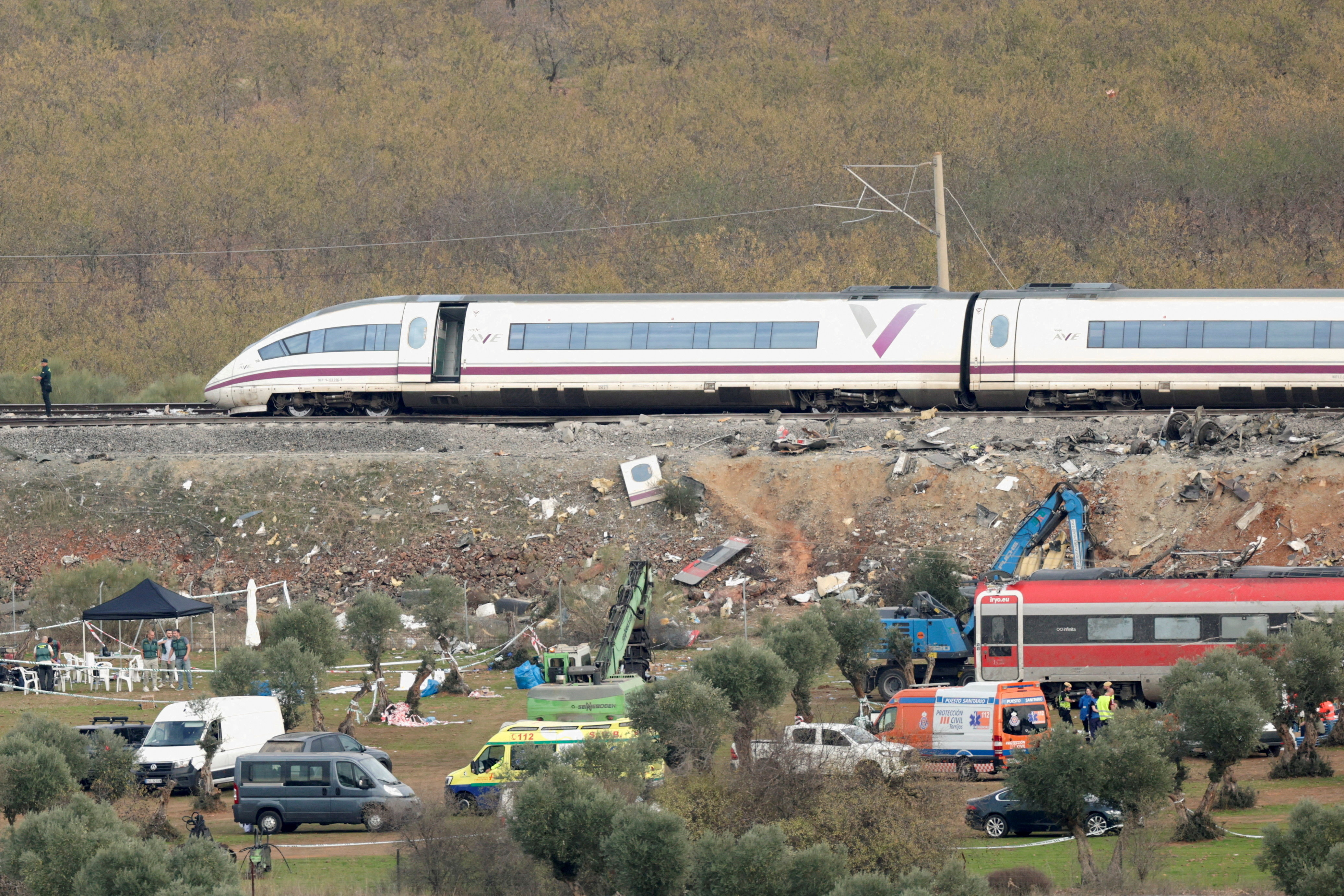
Spanish Transport Minister Oscar Puente will face questions from lawmakers on Tuesday over his handling of Europe’s worst train crash since 2013, as the government readies an emergency aid package for victims and their families.
Last week’s high-speed collision, with a confirmed death toll of 69 so far, has sparked widespread calls for Puente’s resignation, including from coalition allies. It was the second accident on the same line this year after a crash in January that killed 46 people.
Puente has refused to step down, saying his way of taking responsibility was to “face up” to the crisis by explaining what happened to the public and fixing the system.
He is set to appear at 5 p.m. (1600 GMT) before the Permanent Deputation, a reduced caretaker legislature that holds limited powers between parliamentary terms before an election on November 29.
‘RESTORING SHATTERED CONFIDENCE’
Prime Minister Pedro Sanchez on Monday said the government would approve an aid package doubling payouts for crash victims under compulsory passenger insurance, advancing compensation payments and improving temporary incapacity cover.
Speaking at the World in Progress forum in Barcelona, Sanchez said the priority was helping victims and “restoring the shattered confidence in high-speed rail as soon as possible with whatever it takes”.
The cabinet was due to meet on Tuesday to approve the aid package, after which Puente is also expected to present new safety measures.
Spanish newspaper El Pais, citing unidentified sources, reported on Tuesday that the measures being considered included imposing a 40 kph (25 mph) speed limit when relying on a driver’s vision to see obstacles ahead if a signal system fails.
They would also include hiring more staff and improving conditions in rail control centres.
Spain would also push for a faster rollout of the standardised European Rail Traffic Management System for safety and signalling across its network, the report said. The implementation of the ERTMS is behind schedule on the line where the accidents occurred, government contracts show.
Puente said on Friday that a computer failure knocked out the signalling system. He called a subsequent control-centre order for the train to resume its journey “inexplicable”. Investigators estimated an impact speed of 160 to 200 kph.
Several railworkers’ unions rejected placing the blame on human error before the investigation is completed.


Click here to change your cookie preferences