
Europe needs to stop treating disruption as a measure of success and start asking a rather more important question. Does innovation make businesses, economies and people’s lives better?
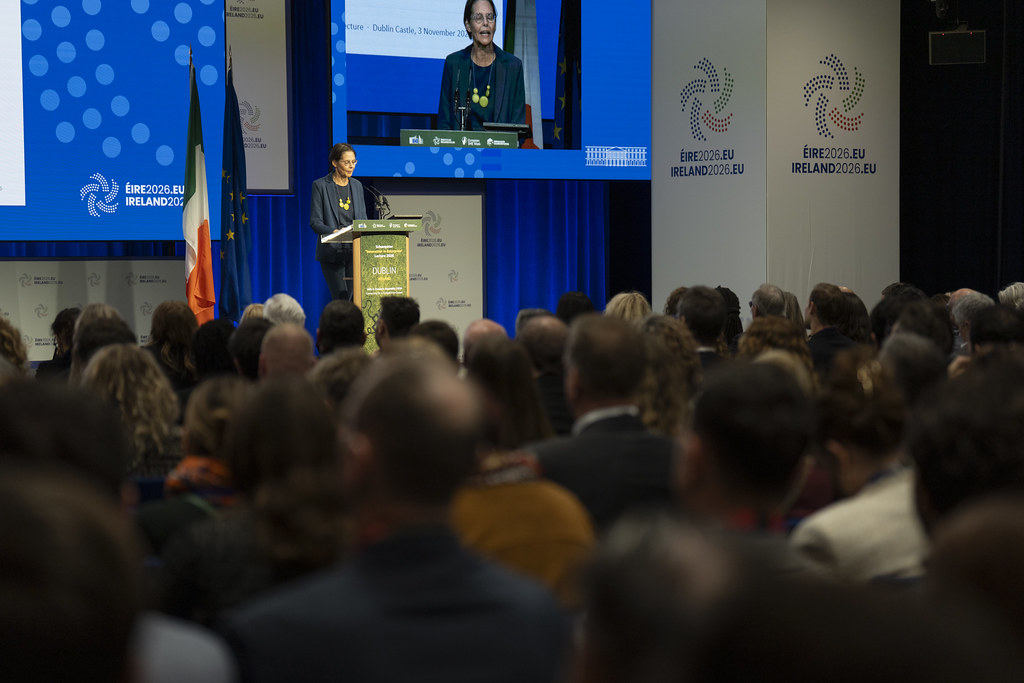
That was the challenge put to European entrepreneurs and policymakers by Professor Johanna Mair, director of the School of Transnational Governance at the European University Institute (EUI), during the annual Schumpeter ‘Innovation in Enterprise’ Lecture at Dublin Castle on Tuesday evening.
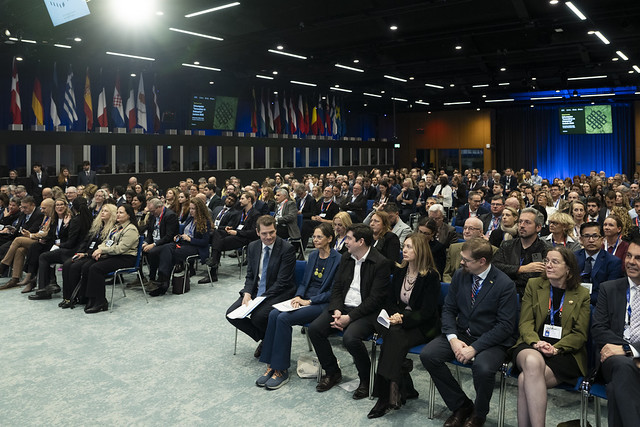
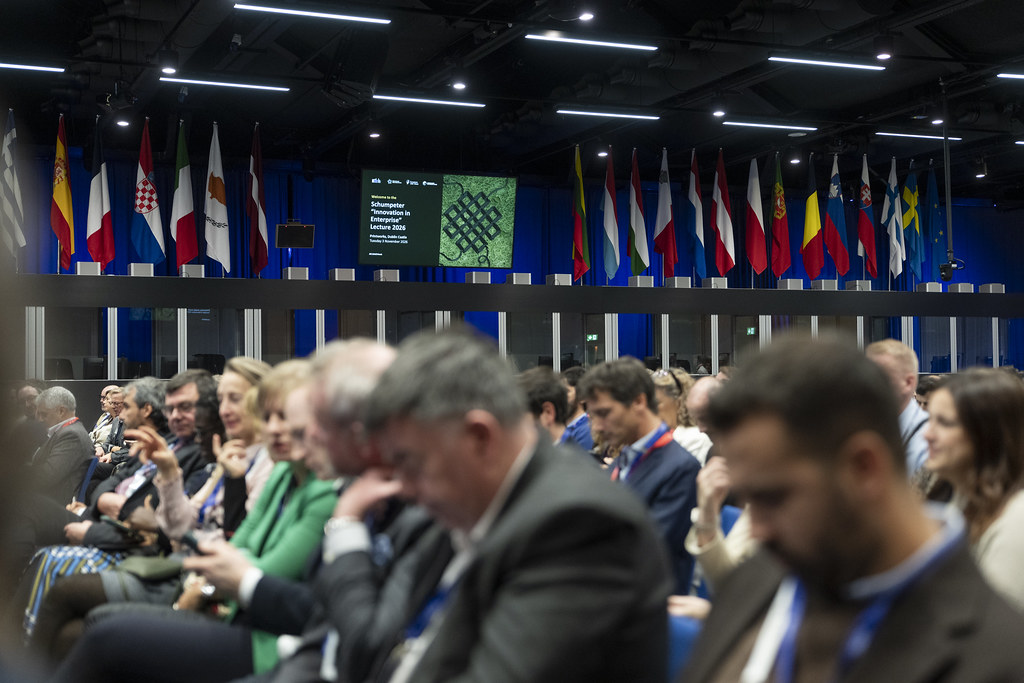
Speaking at the SME and Clusters Assembly 2026, Mair argued that Europe cannot build a stronger, more competitive economy simply by celebrating new technologies, disruptive businesses and the industries they replace.
The harder task, she explained, is making sure that what comes next actually works.
Her lecture, entitled ‘From Creative Destruction to Creative Reconstruction’, challenged the familiar thinking of economist Joseph Schumpeter, whose theory of creative destruction describes how innovation transforms economies by replacing established businesses and industries.
Mair did not dispute the importance of that process. Instead, she questioned whether the ability to disrupt an industry should automatically be regarded as an achievement.
Drawing on her experience in Silicon Valley, she observed how easily disruption “can become a celebration of ambition”, even when its wider benefits remain uncertain.
Her alternative was what she called “creative reconstruction”, an approach that involves improving existing institutions, replacing those that no longer work and developing the capabilities needed to support economic and social progress.
“We cannot afford to dismantle capacities faster than we build arrangements that will replace them,” she warned.
A professor of Organisations, Institutions, and Societal Transformation at the EUI in Florence, Mair has spent much of her career examining how institutions encourage or obstruct change.
Her research covers social entrepreneurship, social innovation and political innovation, work that earned her the 2025 Progress Medal from the Society for Progress.
For Europe’s smaller businesses, the distinction between destruction and reconstruction is particularly important.
A promising idea may help a company grow, but individual entrepreneurs cannot solve every problem standing between innovation and commercial success.
Access to finance, specialist skills, infrastructure and business networks often depends on cooperation between companies, governments and other institutions.
Mair distinguished between what she described as distributed agency, which allows individual businesses and organisations to experiment and take initiative, and collective agency, which enables them to tackle challenges beyond their individual capabilities.
Europe, she argued, needs both. As Mair put it, “No small firm can create the energy infrastructure on which it depends.”
Equally, governments cannot be expected to anticipate every promising innovation or business opportunity.
This, she explained, is where business clusters can make a genuine difference.
By bringing companies, researchers and institutions together, clusters can give smaller businesses access to facilities, expertise and financing that would otherwise be beyond their reach.
Simply putting companies in the same network, though, is not enough. Mair stressed that the way clusters are managed matters just as much as the opportunities they promise.
Someone must turn research into something businesses can actually use, secure the necessary resources and ensure smaller companies are not overshadowed by larger members.
How a cluster is governed, she argued, should not be treated as an afterthought once an innovation strategy has been agreed. It is part of the strategy itself.
“Being invited in a room is not the same as being able to shape what happens there,” she said.
She identified four conditions for making innovation work more effectively: capability, connection, voice and care.
Together, these reflect the need to equip businesses with practical resources, encourage cooperation, ensure meaningful participation and consider the wider consequences of economic change.
For policymakers, this means looking beyond ambitious innovation targets and examining what businesses can actually achieve with the support available to them.
Practical advice, accessible procurement opportunities, shared facilities and suitable financing arrangements can make considerably more difference to a small company than another grand declaration about competitiveness.
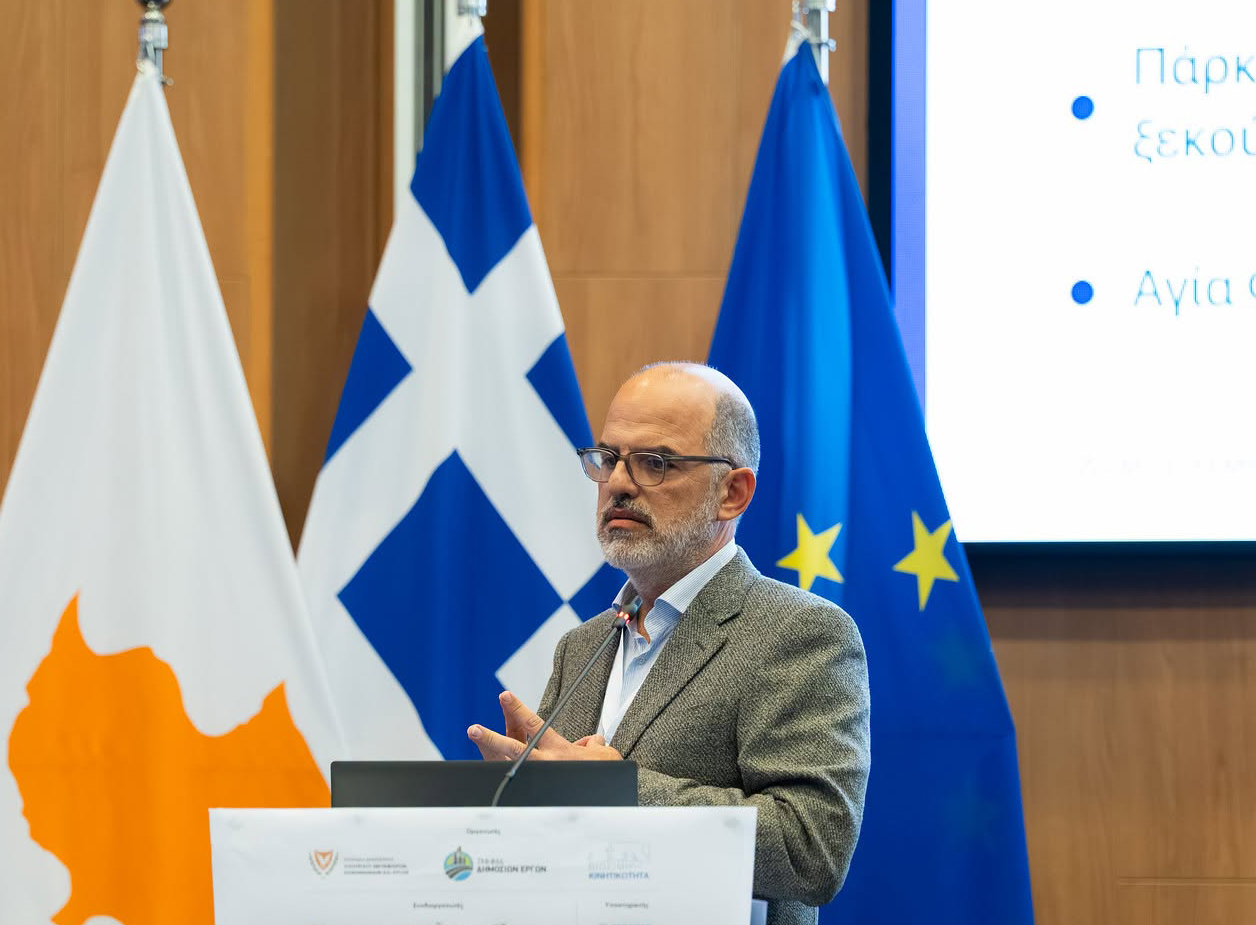
For economies such as Cyprus, where smaller firms form an important part of the business landscape, the argument raises a practical question about whether business networks can help companies overcome limitations of scale and compete more effectively.
The discussion also comes at a difficult time for European enterprise.
The latest Eurochambres survey, presented during the Dublin assembly, found that businesses expect stronger sales in 2027, although confidence is weakening and investment remains under pressure.
Mair’s argument places the emphasis not simply on encouraging entrepreneurs to innovate, but on creating the conditions that allow their ideas to succeed.
Closing her Schumpeter lecture, Mair described institutional innovation as “part of what allows technological ambition to become a societal achievement”.
Echoing the assembly’s motto, Connecting for a Competitive Europe, her message was that Europe needs more than ambitious entrepreneurs and clever new technologies. It also needs “the capacity to shape change together”.
After all, inventing something new is one thing. Making it work for everyone is quite another.




Click here to change your cookie preferences