
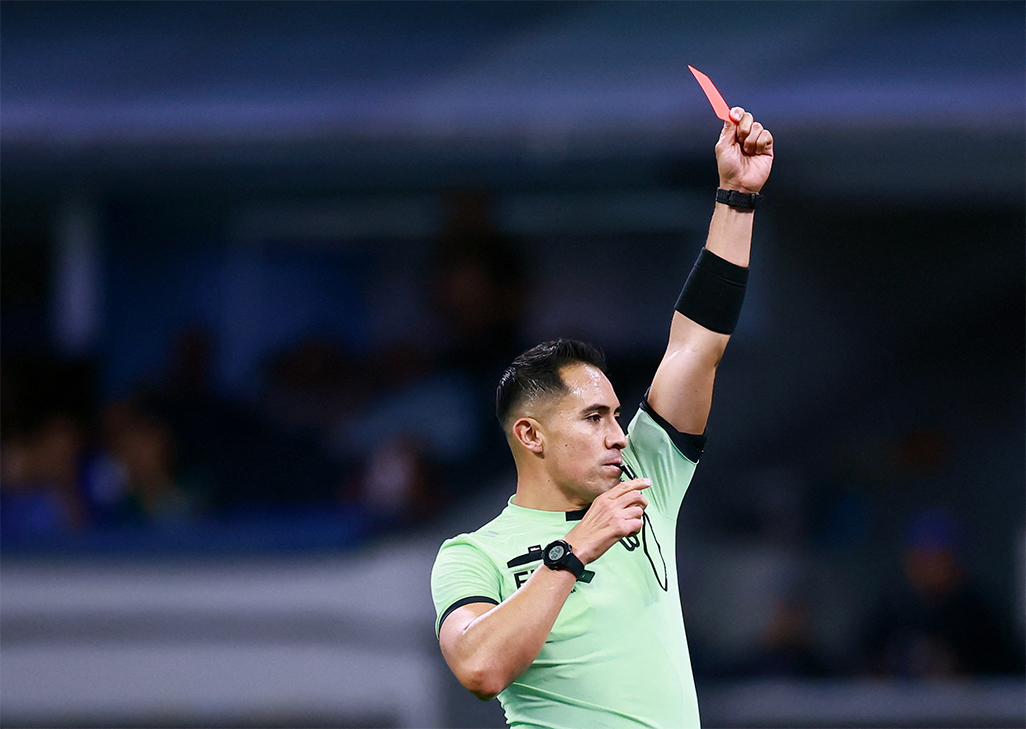
An under-20s match in the Brazilian state of Minas Gerais descended into complete chaos, with the referee having to hand out a record 53 red cards following a massive brawl.
The brawl took place during the first leg of a state championship semifinal match between Uberlandia and Mamore on Sunday.
In his report of the match, referee Fernando Patrick Drosghic Modesto said the trouble began early in the second half, when a number of Uberlandia officials invaded the field of play after one of their players was sent off.
The match was halted for 40 minutes and eventually restarted, with Mamore going on to score in the ninth minute of stoppage time to take a 3-1 lead.
According to reports in Brazilian media, Mamore player Davi taunted Uberlandia players during the goal celebrations, which sparked a massive brawl and led to a deluge of red cards.
A total of 43 players and 8 members of the coaching staff were sent off, while 2 Uberlandia board members were also dismissed, taking the tally up to 53.
“In the 54th minute of the second half, a generalized brawl broke out, making it impossible to show the red cards and to carry out the match-closing protocol,” Drosghic Modesto wrote in his report.
“Therefore, owing to all the turmoil and the lack of security, I declared the match ended.”
Drosghic Modesto added that a police report had been filed over threats made against the referee and that Mamore’s team had vandalised the dressing room after the match.
The previous Guinness World Record for the most red cards shown in a match was 36, which occurred in February 2011 during a fifth-division match in Argentina between Atletico Claypole and Victoriano Arenas.
On Wednesday, Uberlandia said it would be forfeiting the second leg of the semifinal in a “gesture of fair play,” since Mamore did not have enough eligible players to field a team.
The forfeit saw Mamore qualify for the final of the tournament.
“The club has also not remained silent: the appropriate disciplinary measures regarding those involved have already been taken internally, because athletic development is, above all, a matter of personal development,” Uberlandia added.





Click here to change your cookie preferences