
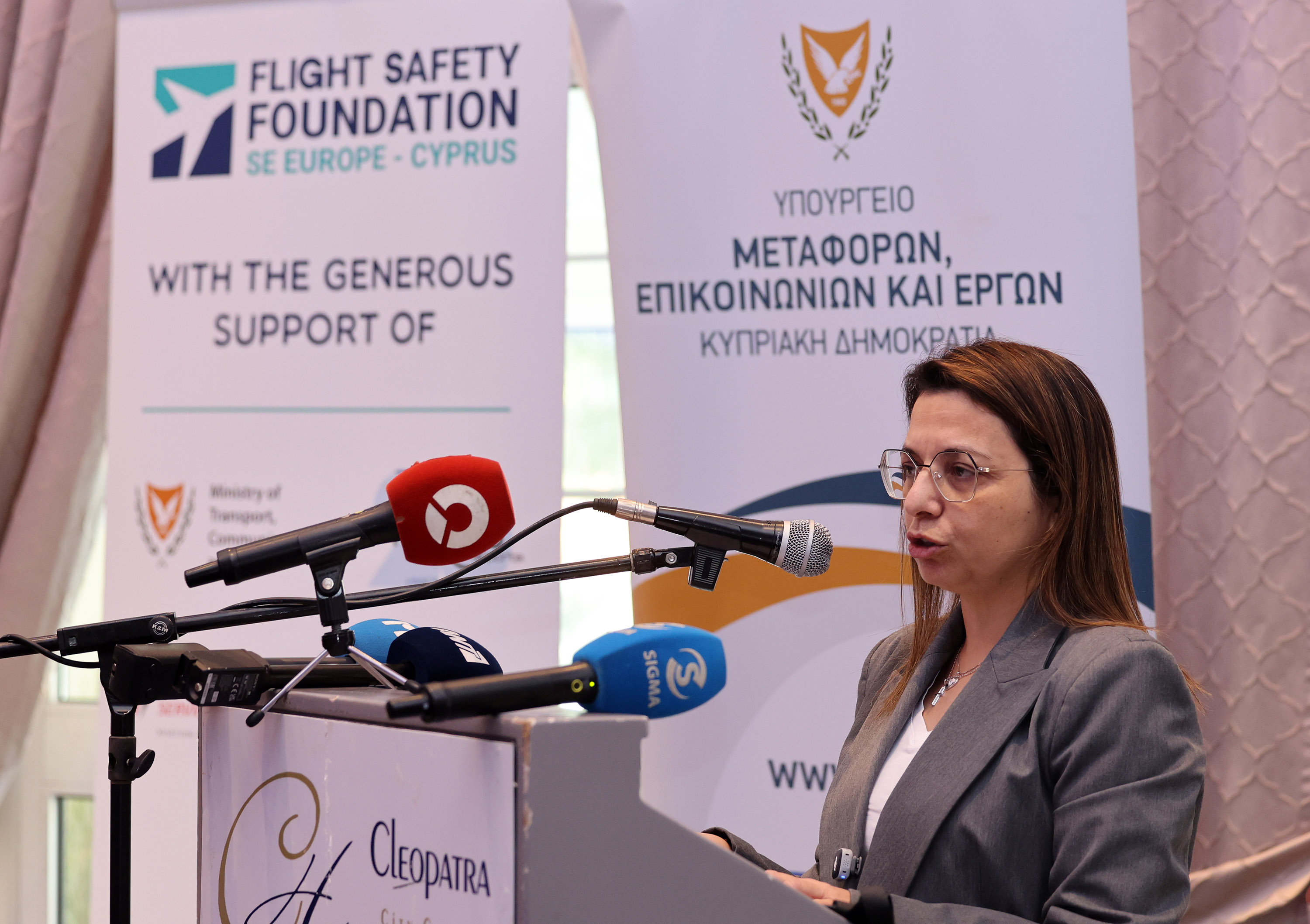
Cyprus’ strategic location at the crossroads of three continents brings significant responsibilities for aviation safety, particularly amid ongoing regional tensions, Transport Minister Evie Tsolaki said on Friday.
Addressing the Flight Safety Foundation’s Southeast Europe conference, Tsolaki warned that geopolitical developments could disrupt air traffic and place additional pressure on air navigation services, making operational preparedness essential.
“We experience first-hand how regional developments can directly affect civil aviation: airspace may be closed or restricted, routes must be adjusted, and air navigation services may come under pressure – whether from military activity or from interference with navigation systems,” she said.
Tsolaki pointed to warnings issued by the European Union Aviation Safety Agency (EASA) throughout the year, noting that the agency had repeatedly issued and updated Conflict Zone Information Bulletins.
“This is a clear reminder of how rapidly the environment in which we operate can change, and of the need for constant vigilance, timely information and coordinated action,” she said.
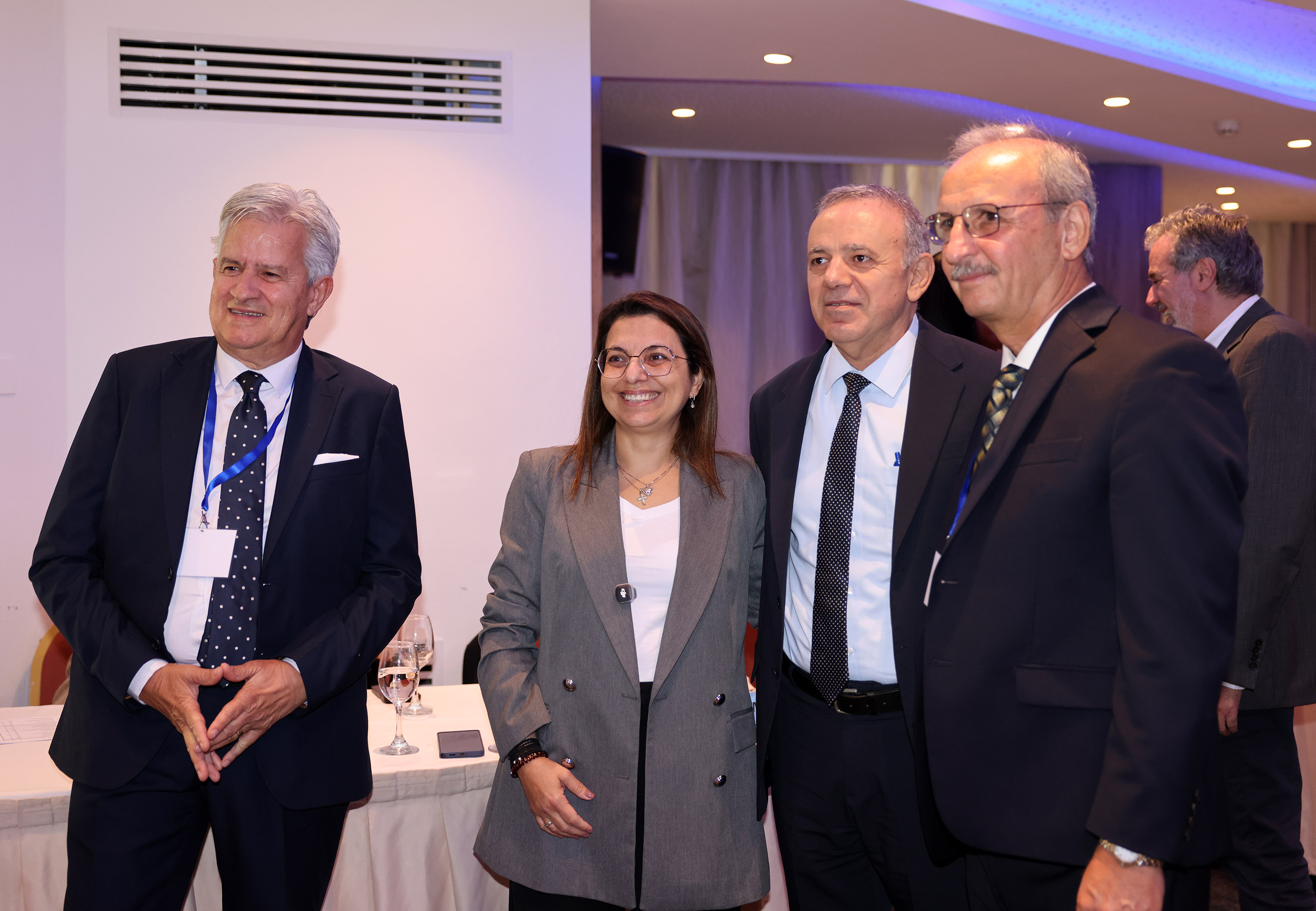
Outlining the government’s aviation policies, the minister stressed that effective airspace management depended on reliable systems, well-trained personnel and close coordination between civil aviation authorities, the military and other relevant bodies.
“The ministry and the department of civil aviation will continue to invest in the modernisation of systems, procedures and skills, so that our aviation system remains safe, resilient and reliable,” she said.
Tsolaki added that maintaining resilience required continuous preparation, training and regular testing of contingency and emergency procedures, alongside cooperation at national, regional and European levels.
Her remarks come against a backdrop of continued concerns over aviation safety in the Nicosia Flight Information Region (FIR).
In August, the Flight Safety Foundation expressed “deep concern” over repeated violations involving Turkish military aircraft and drones within the Nicosia FIR.
The foundation warned that such activity was particularly problematic near major air routes and the approaches to Larnaca and Paphos airports, creating additional operational risks and placing unnecessary pressure on air traffic controllers.
Turkish air and naval forces were reported to have been responsible for a total of 659 violations in June and July alone.
Meanwhile, the ongoing conflict in the Middle East has also affected aviation in Cyprus.
In March, a drone struck the British air base at Akrotiri, highlighting the potential security risks associated with regional hostilities.
Rising tensions have also repeatedly disrupted flights between Cyprus and Israel, resulting in delays and cancellations.



Click here to change your cookie preferences