
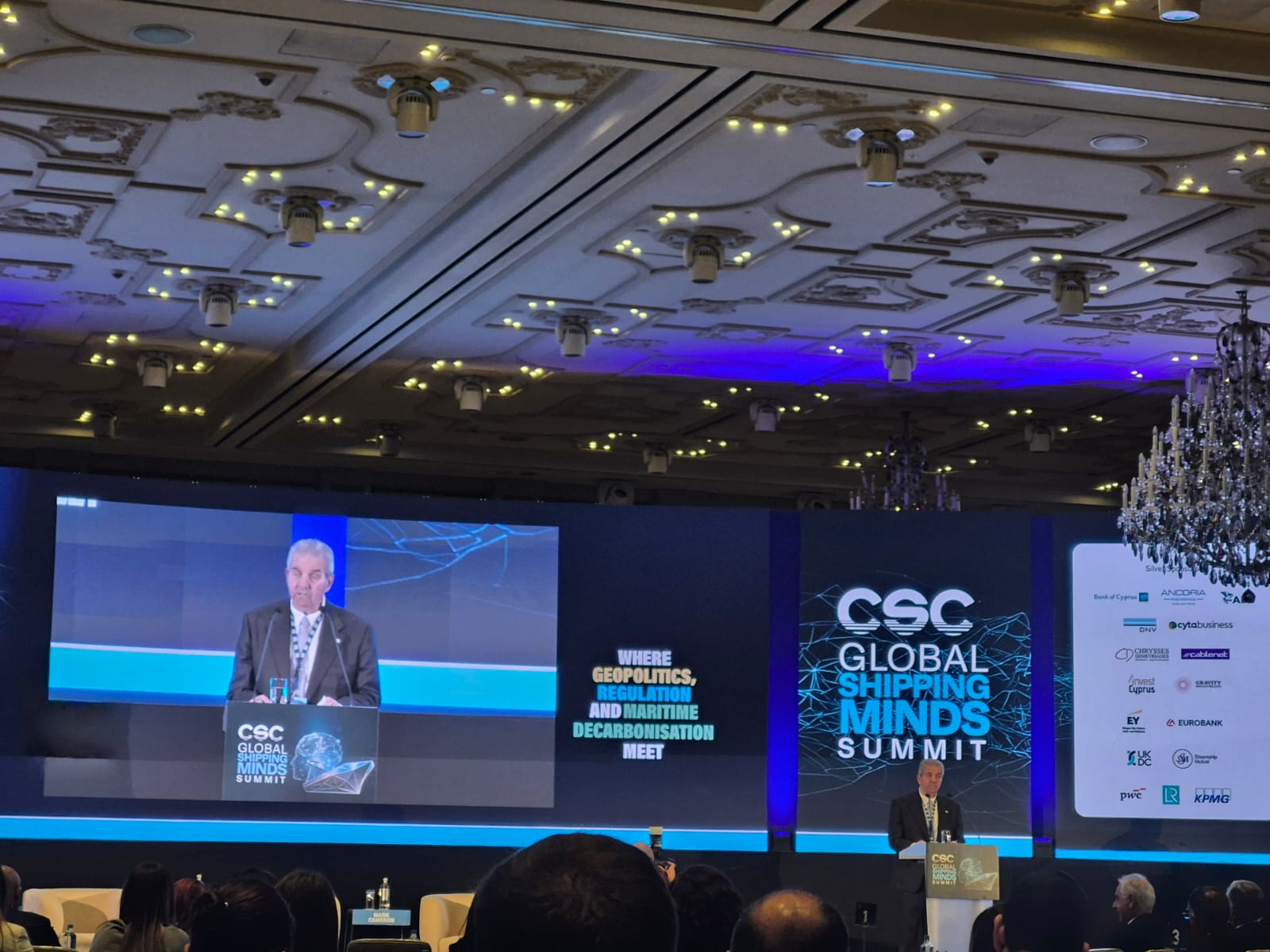
Cyprus Shipping Chamber (CSC) president Andreas Neophytou on Friday warned that fragmented approaches to maritime regulation risk creating further uncertainty for an industry that depends on global trade, as shipowners contend with geopolitical tensions, disrupted supply chains and the cost of transitioning to cleaner fuels.
Opening the inaugural Global Shipping Minds Summit in Limassol, Neophytou called for greater international coordination, just days before crucial environmental discussions at the International Maritime Organisation (IMO) in London.
The summit, organised for the first time by the chamber, brought together shipping executives, academics and industry experts from Cyprus and abroad to discuss the future of international shipping beyond national priorities.
Neophytou said Cyprus, despite its small geographical size, had an important contribution to make to those discussions, having developed a well-established shipping industry backed by decades of experience, a strong shipmanagement presence, skilled professionals and a comprehensive maritime cluster.
As the representative body of the island’s shipping industry, the chamber remained committed to supporting the sector and strengthening its international presence, he added.
Through the summit, Neophytou said, the chamber wanted to contribute to the wider debate on the future of shipping, recognising that the success of Cyprus’ maritime industry was closely linked to that of international shipping.
The conference focused on two interconnected issues, namely geopolitics and the future of global shipping, and energy security and shipping’s energy transition.
Geopolitical tensions, Neophytou explained, were changing established trade routes and disrupting supply chains, while the transition to cleaner fuels was raising critical questions about energy infrastructure, investment and regulatory consistency.
Both developments, he said, emphasised the need for international coordination.
For an industry operating across jurisdictions and serving the global economy, different regulatory approaches risk adding another layer of uncertainty to an already complicated business environment.
Neophytou said “the message was particularly relevant given the timing of the Limassol summit, with the IMO preparing for further discussions on maritime decarbonisation in London.”
The outcome of those negotiations, he added, would be important for the industry’s future, reinforcing the need for constructive engagement and internationally aligned solutions.
Shipping remained central to global trade and economic stability, Neophytou said, adding that the industry’s collective responsibility was to ensure it could continue fulfilling that role in an increasingly complex world.
The chamber president also thanked the international speakers and delegates who had travelled to Cyprus, along with the conference organisers, sponsors and the chamber’s secretariat, for their contribution to the inaugural event.





Click here to change your cookie preferences