
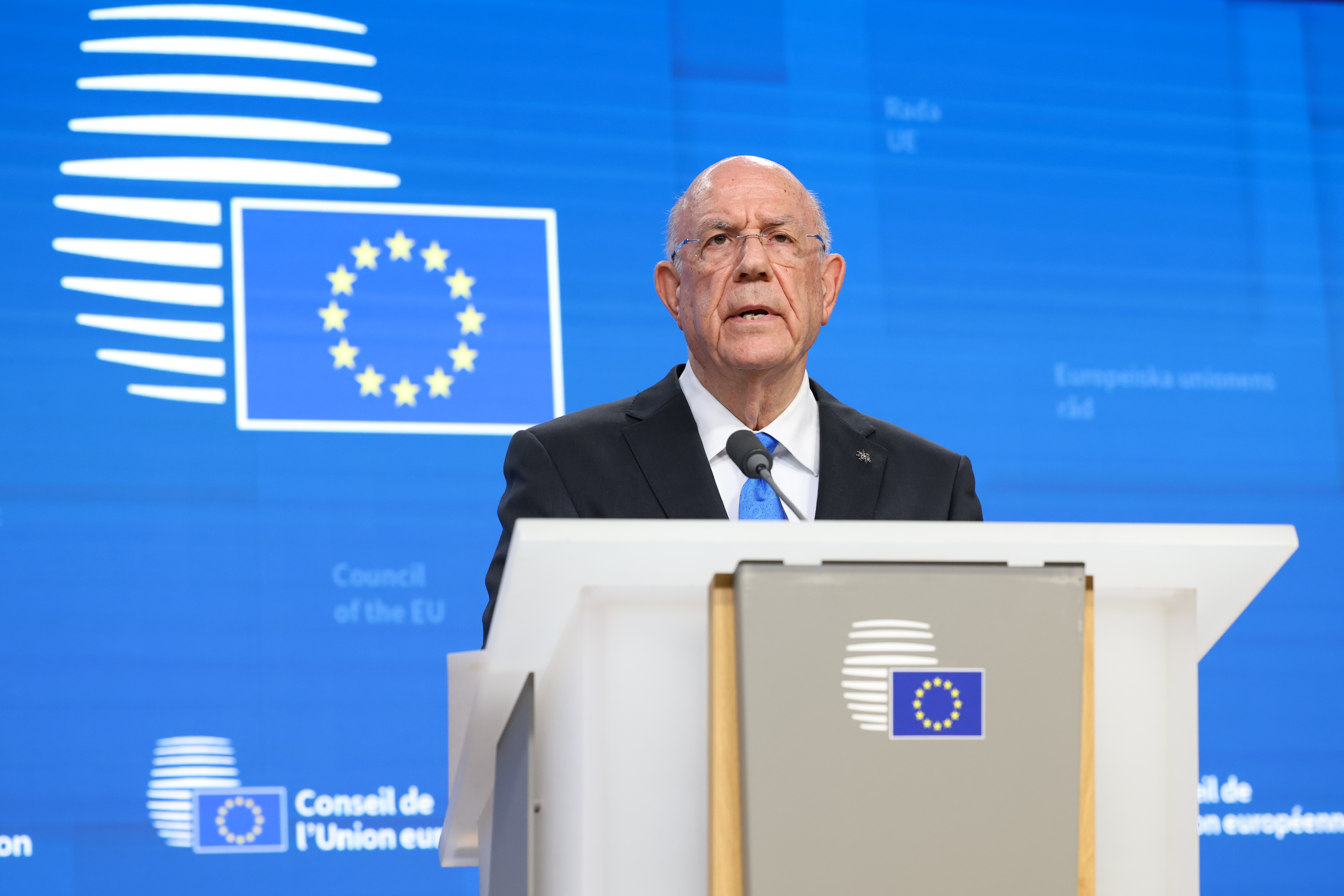
Cyprus “worked tirelessly” to ensure the release of €90 billion worth of European Union loans to Ukraine, Finance Minister Makis Keravnos said on Thursday after the Council of the EU approved all the remaining legislation to allow for the funds’ disbursement.
“Today, the council approved the final element needed to allow for the disbursement of the €90bn loan for Ukraine. The Cyprus presidency has worked tirelessly to ensure all elements needed for the loan were in place,” he said.
He added that the disbursement of the funds will “start flowing as soon as possible” and thus provide “vital support for Ukraine’s most pressing budgetary needs”.
“The EU remains steadfast in its support for Ukraine’s sovereignty and territorial integrity,” he said.
The laws approved on Thursday amounted to changes to the EU’s multiannual financial framework – the bloc’s budget for the period covering the years between 2021 and 2027 – allowing the EU to finance the loan by borrowing on capital markets and to guarantee that budget through what the council described as “EU budget headroom”.
With the legislation now having been approved, the Ukrainian government will begin to receive funds before the end of June at the latest.
The council said that the loans “will help cover the country’s most urgent budgetary and defence industrial capacity needs” this year and next year, and that the money will be allocated “within a robust and conditional framework”.
“Funding will be linked to strict conditions on Ukraine’s side such as adherence to the rule of law, including the fight against corruption,” he said.
A third of the €90bn will, according to the council, constitute “macroeconomic support for Ukraine”, which “can be used to address Ukraine’s most urgent budgetary needs”.
It said that the remaining two thirds will be allocated to bolstering “Ukraine’s capacity to invest in defence industrial capacities, including procurement of defence products”.
The funding, it said “will give Ukraine crucial and timely access to defence products from the defence industries” in its own country, as well as in EU member states, European Free Trade Area (Efta) countries, and other allied countries.
On this matter, the EU did stipulate that Ukraine can only spend the funds on defence hardware from countries which have either signed bilateral agreements with the EU under the €150bn Security Action for Europe (Safe) programme, or which have “demonstrated fulfilment of specific conditions and commitments”.
It went on to say that disbursements “will be made accessible in line with Ukraine’s financing needs”, with the timing of those disbursements to be determined by the Ukrainian government, based on a financing strategy over the matter it had developed earlier this year, which was approved by the European Commission on April 1.





Click here to change your cookie preferences