
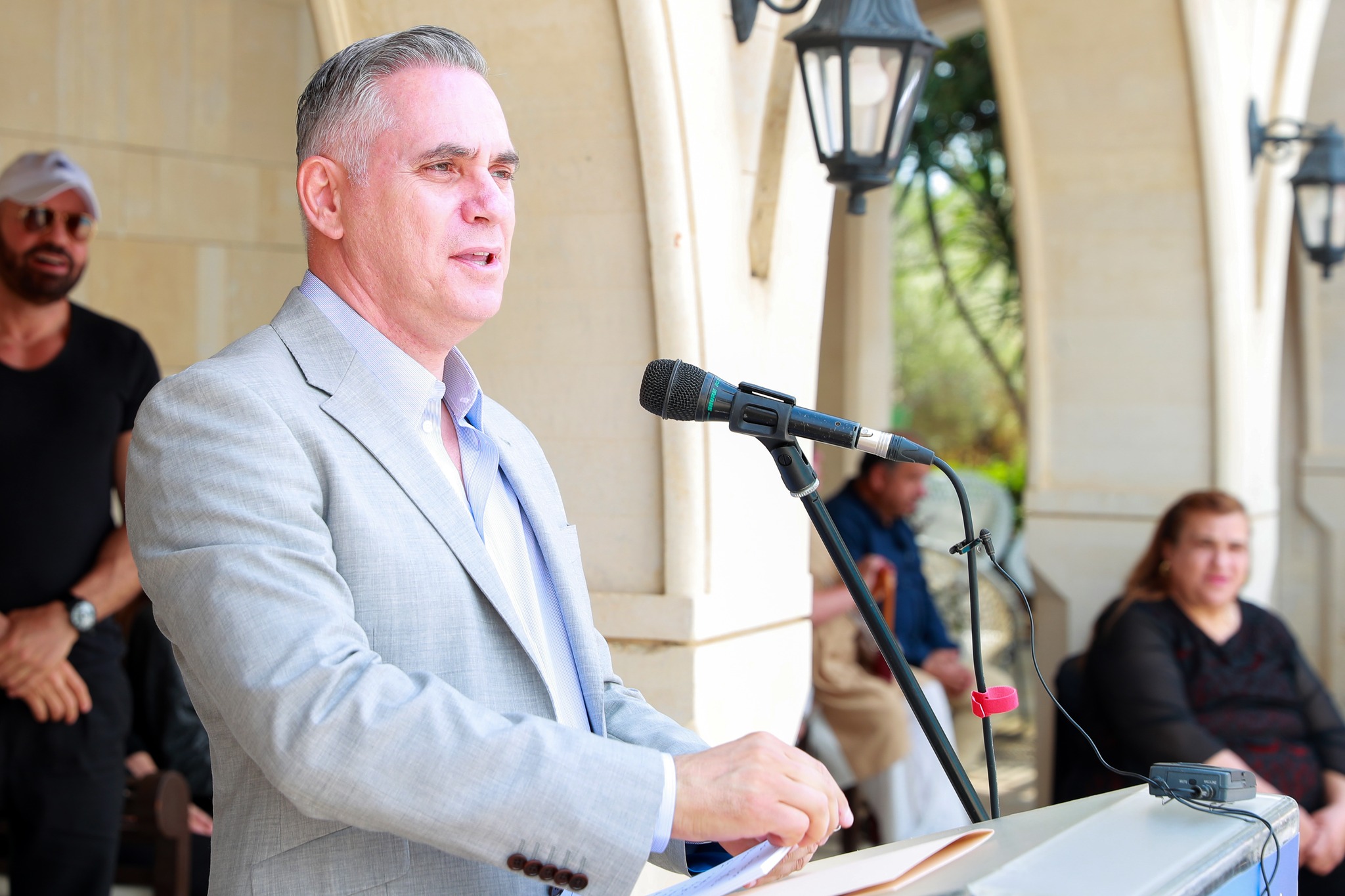
Diko has “no red lines” regarding the question of with whom the party may collaborate to nominate a House president after this month’s parliamentary election, its leader Nicholas Papadopoulos said on Friday.
“No one can answer what will happen with the House president’s role, since we do not know which positions the parties will take in parliament,” he told the Cyprus News Agency, before adding that “we have no red lines, we have not excluded anyone”.
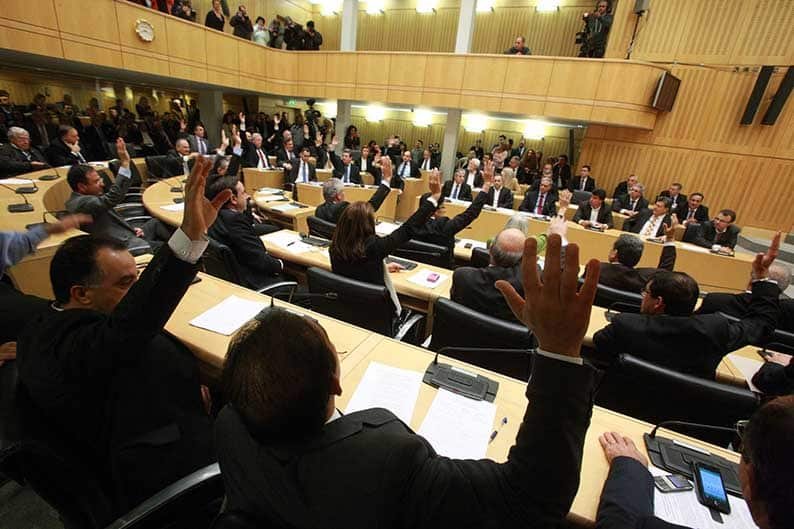
Electing a House president will be the first act of the new parliament when it convenes after the election, with MPs voting among themselves to elect a new president.
Simplified rules have been introduced for that coming election, with a candidate requiring an absolute majority – 29 of 56 MPs – in the first round to be elected, and then a simple majority in any second-round runoff between the candidates who receive the highest number of votes in the first round.
Disy’s Annita Demetriou served as House president for the duration of the last parliament, taking office in 2021 to become the first woman to hold the role, winning the support at the time of her party, Dipa, and Elam.
Current polling suggests that Diko is on course for the worst parliamentary electoral result in its 50-year history. The party has traditionally placed perennially in third place at parliamentary elections, and may win just five seats – down from nine last time around.
Nonetheless, the party’s votes could be important for the election of a House president, given that as many as seven parties look set to enter parliament, and given that Cyprus’ traditional “big two” parties also appear on course for underwhelming results, by historical standards.
According to recent polls, traditional parties Disy, Akel, and Diko will lose ground to new parties established in the last few years on election night, with social media influencer Fidias Panayiotou’s Direct Democracy Cyprus, and former auditor-general Odysseas Michaelides’ Alma, both of which were formed last year, both polling better than Diko at present.
Polling also indicates a historic high of votes and seats for Elam, which is forecast to finish in third place in the election, behind only Disy and Akel.
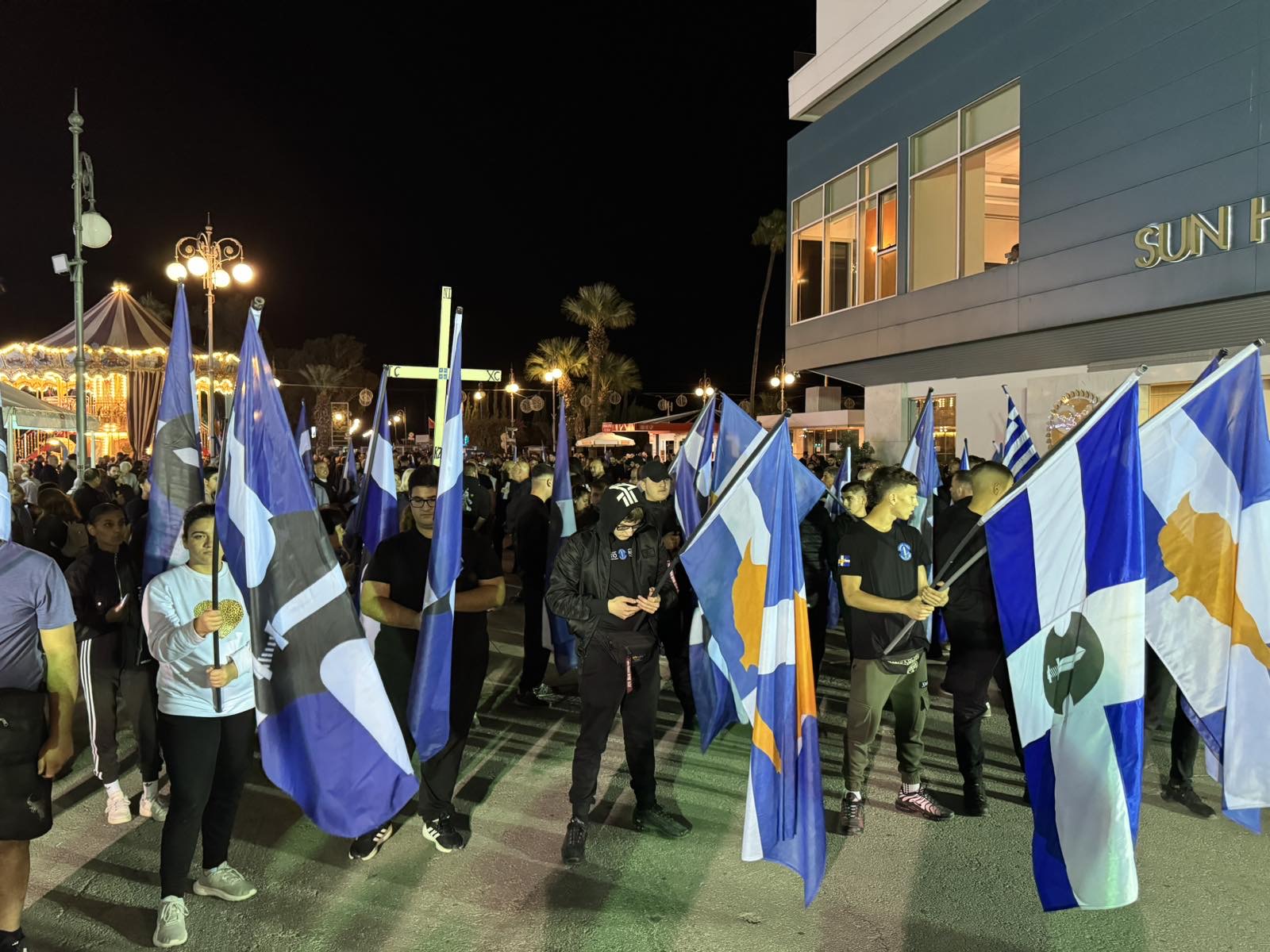
In light of this, Papadopoulos said on Friday that “I believe the dilemma of the elections is whether irresponsibility and populism, or seriousness and responsibility, will prevail”.
“We have seen how extreme and dangerous policies can lead the country to economic disasters,” he warned, before adding that “the fear is that with a parliament which cannot function, the entire country will be led into instability and sagas, and Cyprus does not have the luxury of sagas”.
He said that Cyprus is facing “serious challenges”, listing ongoing developments in the Middle East, the ongoing outbreak of foot and mouth disease, and the Cyprus problem.
“All of this requires seriousness, responsibility, proper planning, and we are very afraid that a parliament which will deal only with conspiracy theories, with meaningless issues, with opportunity issues simply for specific MPs to engage in self-promotion will not deal with people’s real problems,” he said.
Regarding his own party’s future, he said that despite polling, “we are optimistic that with the right organisational work, with the political positions we are promoting, with a strong ballot, that yes, we will maintain our leading and agenda-setting role in parliament”.
Nonetheless, he did acknowledge that “there is disappointment in society, there is bitterness and anger in the world”, and lamented that “some are quick to exploit this bitterness, cultivating toxicity”.
The election will take place on May 24, with a total of 56 seats up for election, including that of Dipa’s George Penintaex, who took his seat in parliament for the first time in December after Marinos Mousiouttas vacated his seat to become labour minister.
Of those 56 seats, 19 will belong to MPs from the Nicosia district, 12 to MPs from the Limassol district, 11 to MPs from the Famagusta district, six to MPs from the Larnaca district, five to MPs from the Paphos district, and three to MPs from the Kyrenia district.
The Paphos district gained an extra seat ahead of May’s election due to the growth in its voting population, with that gain coming at the Nicosia district’s expense.
The Republic of Cyprus’ constitution initially foresaw a parliament with 50 voting members, of whom 35 would be Greek Cypriots and 15 would be Turkish Cypriots, as well as non-voting observers belonging to the Armenian, Latin, and Maronite communities.
Following the breakdown of constitutional order and the outbreak of intercommunal violence in 1963, the Turkish Cypriots were unable to return to their seats in parliament, leaving just 35 voting members.
That figure was raised to 56 Greek Cypriots ahead of the 1985 parliamentary elections after the constitution was altered using the doctrine of necessity. The amendment foresees 24 Turkish Cypriots also being elected, but with the Cyprus problem remaining unsolved, this has not yet happened.




Click here to change your cookie preferences