
For many businesses, especially smaller ones, the problem is not the lack of content. The words are there. The photos are there. The message is there. What is missing is the time, budget or design knowledge needed to turn that material into something polished enough to represent the company properly.
This is the space that Correctify, an AI graphic design platform founded by Giorgos Gennaris, CEO, and Marios Simou, CTO, is trying to enter.
Speaking to the Cyprus Mail, Gennaris said the idea behind Correctify came from a very practical business problem. Up to now, companies that wanted to create marketing materials usually had two options: hire a designer, or try to become one themselves.
Hiring professionals can produce excellent results, but it often means higher costs and waiting times. Beginner-friendly design tools have made the process more accessible, but they still leave much of the work to the user, from choosing templates and pasting text to adjusting layouts and learning enough design principles to make the final result look right. Correctify was created as a third option.
According to a report from Philenews, the government submitted the legislative package at the beginning of July and has urged parliament to examine it as a matter of priority following months of delay.
However, the legislation is now expected to be discussed in September, after parliament suspended its work for the summer recess on Wednesday.
EU member states were required to incorporate the directive into their domestic legal systems by January 11, 2026, but Cyprus did not submit the bills to parliament until the beginning of July 2026.
The prolonged delay prompted the European Commission to launch formal infringement proceedings against Cyprus earlier this year.
Cypriot authorities received a letter of formal notice from the Commission on March 27, 2026, marking the first formal step in the EU infringement process over the country’s failure to meet the transposition deadline.
“The creation of the Cyprus Business Development Organisation constitutes a substantial reform for the Cypriot economy,” Keve said.
The chamber explained that the new organisation is expected to help close existing financing gaps in the market, support entrepreneurship, strengthen the competitiveness of businesses and promote innovation, as well as Cyprus’ green and digital transition.
Keve said it has repeatedly highlighted that the limited availability of alternative sources of finance remains one of the biggest obstacles to the growth of small and medium-sized enterprises in Cyprus.
It added that “businesses’ heavy reliance on the banking system has restricted access to capital for investment, expansion and innovation“.
As the programme celebrates 20 years, the company congratulated the CSC on an initiative that has continued to grow, evolve and extend its reach beyond Cyprus, inspiring thousands of young people to discover the maritime industry.
For Petronav, investing in maritime education is an investment in the future of shipping. However, its involvement in the programme is also part of a much broader story of how Island Oil Holdings, the group to which it belongs, has expanded its activities while placing education, community support and sustainability more firmly within its business strategy.
That development is set out in the group’s latest sustainability report, which traces its growth from a Cyprus marine fuel trader into a wider maritime services organisation operating across fuel supply, ship management, maritime software, vessel equipment, seafarer training and renewable energy.
The company said the donation forms part of its broader sustainability strategy, which places particular emphasis on education, young people and the professional advancement of women by creating opportunities that allow them to realise their full potential.
“Through its partnership with Tepak, DP World Limassol contributes to developing the next generation of talent, enabling students to play their own part in Cyprus’ future development,” the company said.
The company also recalled that its collaboration with Tepak began in 2023 with the signing of a Memorandum of Understanding, which provides for the implementation of joint research programmes, staff exchanges and the development of small-scale projects.
As part of the partnership, DP World Limassol offers internship opportunities to Tepak students while also supporting research initiatives designed to strengthen links between the academic community and industry.
Between those two figures lies a complicated collection of national systems, each with its own rules on contributions, residence, household income and years of work. The result is a European pension map marked by striking differences, but also by numbers that are not always directly comparable.
The scale of the divide is set out in new parliamentary findings prepared by the research, studies and publications service of the Cyprus House of Representatives. The study, overseen by Anthi Tofari following a request from Akel MP Nikos Kettiros, examined how EU countries protect older people whose pension entitlements are low or, in some cases, almost non-existent.
Its findings point to a difference of more than €2,000 a month between some national provisions. However, the comparison is not simply a ranking of which country pays its pensioners most generously.
In Luxembourg and Belgium, the larger amounts generally require a full working life. In Germany and Lithuania, there is no single statutory minimum pension. Meanwhile, other countries guarantee an income only after examining the pensioner’s total resources.
The guidance was reiterated during the group’s annual general meeting on July 15, which recorded shareholder participation representing approximately 73 per cent of the company’s share capital.
During the meeting, shareholders also approved the distribution of a €0.70 dividend per share from the profits of the 2025 financial year, corresponding to a total payment of approximately €94m. The company said that “the temporary ceasefire reached in late June validated management’s earlier assessment that the slowdown recorded at the height of the conflict would be temporary and reversible.”
Following the initial de-escalation, sales recovered and reversed the downward trend. Management said the earlier slowdown reflected consumer sentiment rather than any weakening in the group’s underlying performance.
The latest data place Cyprus above the EU average of 37.5 years, making it one of the bloc’s strongest performers and placing it just below the group of member states where expected working lives exceed 40 years.
Across the European Union, the expected duration of working life increased from 37.2 years in 2024 to 37.5 years in 2025.
The indicator has risen steadily over the past decade, increasing by 2.3 years since 2016, when the EU average stood at 35.2 years.
Eurostat explained that, despite the overall increase, significant differences remain between member states.
The Netherlands recorded the longest expected working life at 44.0 years, followed by Sweden with 43.4 years, Denmark with 42.6 years, Estonia with 41.5 years, Ireland with 40.7 years, Germany with 40.2 years and Finland with 40.1 years.
This measure applies to the treasury bills identified by the code TB13D26 and will remain in effect until the settlement of all transactions is finalised.
The official delisting of the treasury bills from both the stock exchange and the Central Depository Registry is scheduled for July 24, 2026.
According to the announcement, the company secured this approval during its annual general meeting held on June 30, 2026, and subsequently notified the Cyprus Stock Exchange (CSE) of its intentions on July 1, 2026.
To ensure the programme is managed effectively, the company has entered into an agreement with the Cyprus Investment and Securities Corporation Limited (CISCO), to oversee the acquisition of its own shares.
The company is permitted to continue these market operations until June 29, 2027, provided that all activities remain consistent with the terms approved by investors and current legislation.
Specifically, the stock exchange informed investors that the shares of the Reputation Exchange PLC are being removed from the index.
According to the exchange, this decision was reached in accordance with Rule 4.1 of the Basic Rules for Index Management and Calculation, which governs the handling of shares that have been suspended from trading.
The exchange previously announced the suspension of trading for shares in the Reputation Exchange PLC on June 16, 2026, due to the company’s failure to meet its regulatory obligations.
The announcement followed laboratory testing carried out by the Cyprus Marine Environment Protection Association (CYMEPA).
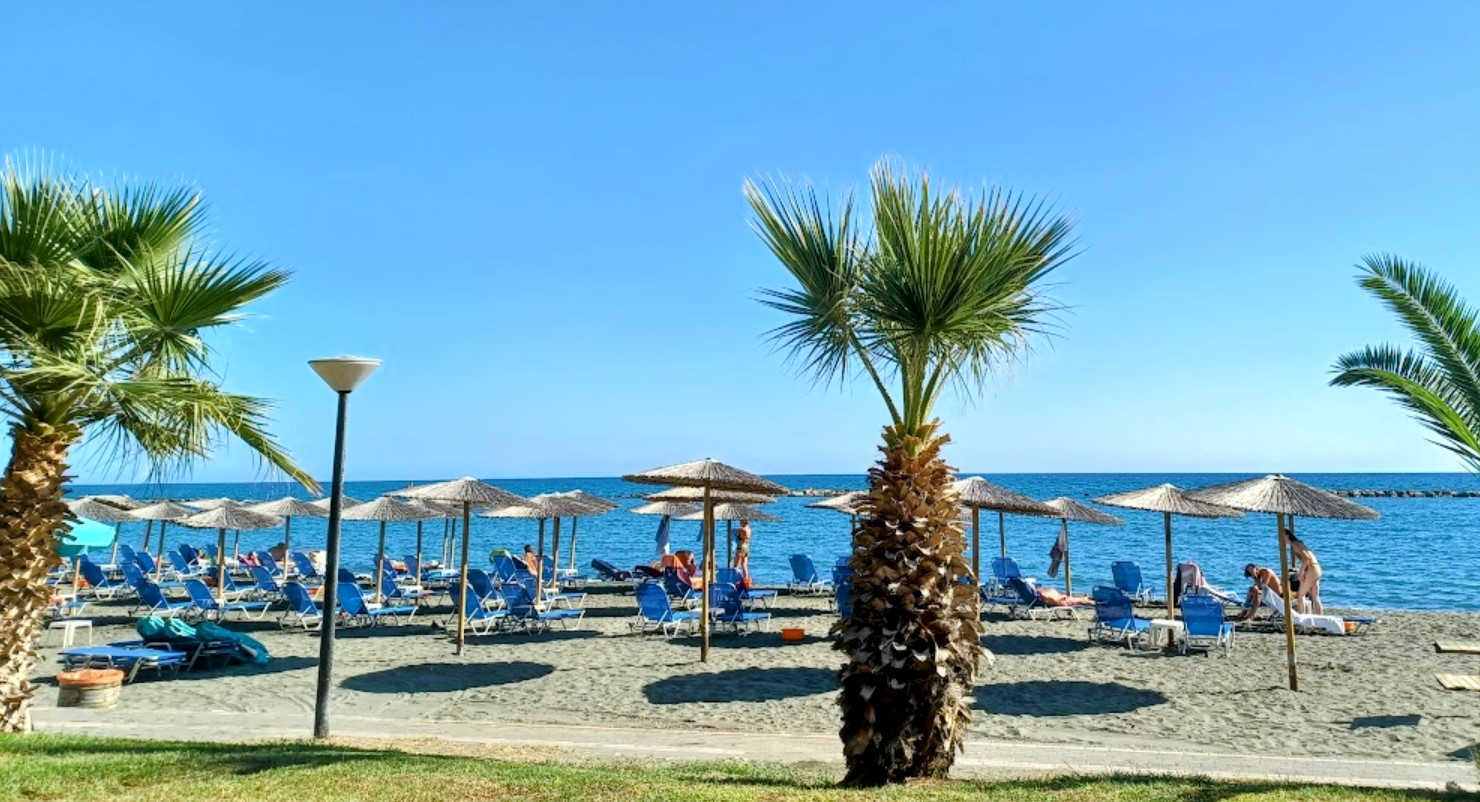
The municipality said CYMEPA conducted laboratory analyses of sea water at Geroskipou’s three Blue Flag beaches, namely the Municipal Beach, the former Cyprus Tourism Organisation municipal beach and Pachyammos 2 beach, located in front of the Ledra hotel.
According to the municipality, all sea water samples analysed were classified as waters of “excellent quality”, confirming the high environmental standards maintained at the area’s award-winning beaches.
The announcement reinforces Cyprus’ wider performance in bathing water quality, with the island continuing to rank among Europe’s leading destinations for clean and safe bathing waters.
Reflecting on the recent CITEA Digital Cyprus Conference, Zisiadou said discussions involving representatives from the technology community, the business sector and government had made one message clear: “the conversation around artificial intelligence is no longer about whether it will influence our future, but about how we choose to actively shape that future”.
The conference explored both “the significant opportunities created by artificial intelligence” and “the challenges that accompany its rapid development”, she said, pointing to its potential to “enhance business productivity, improve services, unlock new entrepreneurial opportunities, and open new pathways for innovation that until recently seemed beyond reach”.
However, Zisiadou stressed that technology alone would not be enough. For the potential of artificial intelligence to translate into meaningful value, she said, Cyprus needed “people with the right knowledge and skills, businesses that are willing to adapt and experiment, and an ecosystem that supports responsible innovation”.
The agreement was reached by Cypriot Energy Minister Michael Damianos and his Lebanese counterpart Joseph Al-Saddi, with both governments saying that it “marks an important milestone in the cooperation between the two countries”.
They said it is “aimed at exploring opportunities to strengthen regional energy connectivity, enhance energy security, and promote sustainable economic development in the eastern Mediterranean”.
Additionally, they expressed their “appreciation” to the World Bank for its “continued support” for the plans, as well as its “valuable contribution in advancing this strategic initiative”.
“In this context, the ministers have endorsed the World Bank’s proposed phased approach for conducting this study,” they said.
The figure compares with €320.9m in the corresponding period of 2025, reflecting the continued growth of the sector. According to the authority, online betting remained the main driver of activity during the January – March period.
Class B operators generated €273m of total gross revenue, while Class A land-based operators accounted for €87.1m. Gross revenue from Class A operators fell marginally by 1 per cent compared with the first quarter of 2025, although it remained 3 per cent higher than during the same period of 2024.
By contrast, Class B revenue rose by 17 per cent year-on-year and by 15 per cent compared with the first quarter of 2024.
Player payouts across both categories reached €314.2m during the quarter, representing a 12 per cent increase compared with the corresponding period of the previous year. Online players again received the largest share, collecting €243.3m during the period.
Specifically, the latest figures showed that total non-performing loans (NPLs) declined from €835 million in March to €830 million at the end of April, with the NPL ratio holding steady at 1.6 per cent of total lending.
Total loans in the banking system stood at €51.04 billion at the end of April, compared with €51.35 billion a month earlier.
Loans that were more than 90 days overdue edged down to €633 million from €634 million in March, while their share of total lending remained unchanged at 1.2 per cent.
Compared with the end of 2025, total non-performing loans declined by €9 million, from €839 million.




Click here to change your cookie preferences