
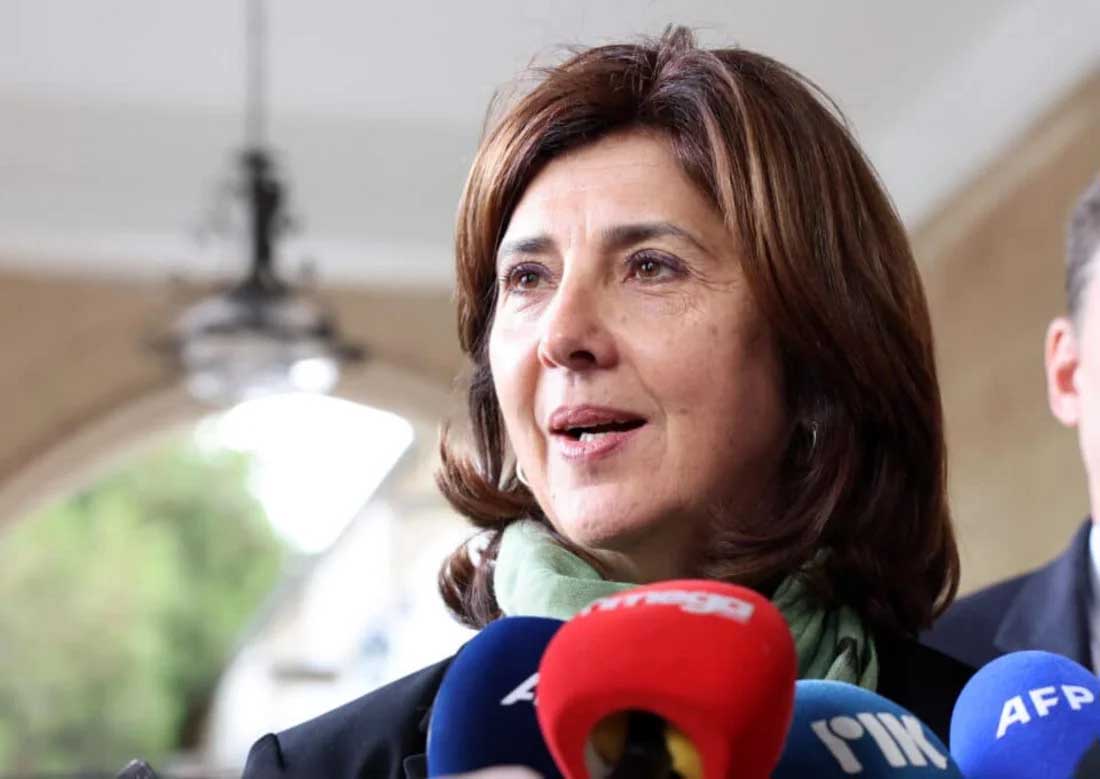
UN envoy Maria Angela Holguin will hold back-to-back meetings on Saturday with delegations from the municipalities of Famagusta and Morphou, Famagusta Mayor Simos Ioannou said on Monday.
Ioannou said that his meeting with Holguin is scheduled for 4.15pm at Nicosia airport, after she meets the Morphou municipality.
He said he would ask for the fenced-off area of Varosha to be returned to its residents under United Nations auspices, propositioning such a move as a “confidence-building measure in exchange for opening the city’s port under European Union control”.
Ioannou will also cite UN Security Council resolutions 550 and 789, which set out the legal status of Varosha.
Resolution 550, adopted in May 1984, called attempts to settle any part of Varosha by people other than its inhabitants “inadmissible” and called for the area to be transferred to UN administration.
Resolution 789, adopted in November 1992, built on it by asking that the zone patrolled by the UN peacekeeping force, Unficyp, be extended to include Varosha, as a step towards implementing 550.
Ioannou said he had not been informed whether Turkish Cypriot representatives would attend.
It has not clarified as to whether Holguin will meet any of the seven other occupied municipalities, those being Akanthou, Karavas, Kyrenia, Kythrea, Lapithos, Lefkoniko and Lysi, which have operated in exile since the Turkish invasion of 1974.
Holguin met President Nikos Christodoulides on Friday and Turkish Cypriot leader Tufan Erhurman on Monday.
She will chair a trilateral meeting with both leaders on November 9, towards the end of her stay.
The Varosha proposal was put forward by Christodoulides, who describes it as “mutually beneficial”; the plan intends to open and repopulate the fenced-off area under UN administration and in exchange open the port of Famagusta under EU control.
Erhurman has said he rejected it, arguing that it fell short of bringing the EU’s direct trade regulation into force and that the move is not a proportional bargain.
Christodoulides has said it differs from the 2005 proposal made by former president Tassos Papadopoulos and remains on the table.
In regards to Morphou, Christodoulides has said its return was “non-negotiable”.
Some 6,500 Greek Cypriots lived in Morphou before the 1974 Turkish invasion, compared with about 30,000 Turkish Cypriots there today.
The Annan Plan provided for the return of the town and surrounding villages, though not the district’s coastline.
The question resurfaced at the 2017 Crans-Montana conference, where the framework put forward by UN Secretary-General Antonio Guterres envisaged the return of “a location”, widely taken to mean Morphou.
The Greek Cypriot map included Morphou’s return while the Turkish Cypriot map did not.


Click here to change your cookie preferences